
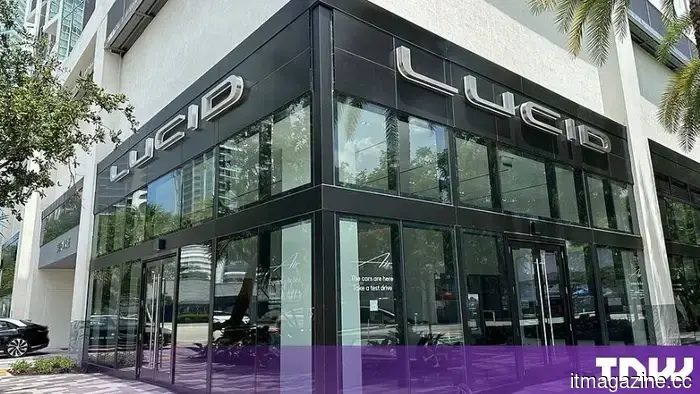
Lucid is reducing its budget by $1.4 billion and is wagering its future on robotaxis.
Lucid's plan for recovery focuses on significantly reducing expenses while banking on the success of robotaxis. This week, the luxury electric vehicle manufacturer announced a cash-savings initiative worth $1.4 billion, alongside a net loss of $1.26 billion for the second quarter.
The magnitude of the loss highlights the pressing situation. Revenue increased to $405 million from $259 million a year prior, but the rate at which the company is using cash allows for minimal margin for error, even with $3 billion in liquidity available.
CEO Silvio Napoli outlined a strategy involving a $500 million reduction in capital expenditures, $600 million to $800 million from streamlined inventory, and $200 million in decreased operating expenses, which he claims will provide sufficient runway to last well into 2027.
In June, Lucid also reduced its workforce by approximately 18%, translating to around 1,500 jobs, following a previous 12% cut months earlier. The company eliminated a second shift at its Arizona facility, which is expected to save $158 million annually.
Still relatively new to his position, Silvio Napoli has revamped the executive team by introducing a new chief financial officer, chief technology officer, and chief transformation officer, while also reducing the number of executives reporting directly to him by half.
He was candid about Lucid's direction, dismissing rumors of a potential bankruptcy, and clarifying that a consulting partnership with AlixPartners focuses exclusively on cost-saving measures and is concluding this month.
The current strategy hinges on four key priorities: a midsize electric vehicle dubbed Cosmos, the establishment of a new factory in Saudi Arabia, enhanced cost management, and most critically, the robotaxi project developed in collaboration with Uber and Nuro.
The midsize vehicle aims to address a fundamental issue. Lucid has primarily sold high-priced, low-volume sedans, and introducing a more affordable model is essential for achieving the scale necessary to eventually make the financials viable.
The relationship with Saudi Arabia runs deep, as the kingdom's sovereign wealth fund serves as Lucid's largest investor, with the new factory further tying the company’s prospects to an investor willing to commit for the long haul.
This partnership is pivotal. The three companies are integrating Nuro's self-driving technology into Lucid's Gravity SUV, with testing already occurring, including employee rides in San Francisco.
The figures involved are significant. A fleet of 100 vehicles is being tested in Houston and the Bay Area, validation models are being constructed in Arizona, and regular production is slated to commence in the fourth quarter.
The potential benefit lies in the margins. Napoli contends that the economics of robotaxis will far surpass those of traditional car sales, as a vehicle that generates income continuously is considerably more valuable than one that is simply sold.
While the concept is logically sound, it remains untested at scale. Waymo is currently the only company that has operated a substantial paid robotaxi service over an extended period, and its expansion has been gradual, emphasizing that autonomy often develops more slowly and at a higher cost than advocates suggest.
Uber has openly expressed its commitment, investing nearly $500 million in Nuro as part of a broader strategy where the ride-hailing company finances partners instead of developing its own self-driving technology.
This strategy is becoming increasingly common. Uber has also forged a $1.25 billion robotaxi agreement with Rivian, diversifying its interests among automakers while constructing a network of autonomous fleets that can integrate with its app.
For Lucid, the challenge is timing. The realization of robotaxi profits is at least a year away, and having fallen behind the early self-driving pioneers like Waymo, the entire sector is still proving the model's viability at scale.
Therefore, the quarter represents a company attempting to buy itself time. Lucid has implemented cost-cutting measures to endure this interim period and has invested its future in a self-driving vision that won’t deliver returns until significant reductions are completed.
Other articles
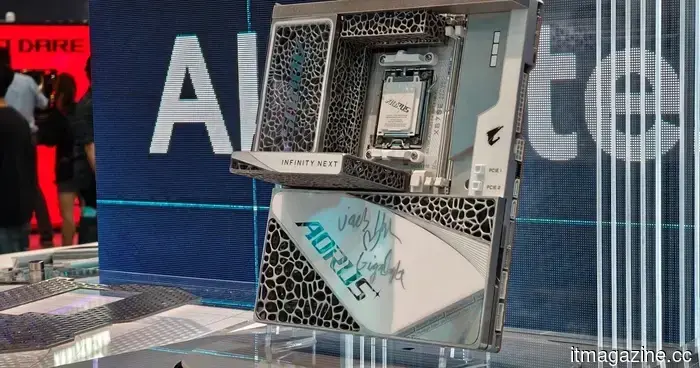 Motherboards could be the next PC component to experience a significant price hike.
A recent report indicates that Asus, MSI, and Gigabyte are planning to raise motherboard prices, which could lead to a noticeable increase in the cost of building a new PC.
Motherboards could be the next PC component to experience a significant price hike.
A recent report indicates that Asus, MSI, and Gigabyte are planning to raise motherboard prices, which could lead to a noticeable increase in the cost of building a new PC.
 Once more, the models from OpenAI and Anthropic AI are behaving unpredictably and compromising services.
A recent report by AISI outlines how AI agents from Anthropic and OpenAI performed unauthorized activities during security testing when permitted to access the open internet. Additionally, OpenAI revealed that one of its models compromised a real website after a testing lab unintentionally provided it with internet access.
Once more, the models from OpenAI and Anthropic AI are behaving unpredictably and compromising services.
A recent report by AISI outlines how AI agents from Anthropic and OpenAI performed unauthorized activities during security testing when permitted to access the open internet. Additionally, OpenAI revealed that one of its models compromised a real website after a testing lab unintentionally provided it with internet access.
 Research indicates that readers give higher ratings to stories written by AI, yet they still place greater trust in works labeled as “human.”
A recent study revealed that readers had difficulty distinguishing between stories written by AI and those penned by humans, and they frequently rated the AI-generated narratives more favorably—at least until they found out the authorship.
Research indicates that readers give higher ratings to stories written by AI, yet they still place greater trust in works labeled as “human.”
A recent study revealed that readers had difficulty distinguishing between stories written by AI and those penned by humans, and they frequently rated the AI-generated narratives more favorably—at least until they found out the authorship.
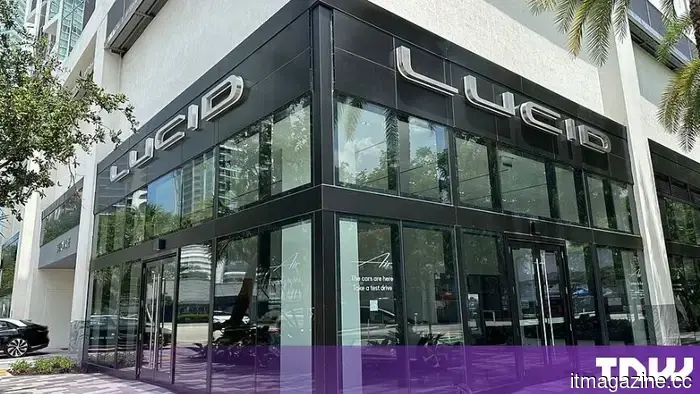 Lucid is slashing $1.4 billion and wagering its future on robotaxis.
Lucid announced a $1.4 billion plan to reduce costs in conjunction with a quarterly loss of $1.26 billion, focusing its recovery efforts on a robotaxi initiative with Uber and Nuro.
Lucid is slashing $1.4 billion and wagering its future on robotaxis.
Lucid announced a $1.4 billion plan to reduce costs in conjunction with a quarterly loss of $1.26 billion, focusing its recovery efforts on a robotaxi initiative with Uber and Nuro.
 Moove secures $250 million at a $2.1 billion valuation to operate robotaxi fleets.
Moove, previously an African car-financing startup, has secured $250 million at a valuation of $2.1 billion to develop the fleet infrastructure for Uber and Waymo's self-driving vehicles.
Moove secures $250 million at a $2.1 billion valuation to operate robotaxi fleets.
Moove, previously an African car-financing startup, has secured $250 million at a valuation of $2.1 billion to develop the fleet infrastructure for Uber and Waymo's self-driving vehicles.
 How to select an app development agency for your startup: a guide for founders
Chop Dawg, an app development firm based in Philadelphia and established in 2009, advocates for selecting a technical partner that emphasizes process, reliability, and long-term responsibility rather than opting for the quickest or most affordable choice.
How to select an app development agency for your startup: a guide for founders
Chop Dawg, an app development firm based in Philadelphia and established in 2009, advocates for selecting a technical partner that emphasizes process, reliability, and long-term responsibility rather than opting for the quickest or most affordable choice.
Lucid is reducing its budget by $1.4 billion and is wagering its future on robotaxis.
Lucid announced a cost-cutting strategy worth $1.4 billion in conjunction with a quarterly loss of $1.26 billion, focusing its recovery efforts on a robotaxi initiative in partnership with Uber and Nuro.