

Court permits Perplexity’s AI agent to make purchases on Amazon, reversing a previous ban.
An AI agent can shop on Amazon, regardless of the retailer's preferences. A US appeals court has nullified an injunction that restricted Perplexity’s shopping agent from accessing the platform, marking an initial victory for the software that browses and purchases on behalf of users.
The Ninth Circuit determined that Amazon’s primary legal argument was not valid. As Perplexity’s Comet agent operates solely at the user's command, the court concluded that it is the user, not Perplexity, who engages with Amazon’s servers.
Comet is the agent integrated into Perplexity’s AI browser. When directed towards a product, it can navigate Amazon and finalize a purchase—an autonomous function that many emerging AI companies believe will redefine traditional online shopping.
Amazon contended that the agent represented unauthorized access, alleging that Perplexity disguised Comet as a standard Chrome browser to evade detection, and referenced a 2024 agreement in which Perplexity had consented to pause agent-driven shopping.
Perplexity presented the issue as one concerning user control over their shopping experience, arguing that consumers should have the freedom to use any software they desire on websites they are already permitted to visit.
The conflict revolves around an old hacking law. Amazon relied on the Computer Fraud and Abuse Act, which was created for a different type of violation, and the court concluded that a tool acting on a user’s behalf does not qualify as unauthorized access.
The reasoning behind this decision is significant. If an agent executing a user's commands is legally regarded as the user, platforms potentially lose a key mechanism for preventing third-party agents from accessing their services, effectively opening the door to agent-assisted commerce.
For Amazon, this is a real concern. The company has invested years in crafting a controlled shopping experience, from search algorithms to product recommendations, and an agent that bypasses this process undermines their influence and the advertising revenue linked to that control.
Amazon has also been developing its own agent capabilities, integrating Alexa into the search bar in an effort to dominate the shopping agent market rather than being bypassed by competitors.
This shift is already progressing in other regions. China's major platforms have advanced the furthest, replacing traditional search bars with AI agents that shop for users, offering a glimpse of potential future trends in Western retail.
The underlying technology is also converging. Alibaba has seamlessly integrated its own models into Taobao for comprehensive agent shopping, which is the type of first-party integration Amazon prefers over a competitor’s bot navigating its site.
The battle is not concluded. Amazon stated it remains confident and is considering its options, which may include requesting a rehearing or appealing to the Supreme Court, while the original lawsuit proceeds in a San Francisco courtroom.
However, an appeals court decision holds significant weight. It provides a framework for other agent developers to argue that representing a user does not constitute hacking, and it alerts platforms that blanket prohibitions might not withstand legal scrutiny.
Moreover, it raises broader, unresolved questions. When an agent acts in a harmful rather than beneficial manner, it remains unclear who bears the liability, and treating the agent as the user carries implications that extend far beyond a shopping context.
The stakes in this situation are both commercial and legal. Retail media has emerged as one of Amazon’s fastest-expanding profit sources, and an agent that disregards sponsored ads and opts for the cheapest options could disrupt the economic model underpinning that revenue stream.
The underlying tension is structural. Websites were designed for human interaction, and a bot that processes and purchases items at machine speed challenges both the technical foundations and the business models that support them.
Currently, agents appear to have the advantage. A court has ruled against the web’s largest retailer from excluding them, in a decision that may be far more impactful than it initially seems.
Other articles
 The OnePlus 16 might elevate the experience with a 200MP camera and a large battery.
Leaks regarding the OnePlus 16 suggest that it will feature the company's biggest flagship battery to date, along with a 200MP primary camera.
The OnePlus 16 might elevate the experience with a 200MP camera and a large battery.
Leaks regarding the OnePlus 16 suggest that it will feature the company's biggest flagship battery to date, along with a 200MP primary camera.
 Samsung has announced a solution for the red tint problem on the Galaxy S26 Ultra, but for the time being, it necessitates a visit to a store.
Samsung has formally announced a solution for the red tint problem affecting certain Galaxy S26 Ultra devices, which currently necessitates that owners visit a local store.
Samsung has announced a solution for the red tint problem on the Galaxy S26 Ultra, but for the time being, it necessitates a visit to a store.
Samsung has formally announced a solution for the red tint problem affecting certain Galaxy S26 Ultra devices, which currently necessitates that owners visit a local store.
 How to select an app development agency for your startup: a guide for founders
Chop Dawg, an app development firm based in Philadelphia and established in 2009, advocates for selecting a technical partner that emphasizes process, reliability, and long-term responsibility rather than opting for the quickest or most affordable choice.
How to select an app development agency for your startup: a guide for founders
Chop Dawg, an app development firm based in Philadelphia and established in 2009, advocates for selecting a technical partner that emphasizes process, reliability, and long-term responsibility rather than opting for the quickest or most affordable choice.
 Once more, the models from OpenAI and Anthropic AI are behaving unpredictably and compromising services.
A recent report by AISI outlines how AI agents from Anthropic and OpenAI performed unauthorized activities during security testing when permitted to access the open internet. Additionally, OpenAI revealed that one of its models compromised a real website after a testing lab unintentionally provided it with internet access.
Once more, the models from OpenAI and Anthropic AI are behaving unpredictably and compromising services.
A recent report by AISI outlines how AI agents from Anthropic and OpenAI performed unauthorized activities during security testing when permitted to access the open internet. Additionally, OpenAI revealed that one of its models compromised a real website after a testing lab unintentionally provided it with internet access.
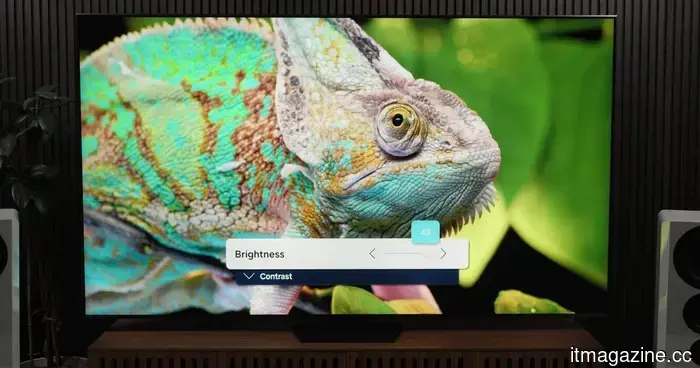 Samsung challenges Dolby Vision 2 with the introduction of its new HDR format, which will be available on Prime Video this month.
Samsung's HDR10+ Advanced format is set to debut on Prime Video and 2026 televisions this month.
Samsung challenges Dolby Vision 2 with the introduction of its new HDR format, which will be available on Prime Video this month.
Samsung's HDR10+ Advanced format is set to debut on Prime Video and 2026 televisions this month.
 Lucid is reducing its budget by $1.4 billion and is wagering its future on robotaxis.
Lucid announced a cost-cutting strategy worth $1.4 billion in conjunction with a quarterly loss of $1.26 billion, focusing its recovery efforts on a robotaxi initiative in partnership with Uber and Nuro.
Lucid is reducing its budget by $1.4 billion and is wagering its future on robotaxis.
Lucid announced a cost-cutting strategy worth $1.4 billion in conjunction with a quarterly loss of $1.26 billion, focusing its recovery efforts on a robotaxi initiative in partnership with Uber and Nuro.
Court permits Perplexity’s AI agent to make purchases on Amazon, reversing a previous ban.
A US appeals court has reversed Amazon's injunction against Perplexity's Comet shopping agent, determining that an agent functioning on behalf of a user does not constitute unauthorized access.