
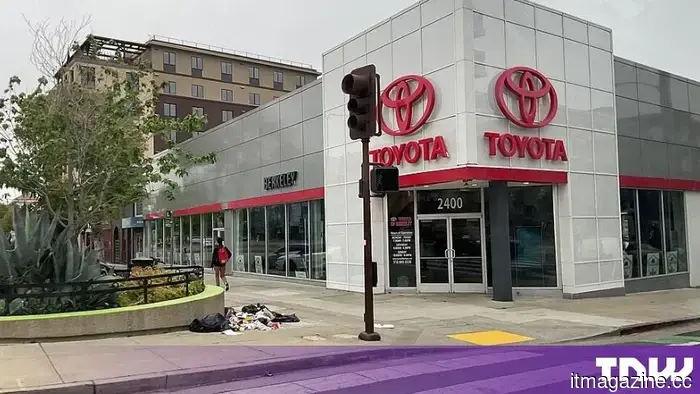
Toyota plans to introduce next-generation hybrid batteries in 2027 as it aims to achieve 5 million hybrid sales.
TL;DR: Toyota will commence the production of next-generation hybrid batteries in 2027, anticipating over 5 million hybrid sales globally this year.
During its quarterly earnings call on Tuesday, Toyota announced the launch of a new generation of hybrid batteries starting next year. The automaker plans to modify existing battery production lines in Japan, which will have the capacity to produce enough new battery packs for around 600,000 vehicles, claiming these will provide enhanced performance at a reduced cost.
“Our battery production capacity will expand in 2027 and 2028, and we will continue our initiatives to meet customer demand,” said Takanori Azuma, Toyota's chief accounting officer, to investors. The specific chemistry of the new batteries was not disclosed, nor was it stated whether they will improve upon current lithium-ion cells or involve a different technology.
This investment aligns with Toyota’s sales achievements. The company sold approximately 2.3 million hybrid vehicles globally in the first half of 2026, making up about 86 percent of its total electrified vehicle sales. Overall electrified vehicle sales, which include hybrids, plug-in hybrids, battery-electric vehicles, and fuel-cell vehicles, rose over nine percent year on year to 2.7 million units.
Toyota anticipates global hybrid sales will surpass five million units for the first time by year-end. This increase occurs even as the total global sales for Toyota and Lexus models dropped around three percent to roughly five million vehicles in the January-to-June period, marking the first decline in two years.
Several factors are contributing to the hybrid sales boom, particularly high fuel prices due to the situation in Iran, pushing consumers toward more fuel-efficient options. In the United States, Toyota’s largest market, the reduction of federal EV tax credits and stricter tariff regulations have slowed EV growth while promoting hybrid adoption. Additionally, Toyota has made its popular models, the Camry and RAV4, hybrid-only for the 2026 model year.
Sales of battery-electric vehicles have also surged, with 193,000 units sold in the first half, reflecting a 135 percent increase year on year. Toyota is advancing next-generation lithium-ion batteries for these EVs, aiming for a range exceeding 1,000 kilometers on the WLTP cycle, which translates to just over 500 miles under the stricter EPA standard, by 2027. Furthermore, the company is developing solid-state batteries that can charge from 10 to 80 percent in under 10 minutes, with production expected between 2027 and 2028.
During the call, Toyota executives acknowledged that improvements are necessary for their EVs to compete with advanced models from China. “We aim to collaborate closely with our local partners, including through joint development, to enhance our competitive edge,” said Azuma. However, hybrids continue to be the primary growth driver, and the new batteries are intended to maintain that momentum.
Other articles
 Deel purchases deepfake-detection company Clarity as issues with fake hiring escalate.
Deel has acquired the Tel Aviv startup Clarity for as much as $50 million, marking its 15th acquisition. This move integrates ongoing identity verification into the hiring process as the company surpasses $1 billion in annual recurring revenue (ARR).
Deel purchases deepfake-detection company Clarity as issues with fake hiring escalate.
Deel has acquired the Tel Aviv startup Clarity for as much as $50 million, marking its 15th acquisition. This move integrates ongoing identity verification into the hiring process as the company surpasses $1 billion in annual recurring revenue (ARR).
 Cracken provides self-service access to its AI-driven offensive cybersecurity platform.
Cracken introduced a self-service tier of its proactive security platform, with prices beginning at $199 per month, just weeks after AI models transitioned out of testing environments.
Cracken provides self-service access to its AI-driven offensive cybersecurity platform.
Cracken introduced a self-service tier of its proactive security platform, with prices beginning at $199 per month, just weeks after AI models transitioned out of testing environments.
 Microsoft instructs employees to refrain from tokenmaxxing and establishes AI budgets at the division level.
Microsoft EVP Jay Parikh instructed employees to limit their use of AI tokens, changed the default model to a more economical option, and assigned a formal AI budget for each division.
Microsoft instructs employees to refrain from tokenmaxxing and establishes AI budgets at the division level.
Microsoft EVP Jay Parikh instructed employees to limit their use of AI tokens, changed the default model to a more economical option, and assigned a formal AI budget for each division.
 Zillow eliminated over 500 positions and has not disclosed whether AI was a contributing factor.
Zillow reduced its workforce by over 500 positions, marking its largest layoff of the year, just one day prior to its earnings report. The company, which describes itself as "AI-native," has not disclosed whether artificial intelligence was a factor in this decision.
Zillow eliminated over 500 positions and has not disclosed whether AI was a contributing factor.
Zillow reduced its workforce by over 500 positions, marking its largest layoff of the year, just one day prior to its earnings report. The company, which describes itself as "AI-native," has not disclosed whether artificial intelligence was a factor in this decision.
 Microsoft instructs employees to refrain from tokenmaxxing and establishes AI budgets at the division level.
Microsoft EVP Jay Parikh instructed employees to limit AI token usage, changed the default model to a more cost-effective option, and established a formal spending limit for AI in each division.
Microsoft instructs employees to refrain from tokenmaxxing and establishes AI budgets at the division level.
Microsoft EVP Jay Parikh instructed employees to limit AI token usage, changed the default model to a more cost-effective option, and established a formal spending limit for AI in each division.
 Deel purchases deepfake-detection startup Clarity as the issue of fake hires increases.
Deel has acquired the Tel Aviv-based startup Clarity for as much as $50 million, marking its 15th acquisition. This move integrates ongoing identity verification into the hiring process as the company surpasses $1 billion in annual recurring revenue (ARR).
Deel purchases deepfake-detection startup Clarity as the issue of fake hires increases.
Deel has acquired the Tel Aviv-based startup Clarity for as much as $50 million, marking its 15th acquisition. This move integrates ongoing identity verification into the hiring process as the company surpasses $1 billion in annual recurring revenue (ARR).
Toyota plans to introduce next-generation hybrid batteries in 2027 as it aims to achieve 5 million hybrid sales.
Toyota plans to transform its Japanese battery production lines to accommodate next-generation packs for 600,000 vehicles, as hybrid sales surpass 5 million units worldwide for the first time.