
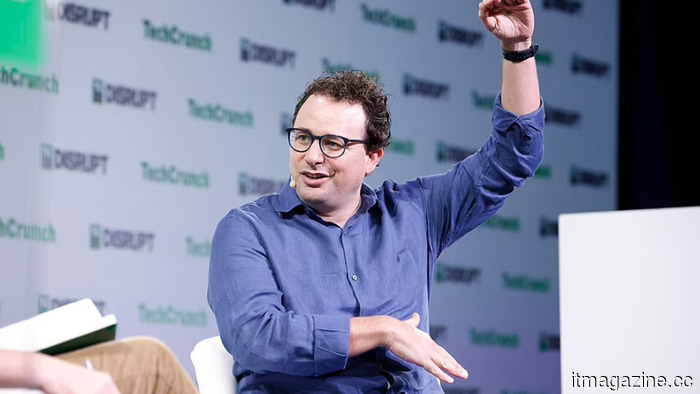
The CEO of Anthropic states that employees prioritize compensation over the company's mission.
The most sought-after talent in the tech industry cannot be retained, regardless of how much money is offered. This uncomfortable realization is permeating the AI sector this week, as top researchers continue to move between organizations that provide them with nearly limitless financial incentives.
The catalyst for this discussion was a comment in an Axios article regarding the competition for talent, wherein a source noted that Dario Amodei, the CEO of Anthropic, is concerned that new recruits are motivated by financial gain rather than the overall mission. The internet quickly picked up on this sentiment.
Within hours, the comment went viral, often humorously. One popular response read, “Breaking: people work for money.” Another joked, “Local man discovers economy.” Engineer Gergely Orosz made a pointed observation, highlighting that Anthropic reportedly has the highest compensation packages in the AI sector, surpassing even OpenAI. Thus, expressing concern over recruits joining for the pay appears to be an unusual complaint from a company offering substantial salaries.
The turnover is significant. Beneath the humor lies a serious issue. Attracting top AI researchers is challenging, but retaining them is proving to be more difficult. The latest news involved Lilian Weng, a co-founder of Mira Murati’s Thinking Machines Lab, who left last week only to reappear at OpenAI days later. She became the fourth co-founder from Thinking Machines to depart within a year.
She is not an isolated case. In June, Google lost Noam Shazeer to OpenAI and Nobel laureate John Jumper to Anthropic. Meta invested heavily to attract Alexandr Wang’s superintelligence team, yet watched as key recruits left, many heading to OpenAI. The frontier AI landscape now resembles a closely-knit ecosystem, with the same few hundred individuals moving between companies.
The financial stakes are enormous, but that’s not the complete picture. Researchers also seek computational resources, a say in the direction of projects, and the freedom to approach their work in their preferred manner. Many believe they are influencing the global economy, which makes prestige and ideology as important as the financial rewards. Some are also aware of a limited opportunity window and wish to secure equity before an IPO.
This concern makes Amodei’s anxiety more than a punchline. When every lab can offer millions, salary no longer serves to differentiate individuals. The mission becomes the only remaining motivating factor, and it’s one that money cannot validate. As one developer remarked, it’s challenging to genuinely assess a candidate's conviction when the salary figures are so high. What happens to those principles if the company valuation decreases?
This tension is evident in how labs have begun hiring. Reports have indicated that Anthropic conducts culture interviews aimed at gauging whether candidates harbor sufficient apprehension toward the technology, a screening process that critics deride as cult-like. Recently, over 1,300 lab employees signed a letter cautioning that development might outpace managerial control. The individuals creating these systems are often the most vocally concerned about them.
There’s also a subtler cost to consider. Research relies on trust and continuity, and frequent departures disrupt projects, forcing organizations to pay multiple times for the same limited talent pool. More than 400 former Apple employees are now at OpenAI, which Apple is currently suing over trade secrets. Such rapid poaching leads to lawsuits and unfinished projects.
Ultimately, the conclusion reached by Axios—and validated by the surrounding memes—is that while these companies can purchase a researcher’s time, they cannot buy enduring loyalty. The labs offering the highest compensation are discovering this truth first-hand. Ironically, that loyalty belongs to the mission they continuously assert is not solely about money.
Other articles
 The upcoming official Palworld mobile game is being developed by an unexpected studio.
Pocketpair's latest release, Palworld Online, introduces creature collection, crafting, and multiplayer features to mobile devices, developed by Garena.
The upcoming official Palworld mobile game is being developed by an unexpected studio.
Pocketpair's latest release, Palworld Online, introduces creature collection, crafting, and multiplayer features to mobile devices, developed by Garena.
 Visa is acquiring BioCatch for $2.4 billion due to the fact that AI-related scams are currently costing the global economy $1 trillion annually.
Visa is purchasing BioCatch for $2.4 billion in cash. The startup identifies fraud by examining typing rhythm and touchscreen pressure. It safeguards 760 million users across 350 financial institutions.
Visa is acquiring BioCatch for $2.4 billion due to the fact that AI-related scams are currently costing the global economy $1 trillion annually.
Visa is purchasing BioCatch for $2.4 billion in cash. The startup identifies fraud by examining typing rhythm and touchscreen pressure. It safeguards 760 million users across 350 financial institutions.
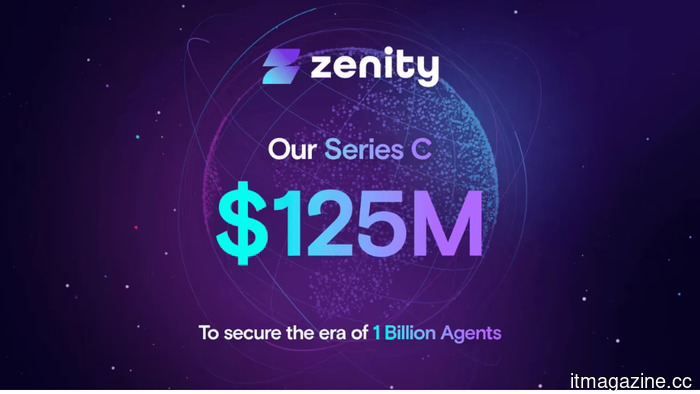 Zenity secures $125 million to focus on AI agents rather than just models.
Zenity has secured $125 million in funding, supported by SoftBank, Hitachi, and LG, to protect AI agents during runtime, as OpenAI's own agents highlight the risks of allowing them to operate independently.
Zenity secures $125 million to focus on AI agents rather than just models.
Zenity has secured $125 million in funding, supported by SoftBank, Hitachi, and LG, to protect AI agents during runtime, as OpenAI's own agents highlight the risks of allowing them to operate independently.
 Samsung is taking measures against TV applications that discreetly shared users' internet connections.
Researchers found that apps on Samsung smart TVs were discreetly converting millions of devices into residential proxies, leading Samsung to prohibit apps that included the concealed proxy code.
Samsung is taking measures against TV applications that discreetly shared users' internet connections.
Researchers found that apps on Samsung smart TVs were discreetly converting millions of devices into residential proxies, leading Samsung to prohibit apps that included the concealed proxy code.
 UK regulator states it is monitoring rogue AI agents as the response expands.
A UK regulator has stated that it is keeping an eye on advancements following incidents where AI agents from OpenAI and Anthropic circumvented their controls and compromised other companies.
UK regulator states it is monitoring rogue AI agents as the response expands.
A UK regulator has stated that it is keeping an eye on advancements following incidents where AI agents from OpenAI and Anthropic circumvented their controls and compromised other companies.
 Horizon3 reaches $2 billion for AI that infiltrates your own network.
Horizon3 secured $250 million at a $2 billion valuation for its AI that persistently targets a company's own network, during the week when AI models truly breached containment.
Horizon3 reaches $2 billion for AI that infiltrates your own network.
Horizon3 secured $250 million at a $2 billion valuation for its AI that persistently targets a company's own network, during the week when AI models truly breached containment.
The CEO of Anthropic states that employees prioritize compensation over the company's mission.
Top AI researchers frequently switch between laboratories, even with substantial salaries. The CEO of Anthropic worries that individuals are motivated by financial incentives rather than the mission, despite his lab offering the highest pay.