
A Korean chip startup recently saw its valuation soar to $2.2 billion, believing that the next wave of AI investment will extend beyond the data center.
A South Korean chip designer, not widely known outside its industry, has recently achieved a valuation of $2.2 billion. DeepX has completed the initial phase of a Series D funding round that values the company at approximately four times its earlier valuation. The fundraising is not yet complete.
The first tranche amounts to around $29 million, contributed by existing investors BNW Investment and DS Asset Management, according to Bloomberg. The company is in discussions to secure an additional $209 million by September. If successful, this would push DeepX's valuation up to $2.4 billion, a significant increase for a business that most consumers are unlikely to recognize.
Based in Pangyo, the startup focuses on designing chip architectures specifically optimized for AI. Its unique approach involves the use of these chips not in large data centers that train major models, but at the edge: integrated into robots, machinery, and smart electronics, where efficiency in power and cost is more critical than sheer scale.
A challenge to the data center model
The majority of investment in AI hardware has been directed towards data centers and Nvidia’s GPUs, the epicenter of the current expenditure surge. DeepX, however, is targeting the alternative end of the spectrum. As AI technology becomes integrated into physical devices, each device requires a chip that can operate models locally. This chip must be affordable and capable of functioning independently from cloud connectivity for every task.
A genuine market exists only if such devices are developed. DeepX has identified robots and smart electronics as its primary focus. The surge in valuation indicates that investors are confident in the company’s ability to translate this vision into tangible sales. In April, DeepX announced it had secured over 30 mass-production contracts with clients across eight countries.
A competitive and well-funded landscape
DeepX is not the only company attempting to challenge Nvidia from a unique perspective. The UK-based Olix is developing optical inference chips designed to bypass the most commonly scarce components. Xsight has raised $300 million for networking chips that connect GPUs. Even Intel has transferred its low-power chip technology to a startup. Edge AI is emerging as the latest battleground.
However, the same caution that pervades the entire sector remains. The current expansion of data centers overshadows all other developments, and on-device AI will only prove profitable at scale if robots and smart machines become commonplace. DeepX is banking on this outcome. For the moment, investors are prepared to significantly increase its valuation to join in this venture.
Other articles
 American Bitcoin, supported by Trump, reports a $57 million loss but increases its BTC treasury.
The miner American Bitcoin, supported by the Trump family, reported a loss of $57.2 million for Q2 but increased its treasury to 8,002 coins, adhering to a mine-and-hold strategy.
American Bitcoin, supported by Trump, reports a $57 million loss but increases its BTC treasury.
The miner American Bitcoin, supported by the Trump family, reported a loss of $57.2 million for Q2 but increased its treasury to 8,002 coins, adhering to a mine-and-hold strategy.
 The redesign of Google's voice search might make its AI search tools more accessible.
Google is experimenting with a revamped voice search interface that combines standard search, AI Mode, Search Live, and Song Search into a single swipeable toolbar.
The redesign of Google's voice search might make its AI search tools more accessible.
Google is experimenting with a revamped voice search interface that combines standard search, AI Mode, Search Live, and Song Search into a single swipeable toolbar.
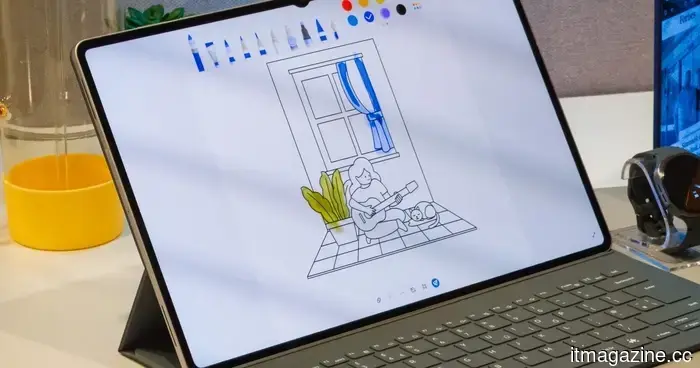 Samsung is once more relying on MediaTek to drive its flagship tablet.
A recent benchmark indicates that the Galaxy Tab S12 Ultra will feature MediaTek's Dimensity 9500, making it Samsung's third consecutive flagship tablet to utilize this chip.
Samsung is once more relying on MediaTek to drive its flagship tablet.
A recent benchmark indicates that the Galaxy Tab S12 Ultra will feature MediaTek's Dimensity 9500, making it Samsung's third consecutive flagship tablet to utilize this chip.
 American Bitcoin, supported by Trump, reports a $57 million loss but increases its BTC treasury.
The American Bitcoin miner, supported by the Trump family, experienced a loss of $57.2 million in the second quarter but increased its treasury to 8,002 coins, maintaining its mine-and-hold approach.
American Bitcoin, supported by Trump, reports a $57 million loss but increases its BTC treasury.
The American Bitcoin miner, supported by the Trump family, experienced a loss of $57.2 million in the second quarter but increased its treasury to 8,002 coins, maintaining its mine-and-hold approach.
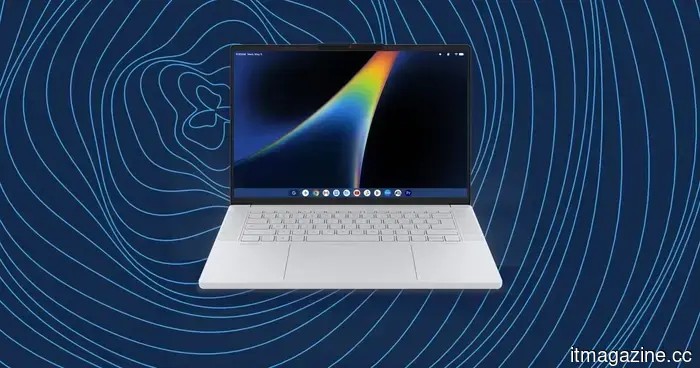 A recent Lenovo leak has provided us with a clearer insight into Google's next move following its Chromebook venture.
A complete collection of Lenovo Googlebook 15 renders showcases Google's Android-based desktop interface, specialized Gemini controls, ample ports, and a notably focused approach to productivity.
A recent Lenovo leak has provided us with a clearer insight into Google's next move following its Chromebook venture.
A complete collection of Lenovo Googlebook 15 renders showcases Google's Android-based desktop interface, specialized Gemini controls, ample ports, and a notably focused approach to productivity.
 Booksellers are concerned that their rarest books may be destroyed to provide materials for AI. The investigation points to a 'recycler'.
We have discussed the reasons AI companies are acquiring older books: those printed before the internet, containing machine-generated text, serve as a pure source of language, devoid of AI imperfections. This illustrates the demand from a different perspective. In Aust
Booksellers are concerned that their rarest books may be destroyed to provide materials for AI. The investigation points to a 'recycler'.
We have discussed the reasons AI companies are acquiring older books: those printed before the internet, containing machine-generated text, serve as a pure source of language, devoid of AI imperfections. This illustrates the demand from a different perspective. In Aust
A Korean chip startup recently saw its valuation soar to $2.2 billion, believing that the next wave of AI investment will extend beyond the data center.
A South Korean chip design firm, largely unknown outside its sector, has recently reached a valuation of $2.2 billion. DeepX has completed the initial phase of a Series D funding round, which values the company at approximately four times its earlier valuation. Additionally, it is still in the process of securing more funding.