
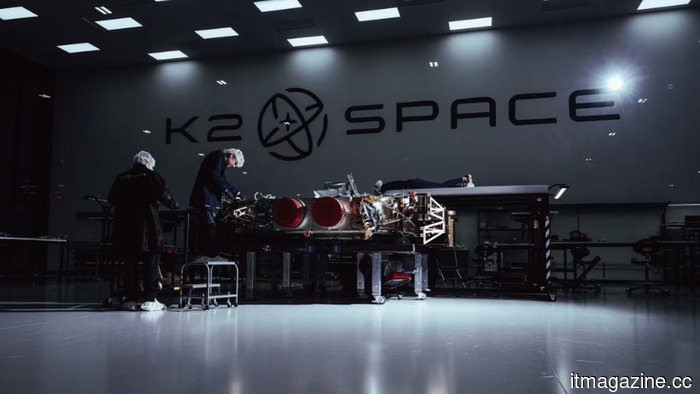
While others are reducing the size of satellites, K2 secured $500 million to develop large satellites and deploy AI in space.
Many satellite startups are focused on developing smaller satellites, but K2 Space is intentionally taking the opposite approach. Recently, the company secured $500 million in funding to expand its operations.
On Thursday, K2 announced it had completed a $500 million Series D funding round, achieving a valuation of $6.8 billion. This round was led by Kleiner Perkins and ICONIQ, with additional backing from Alphabet’s CapitalG, Lightspeed, and ARK Invest. This valuation more than doubles the $3 billion it was worth just a few months ago. K2 has raised over $1 billion in total, supported by more than $1 billion in signed contracts.
The company’s strategy is unconventional. While most of the industry aims to produce smaller satellites to reduce launch expenses, K2 believes that larger satellites with higher power capacity can achieve more in orbit.
Evidence of this approach is already in space. Its first "mega-class" satellite, Gravitas, launched successfully in March aboard a SpaceX Falcon 9 rocket. Weighing two tons and generating 20 kilowatts of power, it carries multiple payloads for clients, including the U.S. military, according to GeekWire.
K2 manufactures over 85% of each satellite in-house. Its manufacturing facility in Torrance, California, spans 180,000 square feet and is designed to produce up to 100 satellites annually. The company asserts that this in-house production model enables it to create large satellites efficiently and cost-effectively.
A significant portion of K2's contracts is with military clients. The company intends to deliver 30 satellites for SES’s meoSphere network, construct spacecraft for the Anduril-led Golden Dome missile defense initiative, and serve as a bus provider for a U.S. Space Force satcom project, marking its first official contract with the Pentagon. This aligns with a broader trend of increased investment in the defense space sector.
Looking ahead, K2 has an ambitious plan for late 2028, when it aims to launch a 100-kilowatt “Giga” satellite designed to facilitate “massive amounts of compute on orbit.” In more straightforward terms, this represents a move toward establishing AI data centers in space, a concept highlighted by its CEO in a conversation with Bloomberg.
K2 was established in 2022 by brothers Karan and Neel Kunjur, the latter having previously worked as an engineer at SpaceX. This funding round occurs amidst a surge in investment across various sectors of the space industry, including launch services, defense, and orbital infrastructure.
However, there are significant risks involved. Manufacturing 100 large satellites annually is a manufacturing challenge that has yet to be accomplished, and space-based data centers are still several years away from being a reality and remain unproven. K2's upcoming mission, Trinity, plans to deploy multiple satellites in early 2027. The transition from one satellite to hundreds is their objective, and whether orbit will become the next location for data centers is the larger gamble they are taking.
Other articles
 The chips that connect GPUs are now the sought-after commodity. Xsight has secured $300 million to offer an open version.
The surge in artificial intelligence has brought GPUs into the spotlight. Meanwhile, the unassuming chips that connect thousands of these GPUs are quietly increasing in value. Xsight Labs, an Israeli semiconductor company, announced on Thursday that it has secured over $300 million at a valuation of $2.8 billion.
The chips that connect GPUs are now the sought-after commodity. Xsight has secured $300 million to offer an open version.
The surge in artificial intelligence has brought GPUs into the spotlight. Meanwhile, the unassuming chips that connect thousands of these GPUs are quietly increasing in value. Xsight Labs, an Israeli semiconductor company, announced on Thursday that it has secured over $300 million at a valuation of $2.8 billion.
 The true advantage of AI emerges when entrepreneurs cease to restrict their own potential.
Kirk Drake, the founder of CU 2.0, states that the primary barrier to AI adoption isn't the cost or complexity; rather, it's the assumptions that entrepreneurs hold about the technology. Many organizations already possess the knowledge necessary for AI but have yet to structure it effectively.
The true advantage of AI emerges when entrepreneurs cease to restrict their own potential.
Kirk Drake, the founder of CU 2.0, states that the primary barrier to AI adoption isn't the cost or complexity; rather, it's the assumptions that entrepreneurs hold about the technology. Many organizations already possess the knowledge necessary for AI but have yet to structure it effectively.
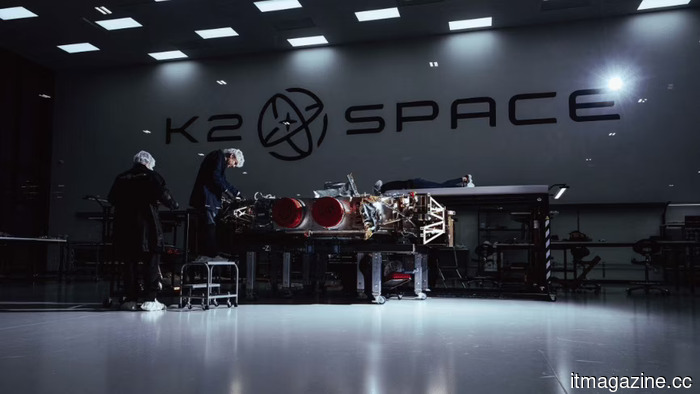 While others are downsizing satellites, K2 has secured $500 million to develop large ones and deploy AI in space.
While most satellite startups are competing to create smaller devices, K2 Space is intentionally taking a different approach by pursuing larger designs. On Thursday, the company announced it has secured $500 million in Series D funding, boosting its valuation to $6.8 billion.
While others are downsizing satellites, K2 has secured $500 million to develop large ones and deploy AI in space.
While most satellite startups are competing to create smaller devices, K2 Space is intentionally taking a different approach by pursuing larger designs. On Thursday, the company announced it has secured $500 million in Series D funding, boosting its valuation to $6.8 billion.
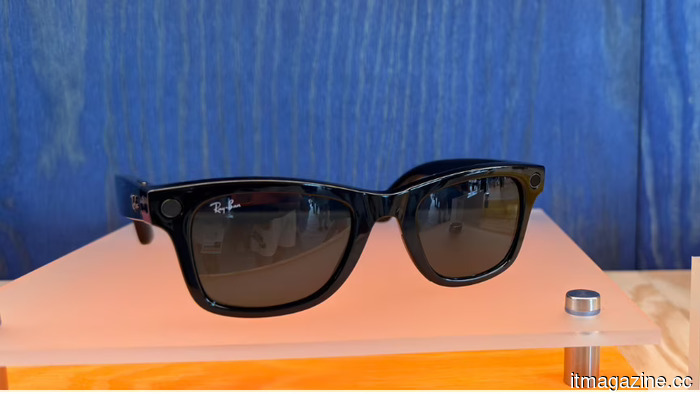 A $2 sticker breaks the one element that keeps Meta's 'pervert glasses' intact.
Meta's solution to the issue of "pervert glasses" was to include a small light that activates when the camera is recording, serving as a warning to those in proximity. A sticker priced at a few dollars can deactivate this light. Engadget's Karissa Bell experimented with these workarounds.
A $2 sticker breaks the one element that keeps Meta's 'pervert glasses' intact.
Meta's solution to the issue of "pervert glasses" was to include a small light that activates when the camera is recording, serving as a warning to those in proximity. A sticker priced at a few dollars can deactivate this light. Engadget's Karissa Bell experimented with these workarounds.
 Google's much-anticipated competitor to AirTag has just been revealed ahead of its release under a recognizable name.
The Pixel Tag has been revealed prior to Google's major event, suggesting that it may soon be simpler to locate lost keys and wallets.
Google's much-anticipated competitor to AirTag has just been revealed ahead of its release under a recognizable name.
The Pixel Tag has been revealed prior to Google's major event, suggesting that it may soon be simpler to locate lost keys and wallets.
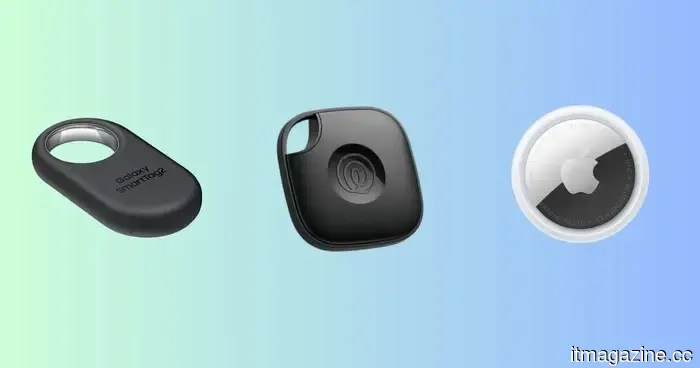 Google's highly anticipated competitor to AirTag has just been revealed ahead of its launch under a recognizable name.
The Pixel Tag has been revealed before Google's major event, suggesting that it might soon be simpler to locate lost keys and wallets.
Google's highly anticipated competitor to AirTag has just been revealed ahead of its launch under a recognizable name.
The Pixel Tag has been revealed before Google's major event, suggesting that it might soon be simpler to locate lost keys and wallets.
While others are reducing the size of satellites, K2 secured $500 million to develop large satellites and deploy AI in space.
While most satellite startups are focused on developing smaller models, K2 Space is intentionally pursuing a different path by opting for larger designs. The company announced on Thursday that it has secured $500 million in Series D funding, bringing its valuation to $6.8 billion.