
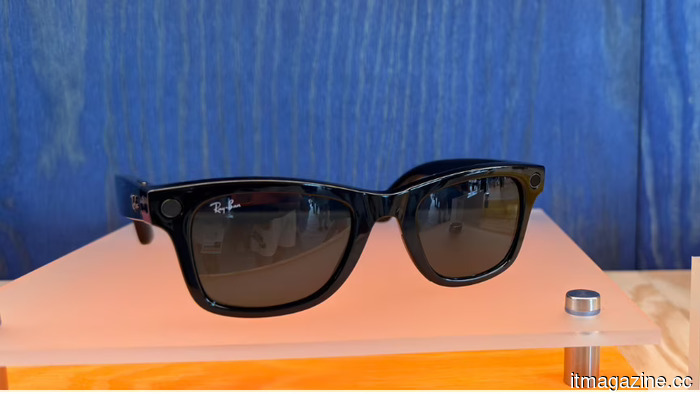
A $2 sticker breaks the one element that keeps Meta's 'pervert glasses' intact.
Meta's solution to the issue of "pervert glasses" was to install a small light that activates when the camera is recording, serving as a warning to those nearby. However, a sticker priced at just a few dollars can deactivate this light.
Engadget’s Karissa Bell experimented with some inexpensive LED-blocking stickers marketed as “privacy” products. One kit was available for $16.99 for a dozen stickers. When she tested them on her second-generation Ray-Ban Meta glasses outdoors, the recording light was imperceptible and did not trigger Meta’s tamper alert.
This situation reveals a clever yet problematic aspect. Meta implemented a mandatory update that disables the camera if the LED is physically damaged, but the stickers don’t actually break it. They allow just enough light to sneak past the sensor, preventing any alarms from sounding, making it difficult to identify who might be obscuring the light.
However, this crackdown was already proving ineffective. The stickers were introduced weeks after Meta declared a prohibition on individuals filming themselves harassing strangers with the glasses, but the enforcement isn't effective. An investigation by Oligarch Watch, highlighted by Futurism, discovered hundreds of such videos still active on Meta’s platforms.
Many originate from “pickup artists” who confront women in public and film themselves rating their bodies. One account has shared numerous clips since the ban, while another creator with over 500,000 followers garners millions of views for mocking women's weight on the street. In one video, a man records a girl who tells him she is 17 years old.
Some flagged accounts were removed following the report, but this is just a minor improvement. Instagram’s head, Adam Mosseri, had vowed to take action "in every way we can." Meta has now indicated it is looking into methods for detecting tampering, will remove the listings selling such stickers, and will ban repeat offenders.
The recording light isn't the only concern. Meta's glasses have put the wearers at risk, as contractors have reportedly reviewed sensitive footage captured by these devices, and Meta employs some clips for training its AI. Their plans for facial recognition have raised alarms among US lawmakers and privacy advocates.
Competitors are facing similar challenges. Reports indicate that Apple has struggled with the decision of whether to include a camera, apprehensive about a potentially negative perception. Creating a face computer that people can trust is proving to be more challenging than simply making one that sells.
Despite the controversies, sales remain strong. Revenue from smart glasses nearly doubled year-over-year in the second quarter, as reported by Ray-Ban manufacturer EssilorLuxottica, according to Gizmodo. Meta sold roughly 7 million pairs in 2025. While the backlash is vociferous, sales figures are booming.
Interestingly, there’s also an element of irony. DuckDuckGo has launched $35 sunglasses that contain no camera, microphone, or AI, promoted as “anti-surveillance eyewear.” They are part of a small selection of camera-free glasses. Currently, both the recording glasses and the ones that deliberately do not record are experiencing significant sales.
Other articles
 Oracle integrated its competitor's AI into its business applications, leading to an 8% increase in its stock.
Oracle has recently integrated its cloud competitor's AI into the software used by its customers to operate their businesses. This move was well-received by investors. On Thursday, the company announced that it is enhancing its partnership with Google Cloud to incorporate Gemini into Oracle’s enterprise offerings.
Oracle integrated its competitor's AI into its business applications, leading to an 8% increase in its stock.
Oracle has recently integrated its cloud competitor's AI into the software used by its customers to operate their businesses. This move was well-received by investors. On Thursday, the company announced that it is enhancing its partnership with Google Cloud to incorporate Gemini into Oracle’s enterprise offerings.
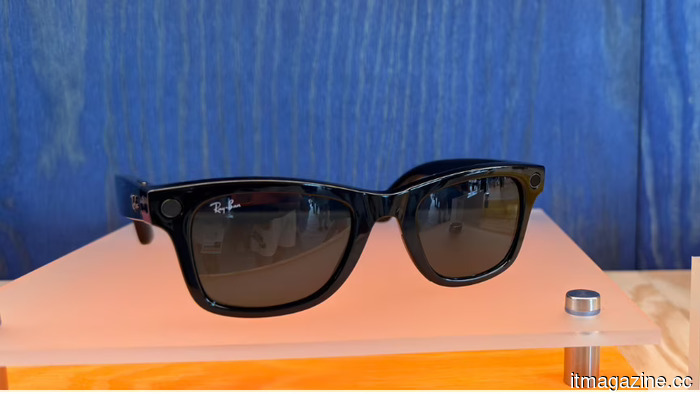 A $2 sticker undermines the single element that keeps Meta's 'pervert glasses' intact.
Meta's solution to the issue of "pervert glasses" involved a small light that activates when the camera is recording, serving as a warning to those nearby. However, a sticker priced at a few dollars can turn it off. Karissa Bell from Engadget evaluated these workarounds.
A $2 sticker undermines the single element that keeps Meta's 'pervert glasses' intact.
Meta's solution to the issue of "pervert glasses" involved a small light that activates when the camera is recording, serving as a warning to those nearby. However, a sticker priced at a few dollars can turn it off. Karissa Bell from Engadget evaluated these workarounds.
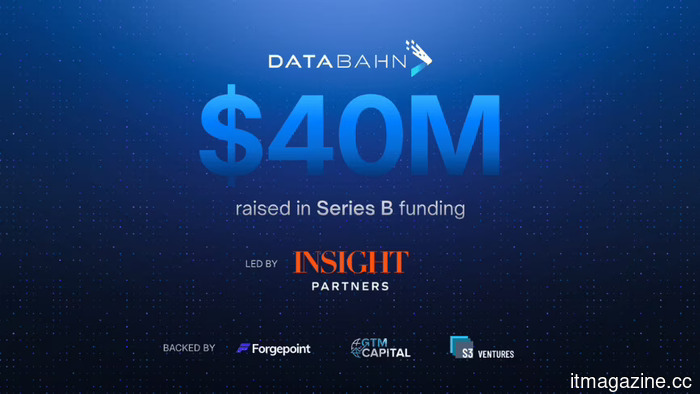 The unattractive layer of AI agents that is essential: DataBahn secures $40 million to market it.
The captivating aspect of AI lies in the models themselves, while the costly and less glamorous task involves supplying them with accurate data. A startup has recently secured $40 million, believing that this responsibility represents the next significant enterprise component. DataBahn, a Texas-based company established in 2023, has completed...
The unattractive layer of AI agents that is essential: DataBahn secures $40 million to market it.
The captivating aspect of AI lies in the models themselves, while the costly and less glamorous task involves supplying them with accurate data. A startup has recently secured $40 million, believing that this responsibility represents the next significant enterprise component. DataBahn, a Texas-based company established in 2023, has completed...
 The true advantage of AI arises when entrepreneurs cease to restrict their own capabilities.
Kirk Drake, the founder of CU 2.0, points out that the primary barrier to adopting AI is not related to cost or complexity, but rather the preconceived notions entrepreneurs hold about the technology. Many organizations possess the knowledge required for AI, but they've yet to structure it effectively.
The true advantage of AI arises when entrepreneurs cease to restrict their own capabilities.
Kirk Drake, the founder of CU 2.0, points out that the primary barrier to adopting AI is not related to cost or complexity, but rather the preconceived notions entrepreneurs hold about the technology. Many organizations possess the knowledge required for AI, but they've yet to structure it effectively.
 The Spotlight algorithm on Snapchat now prioritizes videos created by humans rather than those generated by AI.
Snapchat will cease recommending entirely AI-generated videos on Spotlight, prioritizing genuine human-created content, while still permitting AI-edited videos to be featured.
The Spotlight algorithm on Snapchat now prioritizes videos created by humans rather than those generated by AI.
Snapchat will cease recommending entirely AI-generated videos on Spotlight, prioritizing genuine human-created content, while still permitting AI-edited videos to be featured.
 While others are reducing the size of satellites, K2 has secured $500 million to create large satellites and deploy AI in space.
While most satellite startups are competing to develop smaller systems, K2 Space is intentionally taking a different approach by focusing on larger designs. The company recently secured $500 million from investors to continue its expansion. K2 announced on Thursday that it raised a $500 million Series D round at a valuation of $6.8 billion.
While others are reducing the size of satellites, K2 has secured $500 million to create large satellites and deploy AI in space.
While most satellite startups are competing to develop smaller systems, K2 Space is intentionally taking a different approach by focusing on larger designs. The company recently secured $500 million from investors to continue its expansion. K2 announced on Thursday that it raised a $500 million Series D round at a valuation of $6.8 billion.
A $2 sticker breaks the one element that keeps Meta's 'pervert glasses' intact.
Meta's solution to the issue of "pervert glasses" was to include a small light that activates when the camera is recording, serving as a warning to those in proximity. A sticker priced at a few dollars can deactivate this light. Engadget's Karissa Bell experimented with these workarounds.