
While others are downsizing satellites, K2 has secured $500 million to develop large ones and deploy AI in space.
Most satellite startups are focused on developing smaller satellites, but K2 Space is intentionally taking a different approach by aiming for larger ones. The company recently secured $500 million from investors to continue this expansion.
On Thursday, K2 announced it completed a $500 million Series D funding round at a valuation of $6.8 billion. The investment round was led by Kleiner Perkins and ICONIQ, with participation from Alphabet’s CapitalG, Lightspeed, and ARK Invest. This new funding has more than doubled its previous valuation of $3 billion from just a few months ago. To date, K2 has raised over $1 billion, backed by more than $1 billion in signed contracts.
This strategy is unconventional, as the majority of the industry is opting for smaller satellites to reduce launch expenses. K2, however, contends that the key factor in orbit is power, which dictates a satellite's capabilities, leading them to focus on building large, high-power satellites.
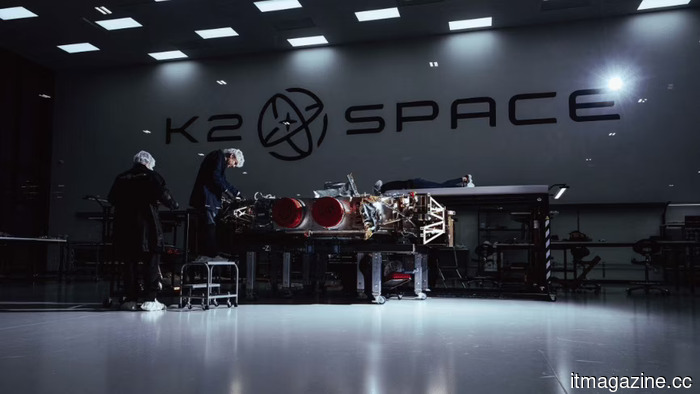
Evidence of this approach is already in space. Its first "mega-class" satellite, Gravitas, was launched into orbit in March aboard a SpaceX Falcon 9. This satellite weighs two tons, produces 20 kilowatts of power, and carries multiple payloads for various clients, including the US military, according to GeekWire.
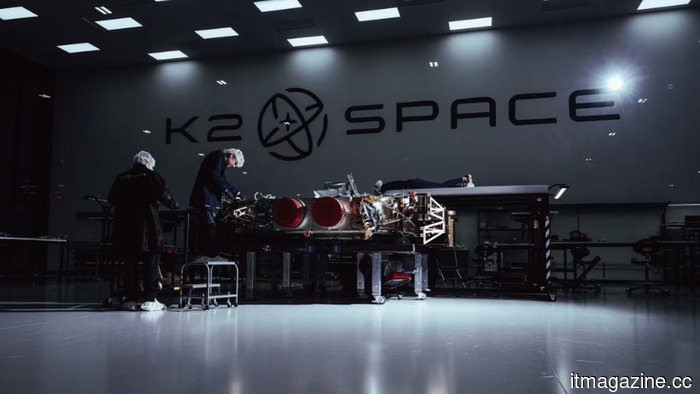
K2 assembles more than 85% of each satellite internally. Its 180,000-square-foot facility in Torrance, California, is designed to produce up to 100 satellites annually. The company claims that this in-house manufacturing model enables them to build large satellites quickly and at a lower cost.
A significant portion of K2's demand comes from military contracts. The company will provide 30 satellites for SES’s meoSphere network, develop spacecraft for the Anduril-led Golden Dome missile defense program, and serve as a bus provider for a US Space Force satcom initiative, marking its first official project with the Pentagon. This aligns with a broader trend of increased funding in the defense space sector.
Looking further ahead, K2 has a more ambitious goal. By late 2028, it intends to launch a 100-kilowatt "Giga" satellite designed to handle "massive amounts of compute in orbit." Essentially, this represents a move toward establishing AI data centers in space, a concept that was mentioned by its CEO to Bloomberg.
Founded in 2022 by brothers Karan and Neel Kunjur, the latter of whom is a former SpaceX engineer, K2’s funding arrives during a surge of investment across various sectors of the space industry including launch operations, defense, and orbital infrastructure.
There are notable risks involved. Achieving the production of 100 large satellites each year is a manufacturing challenge that no one has successfully met, and the concept of space-based data centers is still years away from realization and remains untested. K2's upcoming mission, Trinity, involves launching multiple satellites in early 2027. The company's gamble is to escalate from a single satellite to numerous ones, with the future of orbit as a data center location being part of their broader bet.
Other articles
 While others are reducing the size of satellites, K2 secured $500 million to develop large satellites and deploy AI in space.
While most satellite startups are focused on developing smaller models, K2 Space is intentionally pursuing a different path by opting for larger designs. The company announced on Thursday that it has secured $500 million in Series D funding, bringing its valuation to $6.8 billion.
While others are reducing the size of satellites, K2 secured $500 million to develop large satellites and deploy AI in space.
While most satellite startups are focused on developing smaller models, K2 Space is intentionally pursuing a different path by opting for larger designs. The company announced on Thursday that it has secured $500 million in Series D funding, bringing its valuation to $6.8 billion.
 The true benefit of AI emerges when entrepreneurs cease to restrict their own capabilities.
Kirk Drake, the founder of CU 2.0, asserts that the primary barrier to AI adoption isn't cost or complexity, but rather the preconceived notions that entrepreneurs have about the technology. Many organizations already possess the knowledge required for AI but have never structured it effectively.
The true benefit of AI emerges when entrepreneurs cease to restrict their own capabilities.
Kirk Drake, the founder of CU 2.0, asserts that the primary barrier to AI adoption isn't cost or complexity, but rather the preconceived notions that entrepreneurs have about the technology. Many organizations already possess the knowledge required for AI but have never structured it effectively.
 GM is developing its own in-vehicle AI assistant since Google’s Gemini is unable to access the information that the car possesses.
TL;DRGM is set to introduce a proprietary AI assistant later this year that surpasses Gemini by incorporating OnStar, vehicle telemetry, and predictive maintenance features. The specific LLM provider has not been disclosed. Gemini will remain in service. General Motors will debut its in-vehicle AI assistant.
GM is developing its own in-vehicle AI assistant since Google’s Gemini is unable to access the information that the car possesses.
TL;DRGM is set to introduce a proprietary AI assistant later this year that surpasses Gemini by incorporating OnStar, vehicle telemetry, and predictive maintenance features. The specific LLM provider has not been disclosed. Gemini will remain in service. General Motors will debut its in-vehicle AI assistant.
 The chips that connect GPUs are now the sought-after commodity. Xsight has secured $300 million to offer an open version.
The surge in artificial intelligence has brought GPUs into the spotlight. Meanwhile, the unassuming chips that connect thousands of these GPUs are quietly increasing in value. Xsight Labs, an Israeli semiconductor company, announced on Thursday that it has secured over $300 million at a valuation of $2.8 billion.
The chips that connect GPUs are now the sought-after commodity. Xsight has secured $300 million to offer an open version.
The surge in artificial intelligence has brought GPUs into the spotlight. Meanwhile, the unassuming chips that connect thousands of these GPUs are quietly increasing in value. Xsight Labs, an Israeli semiconductor company, announced on Thursday that it has secured over $300 million at a valuation of $2.8 billion.
 Apple might alter its iPhone launch approach, potentially impacting the standard iPhone the most.
Apple's iPhone releases have maintained a consistent pattern for many years. Each September, Apple unveils its latest flagship models, followed by a more budget-friendly "e" version that appears in the spring a few months later. This has been a straightforward formula, but it may not remain unchanged for long...
Apple might alter its iPhone launch approach, potentially impacting the standard iPhone the most.
Apple's iPhone releases have maintained a consistent pattern for many years. Each September, Apple unveils its latest flagship models, followed by a more budget-friendly "e" version that appears in the spring a few months later. This has been a straightforward formula, but it may not remain unchanged for long...
 The Galaxy S26 FE might repurpose the cameras that customers were hoping Samsung would update.
The Galaxy S26 FE might continue using the same 50MP main and 8MP telephoto sensors found in its predecessor, resulting in minimal potential for significant camera improvements.
The Galaxy S26 FE might repurpose the cameras that customers were hoping Samsung would update.
The Galaxy S26 FE might continue using the same 50MP main and 8MP telephoto sensors found in its predecessor, resulting in minimal potential for significant camera improvements.
While others are downsizing satellites, K2 has secured $500 million to develop large ones and deploy AI in space.
While most satellite startups are competing to create smaller devices, K2 Space is intentionally taking a different approach by pursuing larger designs. On Thursday, the company announced it has secured $500 million in Series D funding, boosting its valuation to $6.8 billion.