
AI search is becoming fragmented, outdated, and cluttered with advertisements.
A year prior, AI search was essentially represented by a single product known as ChatGPT. According to a new report, that time has already passed.
Similarweb’s 2026 Generative AI Landscape report reveals a market that is rapidly expanding while also fragmenting. Between June 2025 and May 2026, generative AI websites attracted 9.5 billion visits each month globally, marking a 70% increase from the previous year. App downloads rose to 4.4 billion, a 58% increase.
The surprising aspect is not the growth but the fragmentation. While ChatGPT remains the largest player, its dominance is diminishing.
ChatGPT continues to be the leading independent AI website, still substantial in size. However, Similarweb notes that its share of web visits has gradually declined as competitors like Gemini, Claude, Perplexity, and DeepSeek attract their own user bases.
The app data highlights who is gaining traction. Among monthly active users in the US, Meta AI surged by 435% and Claude by 349% year-on-year. Grok saw a rise of 117%, Perplexity 94%, and even ChatGPT increased by 87%. Gemini's growth was 31%, whereas two entities, Microsoft’s 365 Copilot and DeepSeek, experienced decreases of 31% and 23%, respectively.
Google's strategy: integrate AI into search
Google is not remaining idle. Its AI Overviews are appearing on an increasing number of US searches, with visits to its conversational AI Mode continuing to grow. Similarweb estimates that Overviews are featured on nearly 40% of US searches, enhancing the AI-native user journey.
This trend puts pressure on the open web. The only significant web category to decline over the past year was news, which dropped by 5%, even as AI chatbots expanded by 57%. Nevertheless, users are not abandoning Google: 95% of ChatGPT users also utilize Google.
AI search is evolving, while some choose to disengage
The demographic is shifting towards a more mature audience. In May 2024, individuals under 35 comprised 61% of gen-AI users, but by May 2026, that figure had decreased to 50%, with growth among users over 45. The report suggests that enduring adoption resembles parents signing up.
However, not everyone is participating. A younger demographic is intentionally avoiding AI, opting instead for tools without it. Among DuckDuckGo's no-AI search, 33% of users are ages 18 to 24, compared to 16% across the web as a whole.
Now, advertisements emerge
A prominent indication of a maturing market is the increasing presence of advertisements. In the US, the proportion of ChatGPT interactions featuring an ad rose from 14% in May 2026 to 26% the following month. Two-thirds of the ads appear only after the second prompt, and 65% of users continue the conversation once an ad is displayed.
The click-through rate sits at a modest 0.50%, with the initial advertisers being somewhat mundane: Resume.io, Monday.com, and Framer topped the list in June. Nonetheless, the trajectory is clear.
Implications for brands
For marketers, the report serves as a caution to take action. AI referral traffic is dramatically increasing, with marketplace referrals up 312%, news up 278%, and travel up 237% year on year. The proportion of ChatGPT responses that mention a web source has grown more than five times in one year, reaching 6.8%.
Being the brand suggested by AI is significant as well. Users visit an AI-recommended brand two to four times more frequently than a competitor. However, optimizing for AI search comes with its own challenges: the majority of referrals, 58.8%, lead to homepages, while the specific pages that ChatGPT references tend to be two or three layers deep.
“Discovery is no longer confined to a single destination,” stated Similarweb’s Baruch Toledano. One caveat persists in the data: these estimates from Similarweb are based on web and app traffic only, and do not account for API usage or AI integrated into other applications. Nevertheless, the trend is unmistakable.
Other articles
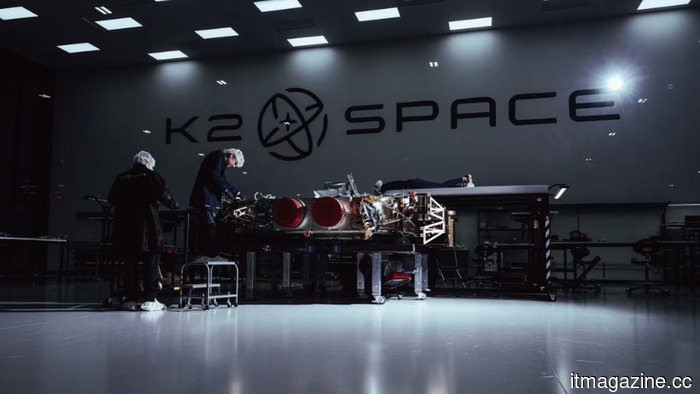 While others are reducing the size of satellites, K2 secured $500 million to develop large satellites and deploy AI in space.
While most satellite startups are focused on developing smaller models, K2 Space is intentionally pursuing a different path by opting for larger designs. The company announced on Thursday that it has secured $500 million in Series D funding, bringing its valuation to $6.8 billion.
While others are reducing the size of satellites, K2 secured $500 million to develop large satellites and deploy AI in space.
While most satellite startups are focused on developing smaller models, K2 Space is intentionally pursuing a different path by opting for larger designs. The company announced on Thursday that it has secured $500 million in Series D funding, bringing its valuation to $6.8 billion.
 The Spotlight algorithm on Snapchat now prioritizes videos created by humans rather than those generated by AI.
Snapchat will cease recommending entirely AI-generated videos on Spotlight, prioritizing genuine human-created content, while still permitting AI-edited videos to be featured.
The Spotlight algorithm on Snapchat now prioritizes videos created by humans rather than those generated by AI.
Snapchat will cease recommending entirely AI-generated videos on Spotlight, prioritizing genuine human-created content, while still permitting AI-edited videos to be featured.
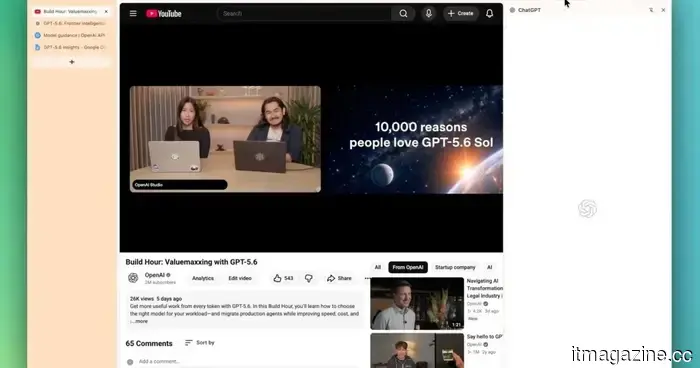 The Chrome extension for ChatGPT can now access your tabs, YouTube videos, and selected text.
OpenAI has enhanced the ChatGPT Chrome extension and desktop application by introducing tab awareness, support for YouTube, the ability to search through browsing history, and a new Activity view to monitor chats.
The Chrome extension for ChatGPT can now access your tabs, YouTube videos, and selected text.
OpenAI has enhanced the ChatGPT Chrome extension and desktop application by introducing tab awareness, support for YouTube, the ability to search through browsing history, and a new Activity view to monitor chats.
 Oracle incorporated its cloud competitor's AI into its business applications, resulting in an 8% increase in its stock.
Oracle has integrated its competitor's AI technology into the software that its customers utilize for their businesses, prompting a positive reaction from investors. The company announced on Thursday that it is enhancing its collaboration with Google Cloud to incorporate Gemini into Oracle's enterprise offerings.
Oracle incorporated its cloud competitor's AI into its business applications, resulting in an 8% increase in its stock.
Oracle has integrated its competitor's AI technology into the software that its customers utilize for their businesses, prompting a positive reaction from investors. The company announced on Thursday that it is enhancing its collaboration with Google Cloud to incorporate Gemini into Oracle's enterprise offerings.
 GM is developing its own in-vehicle AI assistant since Google’s Gemini is unable to access the information that the car possesses.
TL;DRGM is set to introduce a proprietary AI assistant later this year that surpasses Gemini by incorporating OnStar, vehicle telemetry, and predictive maintenance features. The specific LLM provider has not been disclosed. Gemini will remain in service. General Motors will debut its in-vehicle AI assistant.
GM is developing its own in-vehicle AI assistant since Google’s Gemini is unable to access the information that the car possesses.
TL;DRGM is set to introduce a proprietary AI assistant later this year that surpasses Gemini by incorporating OnStar, vehicle telemetry, and predictive maintenance features. The specific LLM provider has not been disclosed. Gemini will remain in service. General Motors will debut its in-vehicle AI assistant.
 The true advantage of AI emerges when entrepreneurs cease to restrict their own potential.
Kirk Drake, the founder of CU 2.0, states that the primary barrier to AI adoption isn't the cost or complexity; rather, it's the assumptions that entrepreneurs hold about the technology. Many organizations already possess the knowledge necessary for AI but have yet to structure it effectively.
The true advantage of AI emerges when entrepreneurs cease to restrict their own potential.
Kirk Drake, the founder of CU 2.0, states that the primary barrier to AI adoption isn't the cost or complexity; rather, it's the assumptions that entrepreneurs hold about the technology. Many organizations already possess the knowledge necessary for AI but have yet to structure it effectively.
AI search is becoming fragmented, outdated, and cluttered with advertisements.
A year ago, AI search was largely represented by a single product known as ChatGPT. However, a recent report indicates that this phase has already come to an end. The 2026 Generative AI Landscape report by Similarweb highlights a market that is both thriving and diversifying simultaneously. Generative AI we