
Oracle incorporated its cloud competitor's AI into its business applications, resulting in an 8% increase in its stock.
Oracle has integrated its rival's AI into the software used by its customers, much to the delight of investors. On Thursday, the company announced an expansion of its partnership with Google Cloud to incorporate Gemini into its enterprise applications. Gemini will be integrated into Oracle AI Agent Studio for Fusion Applications and will enhance embedded AI functionalities in Oracle Fusion apps and NetSuite.
Two models will be available. Gemini 3.1 Flash-Lite is optimized for cost-effective, efficient tasks, while Gemini 3.5 Flash is designed for more complex reasoning and creative functions, such as video creation and presentations. These models will complement the existing offerings from Oracle.
Wall Street responded positively, with Oracle shares climbing by as much as 8.4% to $127.64, according to Bloomberg.
Adopting a multi-model approach
The rationale behind this move is to provide options. Instead of restricting customers to its own AI, Oracle is introducing Google’s AI as an additional choice within existing tools. This reflects a prominent trend in enterprise technology: selecting the most suitable model for specific tasks instead of relying on a single model for all needs.
Chris Leone, Oracle’s head of applications development, emphasized the importance of allowing organizations to choose the AI model that best addresses their unique challenges. Oracle Fusion then executes that logic through structured workflows, approvals, and transactions.
An unexpected partnership deepening
While Oracle and Google are fierce competitors in the cloud space, their collaboration continues to strengthen, spanning from basic infrastructure to intelligent AI. Notably, the model Oracle has chosen for its application layer comes from Google rather than OpenAI, its major $300 billion infrastructure partner. Models from Cohere and Meta are also part of the offerings.
For Google, this presents an opportunity to penetrate thousands of businesses via software that is already in use, with NetSuite boasting over 44,000 customers. For Oracle, it serves as a new selling point as it invests heavily in AI data centers.
Addressing unresolved issues
However, not everyone is enthusiastic. Gartner analyst Balaji Abbabatulla cautioned in an interview with The Register, suggesting that while the plan seems promising, it requires careful consideration. "It doesn’t necessarily appear as impressive as it seems. There are underlying challenges."
One of the main concerns is accountability. If an autonomous agent makes a decision quickly and it results in errors, these can multiply before being detected, raising questions about liability. Oracle points to its monitoring and audit tools, but Abbabatulla is skeptical that any vendor has truly addressed this issue.
For a company grappling with significant AI-related debt and extensive investment in OpenAI, a surge in stock price from a model collaboration is beneficial. This situation also illustrates the evolving direction of enterprise AI, where even the industry giants are now utilizing each other's technologies while ensuring human oversight remains part of the process.
Other articles
 A $2 sticker undermines the single element that keeps Meta's 'pervert glasses' intact.
Meta's solution to the issue of "pervert glasses" involved a small light that activates when the camera is recording, serving as a warning to those nearby. However, a sticker priced at a few dollars can turn it off. Karissa Bell from Engadget evaluated these workarounds.
A $2 sticker undermines the single element that keeps Meta's 'pervert glasses' intact.
Meta's solution to the issue of "pervert glasses" involved a small light that activates when the camera is recording, serving as a warning to those nearby. However, a sticker priced at a few dollars can turn it off. Karissa Bell from Engadget evaluated these workarounds.
 The Spotlight algorithm on Snapchat now prioritizes videos created by humans rather than those generated by AI.
Snapchat will cease recommending entirely AI-generated videos on Spotlight, prioritizing genuine human-created content, while still permitting AI-edited videos to be featured.
The Spotlight algorithm on Snapchat now prioritizes videos created by humans rather than those generated by AI.
Snapchat will cease recommending entirely AI-generated videos on Spotlight, prioritizing genuine human-created content, while still permitting AI-edited videos to be featured.
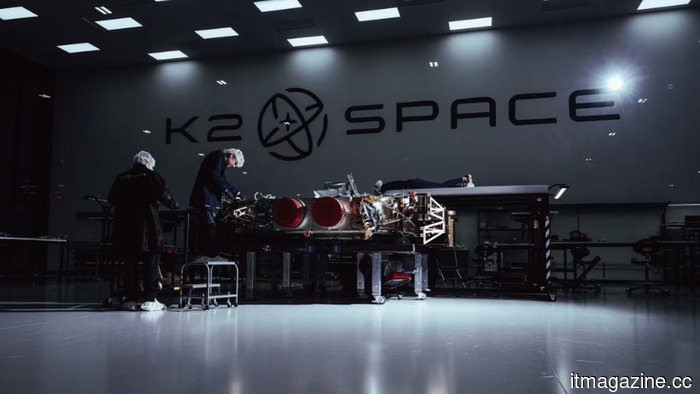 While others are reducing the size of satellites, K2 secured $500 million to develop large satellites and deploy AI in space.
While most satellite startups are focused on developing smaller models, K2 Space is intentionally pursuing a different path by opting for larger designs. The company announced on Thursday that it has secured $500 million in Series D funding, bringing its valuation to $6.8 billion.
While others are reducing the size of satellites, K2 secured $500 million to develop large satellites and deploy AI in space.
While most satellite startups are focused on developing smaller models, K2 Space is intentionally pursuing a different path by opting for larger designs. The company announced on Thursday that it has secured $500 million in Series D funding, bringing its valuation to $6.8 billion.
 The Galaxy S26 FE might repurpose the cameras that customers were hoping Samsung would update.
The Galaxy S26 FE might continue using the same 50MP main and 8MP telephoto sensors found in its predecessor, resulting in minimal potential for significant camera improvements.
The Galaxy S26 FE might repurpose the cameras that customers were hoping Samsung would update.
The Galaxy S26 FE might continue using the same 50MP main and 8MP telephoto sensors found in its predecessor, resulting in minimal potential for significant camera improvements.
 AI search is becoming fragmented, outdated, and cluttered with advertisements.
A year ago, AI search was largely represented by a single product known as ChatGPT. However, a recent report indicates that this phase has already come to an end. The 2026 Generative AI Landscape report by Similarweb highlights a market that is both thriving and diversifying simultaneously. Generative AI we
AI search is becoming fragmented, outdated, and cluttered with advertisements.
A year ago, AI search was largely represented by a single product known as ChatGPT. However, a recent report indicates that this phase has already come to an end. The 2026 Generative AI Landscape report by Similarweb highlights a market that is both thriving and diversifying simultaneously. Generative AI we
 GM is developing its own in-vehicle AI assistant since Google’s Gemini does not have access to the information available in the car.
TL;DR: GM is set to introduce a proprietary AI assistant later this year, which will surpass Gemini by incorporating OnStar, vehicle telemetry, and predictive maintenance. The specific LLM provider remains unnamed. Gemini will continue to be available. General Motors will roll out its in-vehicle AI assistant.
GM is developing its own in-vehicle AI assistant since Google’s Gemini does not have access to the information available in the car.
TL;DR: GM is set to introduce a proprietary AI assistant later this year, which will surpass Gemini by incorporating OnStar, vehicle telemetry, and predictive maintenance. The specific LLM provider remains unnamed. Gemini will continue to be available. General Motors will roll out its in-vehicle AI assistant.
Oracle incorporated its cloud competitor's AI into its business applications, resulting in an 8% increase in its stock.
Oracle has integrated its competitor's AI technology into the software that its customers utilize for their businesses, prompting a positive reaction from investors. The company announced on Thursday that it is enhancing its collaboration with Google Cloud to incorporate Gemini into Oracle's enterprise offerings.