
Simile secures $200 million to examine AI 'twins' of actual consumers.
A startup is advocating for companies to stop seeking opinions from real individuals and instead rely on artificial ones. Simile has secured $200 million at a $2 billion valuation to create “agentic twins,” AI representations of actual consumers that businesses can survey en masse.
Greenoaks led the funding round, as reported by the New York Times, with Index Ventures and others participating again. This is a rapid development for the year-old startup, which had raised $100 million less than six months prior.
Simulating non-existent respondents
Simile claims that it can forecast human behavior by simulating individuals. Companies utilize this technology to test new products or assess brand perceptions more quickly and affordably than through conventional market research.
Although the respondents are artificial, the clientele remains genuine. Last fall, CVS Health employed 400,000 agentic twins to determine strategies for encouraging patients to take their medications. Deloitte and the finance application Wealthfront also count among its clients.
The 💜 of EU tech
Stay updated on the latest developments in the EU tech landscape, along with insights from our knowledgeable founder Boris and some dubious AI-generated art. It's a free weekly newsletter delivered to your inbox. Sign up today!
“If you can simulate the world, you can essentially test numerous interventions,” stated Joon Sung Park, Simile’s 32-year-old CEO. He described the technology as “a window into humanity.”
Real humans created the fakes
The founders have roots in the research that initiated this area. Park established Simile based on a 2023 Stanford paper on AI agents that replicate human life, akin to an AI version of The Sims. His co-founders include Percy Liang, who contributed to the term “foundation model.”
The model originates from actual individuals. Simile conducted two-hour interviews with 1,000 representative participants and collaborated with Gallup to incorporate feedback from millions more. It asserts that its predictions are 85% to 99% accurate, depending on the demographic.
Pricing is based on demand. Simile charges according to the number of agents it simulates, which can range from hundreds of thousands to millions. “The larger the panel, the higher the price,” noted Park.
A bold and untested concept
The underlying idea is disputed. The accuracy claims come from Simile itself, and critics question whether AI representations can genuinely reflect human behavior. Competitors like Helm, Artificial Societies, and Aaru are pursuing similar objectives as part of a broader quest for tangible value from AI.
There is also an element of irony. Simile relies on authentic human data to create its artificial counterparts. This occurs in an environment already saturated with AI agents, where demonstrating one's authenticity has become a business in itself. According to Pulse 2.0, the company aims to model all eight billion people on the planet— a promise that enterprise clients will evaluate based on outcomes.
Other articles
 ByteDance leads China's AI earnings with $4 billion, integrating Lark into Doubao.
ByteDance currently generates approximately $4 billion annually from AI, the highest figure disclosed by any Chinese company, and is integrating its Lark app into Doubao along with its cloud division.
ByteDance leads China's AI earnings with $4 billion, integrating Lark into Doubao.
ByteDance currently generates approximately $4 billion annually from AI, the highest figure disclosed by any Chinese company, and is integrating its Lark app into Doubao along with its cloud division.
 Winamp is partnering with Deezer to introduce streaming capabilities to its legendary music player.
Winamp is collaborating with Deezer to integrate music streaming into its upcoming player, which is set to launch in the first half of 2027, while still maintaining local libraries, podcasts, and radio features.
Winamp is partnering with Deezer to introduce streaming capabilities to its legendary music player.
Winamp is collaborating with Deezer to integrate music streaming into its upcoming player, which is set to launch in the first half of 2027, while still maintaining local libraries, podcasts, and radio features.
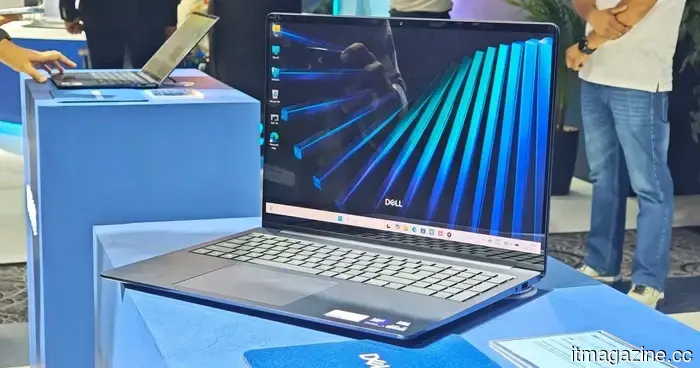 I tested Dell's latest slim laptops, and the new 14S is positioned nicely below the XPS pricing.
Dell's latest 14S and 16S models feature sleek aluminum designs, sizable batteries, OLED display options, and quicker Intel processors, all priced lower than the premium XPS 14.
I tested Dell's latest slim laptops, and the new 14S is positioned nicely below the XPS pricing.
Dell's latest 14S and 16S models feature sleek aluminum designs, sizable batteries, OLED display options, and quicker Intel processors, all priced lower than the premium XPS 14.
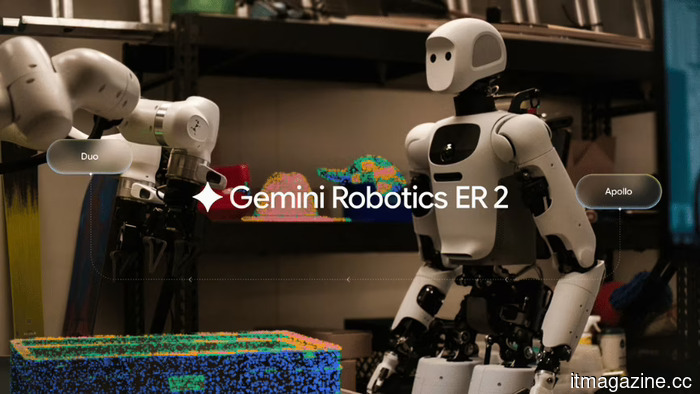 Gemini Robotics 2 from Google DeepMind manages entire humanoid robots.
Google DeepMind's Gemini Robotics 2 provides a single AI model with full-body control over humanoid robots, enabling them to collaborate as a team, although their dexterity remains behind.
Gemini Robotics 2 from Google DeepMind manages entire humanoid robots.
Google DeepMind's Gemini Robotics 2 provides a single AI model with full-body control over humanoid robots, enabling them to collaborate as a team, although their dexterity remains behind.
 LinkedIn introduces a 'This appears to be AI-generated content' button.
LinkedIn has introduced a “Seems like AI slop” button to identify posts generated by artificial intelligence, in response to its crackdown in May and a report indicating that 41% of long-form posts are AI-generated.
LinkedIn introduces a 'This appears to be AI-generated content' button.
LinkedIn has introduced a “Seems like AI slop” button to identify posts generated by artificial intelligence, in response to its crackdown in May and a report indicating that 41% of long-form posts are AI-generated.
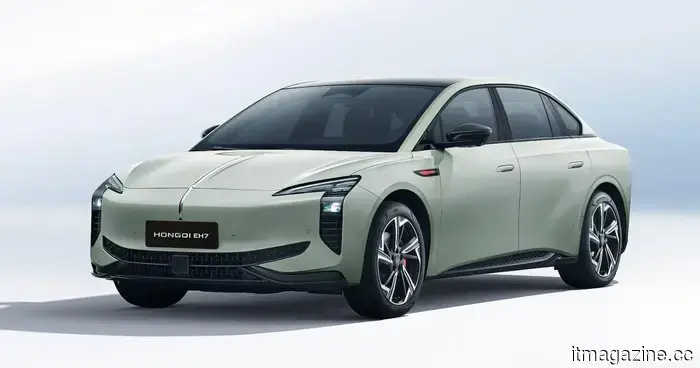 Hongqi claims that its latest EV technology can fully charge a battery in only eight minutes, surpassing BYD.
FAW's Hongqi brand asserts that its battery can be charged from 10% to 90% in less than 8 minutes, entering an intensifying competition in the Chinese EV charging market against BYD, CATL, and Geely.
Hongqi claims that its latest EV technology can fully charge a battery in only eight minutes, surpassing BYD.
FAW's Hongqi brand asserts that its battery can be charged from 10% to 90% in less than 8 minutes, entering an intensifying competition in the Chinese EV charging market against BYD, CATL, and Geely.
Simile secures $200 million to examine AI 'twins' of actual consumers.
Simile secured $200 million at a valuation of $2 billion to develop AI "agentic twins" that businesses can consult instead of conducting traditional market research.