
BYD is set to introduce its inaugural humanoid robot in August.
BYD is the leading seller of electric cars globally. Next month, it plans to introduce a robot to assist in selling vehicles.
China's largest electric vehicle manufacturer will present its first humanoid robot in August at its Di Space experience centers in Zhengzhou, as reported to the South China Morning Post. This will be a functional prototype rather than just a concept, allowing it to interact with visitors.
According to a now-deleted post by BYD cited by the Chinese outlet KrASIA, the robot has a name, “Xiao Di.” It will be a service humanoid that measures 1.61 meters in height, weighs 58.5 kg, and can translate between six Chinese dialects and six foreign languages in real-time. However, BYD has not officially verified these specifications.
Cars first, then everything else
The initiative begins in showrooms. Executive Vice President Stella Li envisions having two or three robots in each BYD store, greeting customers and providing information about the cars. She asserts that these robots will be there to assist human employees, not replace them.
The vision expands beyond this: in the medium term, it includes supermarkets, malls, and warehouses, with a long-term goal of integrating robots into homes for tasks like cleaning, cooking, and providing companionship. BYD plans to create an open platform to develop its own robots and collaborate with others.
The emphasis is on manufacturing. BYD already produces its own batteries, motors, and electronics on a large scale, and Li believes that cars and robots share similar foundations. This connection could allow BYD to create robots at a lower cost compared to independent startups.
Every car manufacturer is pursuing this path
BYD is not a pioneer; it is rather late to the game. Tesla's Optimus is the main competitor, but other Chinese automakers are also entering the field. Xpeng is testing its Iron robot, Li Auto is investigating various designs, and Chery’s Aimoga is already available for consumers.
This interest coincides with a surge in humanoids. In 2025, China produced approximately 20,000 humanoids and over 40,000 in the first half of 2026 alone, supported by government efforts for further development. Some predictions indicate that there could be tens of millions of robot workers within a decade.
The catch, and the timing
There is a significant motivation behind the rush for robots, though the outlook isn't entirely positive. BYD's vehicle sales are under pressure, suffering about a 16% decline in the first half of the year amid a fierce price war in China. A new growth avenue is certainly welcome.
However, a well-crafted demonstration does not equate to a viable business. Investors currently lack information on pricing, production timelines, and commercial applications to evaluate the initiative. Additionally, BYD has refuted reports regarding a dedicated factory for robots, leaving much still unverified.
Furthermore, international expansion is facing hurdles. This announcement comes at a time when the U.S. is beginning to impose restrictions on the import of Chinese robots, which may limit Xiao Di's access to one of its largest potential markets. For the moment, BYD’s robot has a singular role: to sell cars in China, directly from the showroom floor.
Other articles
 Winamp has made a comeback, featuring streaming powered by Deezer.
Winamp is set for another revival: a new player expected in 2027 will incorporate a Deezer-powered subscription in addition to your local files, radio, and podcasts.
Winamp has made a comeback, featuring streaming powered by Deezer.
Winamp is set for another revival: a new player expected in 2027 will incorporate a Deezer-powered subscription in addition to your local files, radio, and podcasts.
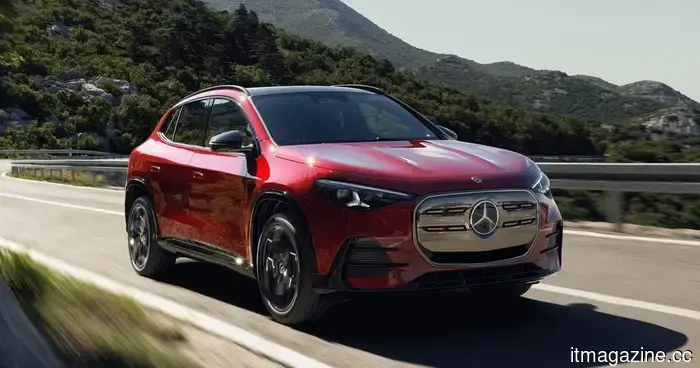 Mercedes-Benz unveils the 2028 GLA in two variants, featuring a host of impressive technology.
Mercedes-Benz unveiled the revamped 2028 GLA in both electric and hybrid versions, showcasing an 800-volt architecture, a range of up to 408 miles, and an AI-enhanced MBUX that includes Gemini and ChatGPT.
Mercedes-Benz unveils the 2028 GLA in two variants, featuring a host of impressive technology.
Mercedes-Benz unveiled the revamped 2028 GLA in both electric and hybrid versions, showcasing an 800-volt architecture, a range of up to 408 miles, and an AI-enhanced MBUX that includes Gemini and ChatGPT.
 Microsoft is combining its Copilots into a single AI super app.
This year, Microsoft is combining Copilot's chat, coding, Cowork, and autonomous agents into one AI "super app" that will cater to both consumer and enterprise needs.
Microsoft is combining its Copilots into a single AI super app.
This year, Microsoft is combining Copilot's chat, coding, Cowork, and autonomous agents into one AI "super app" that will cater to both consumer and enterprise needs.
 Senators caution Apple against using Chinese memory chips.
A bipartisan coalition of US senators has called on Apple to abandon its intentions to purchase memory chips from Chinese manufacturers CXMT and YMTC, citing concerns over national security.
Senators caution Apple against using Chinese memory chips.
A bipartisan coalition of US senators has called on Apple to abandon its intentions to purchase memory chips from Chinese manufacturers CXMT and YMTC, citing concerns over national security.
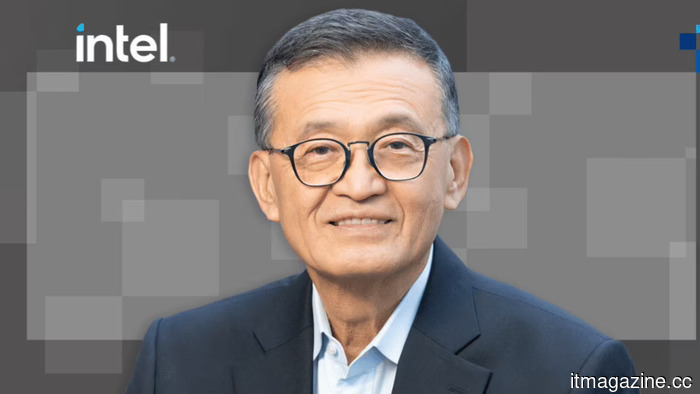 Intel transfers its Atom chip technology to a startup associated with its CEO.
Intel is granting the stealth startup Rosaic uncommon access to its Atom chip technology. Rosaic is led by a long-time co-investor of Intel's CEO, Lip-Bu Tan.
Intel transfers its Atom chip technology to a startup associated with its CEO.
Intel is granting the stealth startup Rosaic uncommon access to its Atom chip technology. Rosaic is led by a long-time co-investor of Intel's CEO, Lip-Bu Tan.
 A study reveals that the AI used by Amazon and Walmart can detect counterfeit 'Made in USA' labels but does not disclose this information.
The research shows that Amazon's AI responds to inquiries about products made in China without hesitation, while it restricts similar questions regarding "Made in USA" claims, highlighting an intriguing double standard on the platform.
A study reveals that the AI used by Amazon and Walmart can detect counterfeit 'Made in USA' labels but does not disclose this information.
The research shows that Amazon's AI responds to inquiries about products made in China without hesitation, while it restricts similar questions regarding "Made in USA" claims, highlighting an intriguing double standard on the platform.
BYD is set to introduce its inaugural humanoid robot in August.
BYD is set to introduce its initial humanoid robot, said to be named Xiao Di, in August, showcasing service robots in its showrooms as it explores embodied AI.