
BYD is set to launch its inaugural humanoid robot in August.
BYD leads the world in electric vehicle sales. In the coming month, the company plans to offer you a car through a robot.
China's largest EV manufacturer will introduce its first humanoid robot in August at its Di Space experience centers located in Zhengzhou, according to information from the South China Morning Post. This will be a functional prototype rather than just a concept, and it will interact with visitors.
Reports indicate that the robot has been named and assigned a role. According to a now-removed post from BYD cited by the Chinese outlet KrASIA, it is called “Xiao Di,” a service-oriented humanoid that stands 1.61 meters tall, weighs 58.5 kg, and can translate between six Chinese dialects and six foreign languages in real-time. However, BYD has not officially verified these specifications.
The strategy begins in the showroom. Executive vice-president Stella Li envisions having two or three robots in every BYD store to welcome customers and provide car information, emphasizing that these robots will complement human staff rather than replace them.
The vision expands further: in the medium term, the company aims to deploy robots in supermarkets, malls, and warehouses, and ultimately in homes for tasks like cleaning, cooking, and providing companionship. BYD plans to create an open platform for both its own robots and those developed in collaboration with others.
The company’s focus is on manufacturing. BYD already produces its own batteries, motors, and electronics on a large scale, and Li believes that the fundamental similarities between cars and robots allow for more affordable robot production compared to independent startups.
BYD is not a pioneer in this field; rather, it is entering the market later than others. Tesla’s Optimus serves as a prominent competitor, while other Chinese car manufacturers are also diving into the humanoid sector. Xpeng is testing its Iron robot, Li Auto is working on designs, and Chery’s Aimoga is already in the consumer market.
This surge in humanoid development is set against a backdrop of increased production in China. The country manufactured around 20,000 humanoids in 2025 and over 40,000 in the first half of 2026, largely due to government encouragement for greater production. Some predictions estimate that there could be tens of millions of robotic workers within the next decade.
However, there are challenges ahead. The urgency for robots is not solely optimistic; BYD’s automotive sector is experiencing difficulty, with sales dropping approximately 16% in the first half of the year due to intense price competition in China. A fresh growth narrative is certainly needed.
Yet, a polished demonstration doesn’t guarantee business success. Investors still lack a price, a production timeline, and verified deployments to evaluate. BYD has also refuted claims regarding a factory robot line, leaving many details unconfirmed.
Meanwhile, international prospects are dimming. This announcement coincides with the U.S. taking steps to prohibit imports of Chinese robots, which may hinder Xiao Di’s entry into one of its largest potential markets. For now, BYD’s robot has a singular purpose: sell cars in China from a showroom.
Other articles
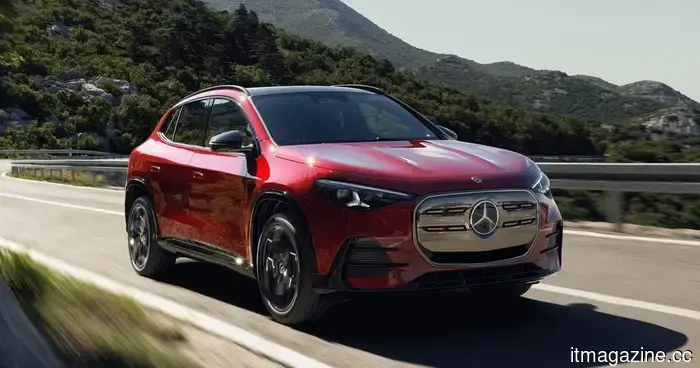 Mercedes-Benz unveils the 2028 GLA in two variants, featuring a host of impressive technology.
Mercedes-Benz unveiled the revamped 2028 GLA in both electric and hybrid versions, showcasing an 800-volt architecture, a range of up to 408 miles, and an AI-enhanced MBUX that includes Gemini and ChatGPT.
Mercedes-Benz unveils the 2028 GLA in two variants, featuring a host of impressive technology.
Mercedes-Benz unveiled the revamped 2028 GLA in both electric and hybrid versions, showcasing an 800-volt architecture, a range of up to 408 miles, and an AI-enhanced MBUX that includes Gemini and ChatGPT.
 The head of Mazda has indicated that the MX-5 Miata may potentially be offered in an electric version.
Mazda indicates that the upcoming MX-5 Miata is being developed with an electric future in consideration, while maintaining its lightweight sports car heritage.
The head of Mazda has indicated that the MX-5 Miata may potentially be offered in an electric version.
Mazda indicates that the upcoming MX-5 Miata is being developed with an electric future in consideration, while maintaining its lightweight sports car heritage.
 Agon secures $30 million to create Europe’s synthetic battlefield for defense AI.
Agon, established by former members of Anduril and Applied Intuition, has secured $30 million to develop a synthetic training environment for defense AI in Europe.
Agon secures $30 million to create Europe’s synthetic battlefield for defense AI.
Agon, established by former members of Anduril and Applied Intuition, has secured $30 million to develop a synthetic training environment for defense AI in Europe.
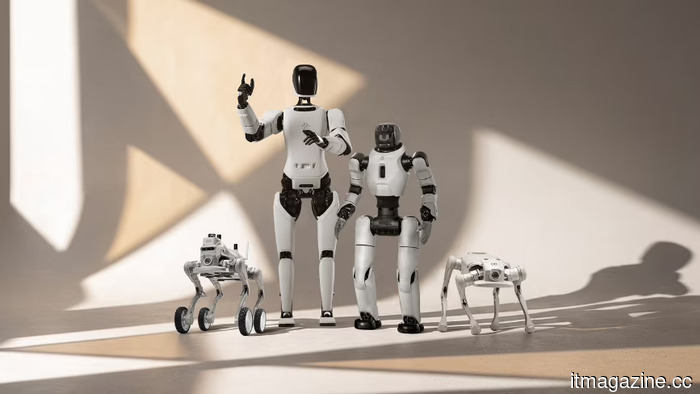 China warns of countermeasures in response to the US ban on robots.
China has warned of potential retaliation in response to the US prohibition on Chinese robot imports, using rare earths and access to Tesla and Nvidia markets as bargaining chips, according to the NYT.
China warns of countermeasures in response to the US ban on robots.
China has warned of potential retaliation in response to the US prohibition on Chinese robot imports, using rare earths and access to Tesla and Nvidia markets as bargaining chips, according to the NYT.
 Samsung presents a bleak forecast regarding pricing for mobile and PC devices.
Samsung anticipates that memory supply issues will worsen in 2027 and continue into 2028, increasing pressure on prices for phones and PCs.
Samsung presents a bleak forecast regarding pricing for mobile and PC devices.
Samsung anticipates that memory supply issues will worsen in 2027 and continue into 2028, increasing pressure on prices for phones and PCs.
 AI is targeting the lower-priced options on heavily trafficked flight paths.
Airlines are utilizing AI to adjust seat prices in real time, eliminating the discount fares that travelers previously discovered on popular routes.
AI is targeting the lower-priced options on heavily trafficked flight paths.
Airlines are utilizing AI to adjust seat prices in real time, eliminating the discount fares that travelers previously discovered on popular routes.
BYD is set to launch its inaugural humanoid robot in August.
BYD is set to launch its inaugural humanoid robot, said to be named Xiao Di, in August, integrating service robots into its showrooms as it advances into embodied AI.