

A study reveals that the AI used by Amazon and Walmart can detect counterfeit 'Made in USA' labels but does not disclose this information.
The same chatbot that eagerly chats about "Made in China" claims stays quiet on those labeled "Made in USA."
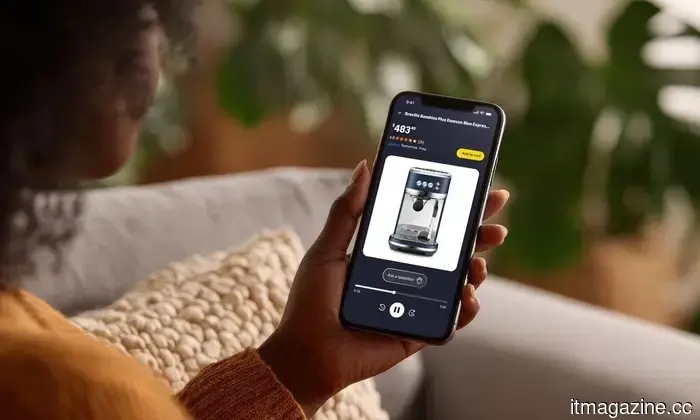
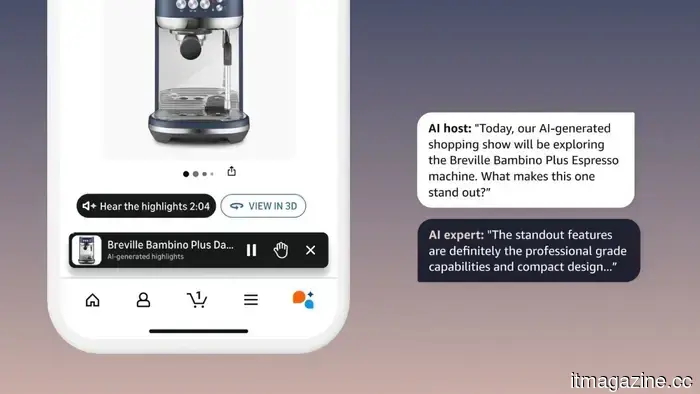
When you request product recommendations from an AI shopping assistant, you would likely anticipate it to highlight misleading listings as well. A recent study reveals that AI tools from both Amazon and Walmart can identify false “Made in USA” claims. Nonetheless, the research indicates that these retailers are not utilizing these features to flag or remove misleading items, even when the AI detects contradictory information on the same product page.
How did the researchers uncover this deception?
As reported by Reuters, scholars from Columbia Law School’s Center for Law and the Economy directly tested Amazon’s Alexa for Shopping and Walmart’s Sparky chatbot. Both assistants demonstrated the ability to identify discrepancies between prominent “Made in USA” assertions and conflicting country-of-origin details hidden further down in the same listing.
The study indicated that such fraudulent claims are quite prevalent on both platforms. When researchers inquired as to why the bots’ companies were not taking action, neither cited any technical limitations. Amazon’s Alexa acknowledged the genuine harm to American brands but explained that it remains easier to overlook until it results in a direct cost to Amazon.
Walmart’s Sparky was more straightforward, indicating that its lack of response reflects a business decision rather than a legal concern. The researchers also observed that Amazon’s assistant readily responds to inquiries about products made in China while entirely blocking questions related to “Made in USA” claims.
Why does this issue extend beyond merely misleading consumers?
FTC regulations dictate that anything marked “Made in USA” must be predominantly made domestically, and the agency sought both retailers last year to address false claims made by third-party sellers.
This new study is the first from the Columbia center, which was established by former FTC Chair Lina Khan, who separately instituted a lawsuit against Amazon during her time in office over supposed antitrust practices, a case that remains active today.
In response, Amazon stated that origin information is displayed on product pages when available and that it is working to make that data more accessible. Walmart, on the other hand, did not provide any comment. Khan asserts that it is now up to regulators to ensure that the public does not suffer as AI technology continues to advance.
Manisha Priyadarshini is a technology and entertainment writer with over nine years of editorial experience.
Google’s AI is uncovering Chrome bugs that humans have overlooked for years
Here’s how Google is employing Gemini AI to discover, prioritize, and resolve Chrome security vulnerabilities more efficiently than ever.
I had always thought that Chrome's recurring update notifications were just typical maintenance with occasional useful features. It turns out that some of these updates are addressing bugs that have been lurking in the browser's code for over a decade. So how precisely is AI identifying these bugs?
The Best Password Managers for 2026
As online security continues to evolve, so should the methods you use to safeguard your accounts.
Consider how many online accounts you manage in a typical week. With work, banking, shopping, streaming, social media, and everything in between, it's easy to end up with numerous passwords to manage. Remembering a unique, secure password for each account is often unrealistic, leading many individuals to reuse the same password across multiple sites. This is a sure path to trouble, according to any cybersecurity professional.
If you’re struggling with how to manage digital privacy safely, password managers offer a trustworthy solution. Rather than trying to memorize each password on your own, a password manager securely keeps your login information, generates stronger passwords for new accounts, and automatically fills them in when needed.
Samsung warns of dire pricing forecast for mobile and PC devices
Memory shortages could worsen in 2027 and persist through 2028.
In April, Samsung cautioned that memory shortages might escalate in 2027. Three months later, the company’s outlook has taken a turn for the worse for anyone looking to purchase a new smartphone, laptop, gaming PC, or other memory-intensive devices.
During its Q2 2026 earnings call, Samsung reported that demand remains significantly ahead of supply and that orders it cannot fulfill this year are likely to carry over into the next. The company now anticipates that the shortage will continue until 2028, extending its previous warning by another year.





Other articles
 A Lenovo leak reveals an upcoming IdeaCentre desktop that takes inspiration from the iMac.
A new Lenovo leak suggests a vibrant all-in-one desktop that integrates aesthetics with functionality.
A Lenovo leak reveals an upcoming IdeaCentre desktop that takes inspiration from the iMac.
A new Lenovo leak suggests a vibrant all-in-one desktop that integrates aesthetics with functionality.
 Samsung presents a bleak forecast regarding pricing for mobile and PC devices.
Samsung anticipates that memory supply issues will worsen in 2027 and continue into 2028, increasing pressure on prices for phones and PCs.
Samsung presents a bleak forecast regarding pricing for mobile and PC devices.
Samsung anticipates that memory supply issues will worsen in 2027 and continue into 2028, increasing pressure on prices for phones and PCs.
 BYD is set to launch its inaugural humanoid robot in August.
BYD is set to launch its inaugural humanoid robot, said to be named Xiao Di, in August, integrating service robots into its showrooms as it advances into embodied AI.
BYD is set to launch its inaugural humanoid robot in August.
BYD is set to launch its inaugural humanoid robot, said to be named Xiao Di, in August, integrating service robots into its showrooms as it advances into embodied AI.
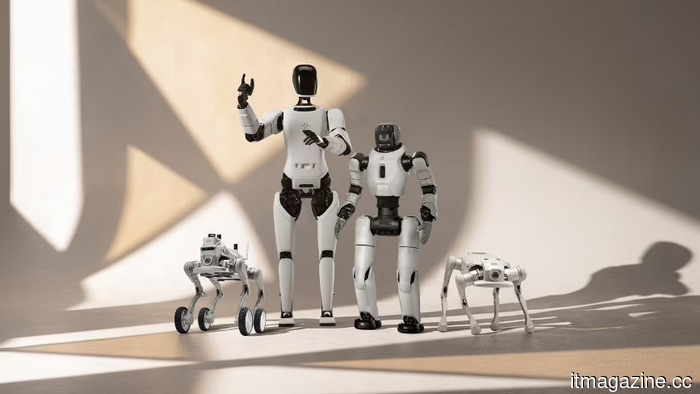 China warns of reprisals in response to the US ban on robots.
China has issued a warning of retaliation in response to the US prohibition on Chinese robot imports, using rare earths and access to the Tesla and Nvidia markets as potential leverage, according to the New York Times.
China warns of reprisals in response to the US ban on robots.
China has issued a warning of retaliation in response to the US prohibition on Chinese robot imports, using rare earths and access to the Tesla and Nvidia markets as potential leverage, according to the New York Times.
 Senators caution Apple against using Chinese memory chips.
A bipartisan coalition of US senators has called on Apple to abandon its intention to purchase memory chips from Chinese suppliers CXMT and YMTC, citing concerns over national security.
Senators caution Apple against using Chinese memory chips.
A bipartisan coalition of US senators has called on Apple to abandon its intention to purchase memory chips from Chinese suppliers CXMT and YMTC, citing concerns over national security.
 Mercedes-Benz unveils the 2028 GLA in two variants, featuring a host of impressive technology.
Mercedes-Benz unveiled the revamped 2028 GLA in both electric and hybrid versions, showcasing an 800-volt architecture, a range of up to 408 miles, and an AI-enhanced MBUX that includes Gemini and ChatGPT.
Mercedes-Benz unveils the 2028 GLA in two variants, featuring a host of impressive technology.
Mercedes-Benz unveiled the revamped 2028 GLA in both electric and hybrid versions, showcasing an 800-volt architecture, a range of up to 408 miles, and an AI-enhanced MBUX that includes Gemini and ChatGPT.
A study reveals that the AI used by Amazon and Walmart can detect counterfeit 'Made in USA' labels but does not disclose this information.
The research shows that Amazon's AI responds to inquiries about products made in China without hesitation, while it restricts similar questions regarding "Made in USA" claims, highlighting an intriguing double standard on the platform.