
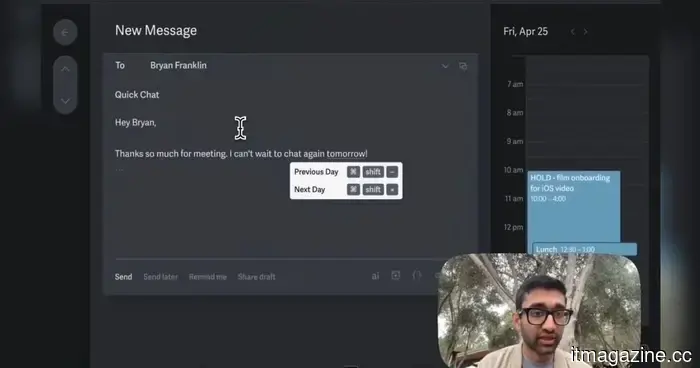
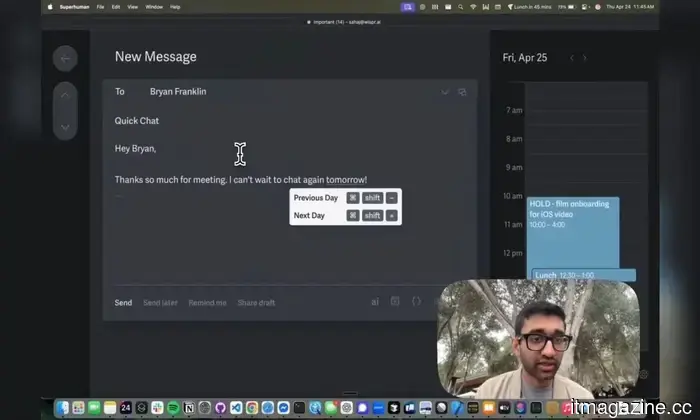
Wispr Flow has finally repaired its toolbar following complaints from hundreds of users.
Desktop users can now relocate the Flow Bar away from app controls.
Wispr Flow received over 700 responses from its critics when it asked for input on what wasn't functioning well, expecting around 50.
The first notable outcome is practical, albeit somewhat modest. An update to Wispr Flow now allows desktop users to shift the Flow Bar rather than keeping it fixed at the bottom of the screen.
This adjustment comes after a challenging period for the dictation app, during which issues with accuracy and reliability had already led to significant user dissatisfaction prior to Wispr opening its feedback channel.
Reasons behind the demand for moving the Flow Bar
Users can now drag the Flow Bar to either side of the screen, and it remembers its new position. In the past, the overlay could obscure controls like Gmail’s send button or the macOS Dock.
About a month ago, we invited Wispr Flow critics to share their thoughts, anticipating about 50 replies. However, over 700 detailed responses poured in, highlighting both the strong points and shortcomings. We compiled this feedback and the team is addressing it. To begin, if the…
One developer even created a separate Mac utility to reposition the bar. While Wispr's official solution took longer to deliver than users would have preferred, the dictation tool should finally stop obstructing users' interactions.
How Wispr aims to regain user trust
Repositioning the toolbar tackles a clear inconvenience. However, it will require more than just a more convenient location to rebuild trust after recent outages and performance inconsistencies.
Wispr reports a 99.9% uptime in dictation over the past weeks, and latency has decreased by 30% since the start of 2026. The company also identified some accuracy issues stemming from an overly aggressive Auto Cleanup setting that altered words without user consent.
The company asserts that it has rectified this issue. While the statistics appear promising, frequent users will ultimately evaluate the Wispr Flow update based on how often the app misinterprets their speech or becomes unresponsive.
What remains unclear from the 700 responses
Wispr has not disclosed the specific content of these hundreds of responses or which complaints it intends to address next. A movable toolbar indicates that the feedback campaign yielded more than just a cluttered inbox, but it does not demonstrate how thoroughly the company has listened.
The upcoming updates now have a defined purpose. Wispr must convert more of this feedback into actionable improvements while ensuring that dictation remains stable enough so users no longer require another survey to clarify what went wrong.
Paulo Vargas is an English major turned reporter turned technical writer, whose career has consistently revolved around...
Gemini is integrating with Google Play, providing insights into your spending habits.
Google Pay is allowing Gemini access to your financial data.
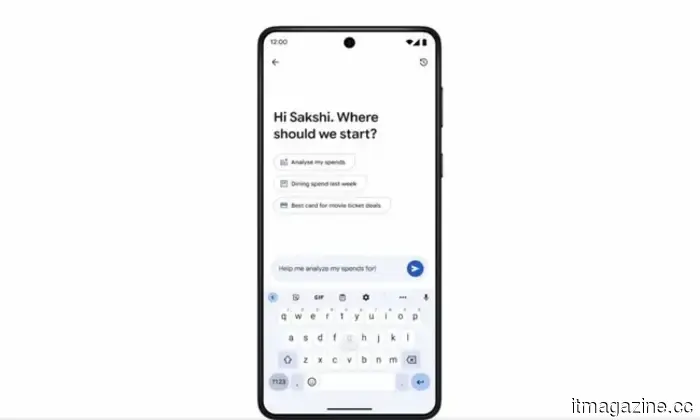
Checking transaction history on Google Pay can reveal your spending, but sifting through a long list of merchants and payments can become challenging. Google seems to recognize this, as it is introducing Gemini to Google Pay. The company has launched Ask Google Pay, an optional conversational AI feature within its payments app in India. Users can inquire about their spending, seek savings advice, and learn about financial topics. It will also provide personalized offers based on user behavior.
Gemini on Mac can now transcribe your speech and act based on what it sees.
The Gemini app for macOS has been updated to include system-wide dictation and an optional feature that utilizes screen context to manage complex requests.
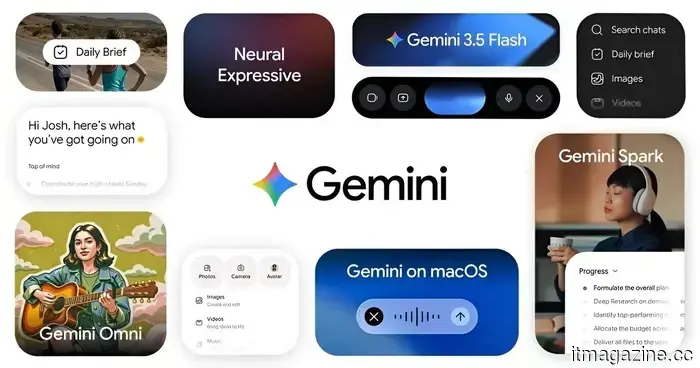
Having released Gemini Spark on macOS earlier this year, Google is now enhancing the Gemini app for Mac with two impactful features that could transform your productivity, whether by replacing your current AI dictation tool or enabling Gemini to act on any content displayed on your screen. A single keystroke converts spoken words into clean text anywhere.
Students are increasingly choosing AI chatbots over human advisors for college counseling.
China's college counseling sector, worth $160 million, is being challenged by free AI services.
Each summer, around 10 million Chinese students confront a tight deadline. After enduring the rigorous Gaokao college entrance exam, they have just a few weeks to select universities and majors that could influence their career trajectories. Families used to invest significantly in expert guidance during this process, but now free AI chatbots are quietly disrupting that business.
How are AI chatbots taking the place of paid college consultants?



Other articles
 Shein reveals an FTC investigation as it seeks to go public.
Shein revealed an unspecified FTC consumer protection investigation in its IPO filing in Hong Kong. The agency regulates 'dark patterns,' which are the manipulative tactics used by Shein's app.
Shein reveals an FTC investigation as it seeks to go public.
Shein revealed an unspecified FTC consumer protection investigation in its IPO filing in Hong Kong. The agency regulates 'dark patterns,' which are the manipulative tactics used by Shein's app.
 Gemini is now able to condense the most chaotic comment threads in Google Docs.
Gemini can now organize extensive comments in Google Docs by reviewer or topic, highlight unresolved queries, create responses, and recommend edits, although access is contingent on the appropriate plan, settings, and document permissions.
Cyera acquires Oasis Security for $1 billion to monitor AI agents.
Cyera is acquiring Oasis Security for approximately $1 billion to manage the "non-human identities" that AI agents utilize to access company data, marking the largest deal in AI-agent security to date.
Gemini is now able to condense the most chaotic comment threads in Google Docs.
Gemini can now organize extensive comments in Google Docs by reviewer or topic, highlight unresolved queries, create responses, and recommend edits, although access is contingent on the appropriate plan, settings, and document permissions.
Cyera acquires Oasis Security for $1 billion to monitor AI agents.
Cyera is acquiring Oasis Security for approximately $1 billion to manage the "non-human identities" that AI agents utilize to access company data, marking the largest deal in AI-agent security to date.
 Audi's Q9 features a petrol V8 engine for the American market as its electric vehicle plans face delays.
Audi's Q9 is a gasoline-powered SUV designed to cater to American preferences, introduced as its electric vehicle ambitions slow down, tariffs impact its entirely imported lineup, and employees voice concerns over potential plant closures.
Audi's Q9 features a petrol V8 engine for the American market as its electric vehicle plans face delays.
Audi's Q9 is a gasoline-powered SUV designed to cater to American preferences, introduced as its electric vehicle ambitions slow down, tariffs impact its entirely imported lineup, and employees voice concerns over potential plant closures.
 Rising cursor prices are driving businesses towards Claude Code and other alternatives.
Price increases from Cursor are driving businesses to switch to Claude Code. However, companies are avoiding both options by using open-source tools that can reduce AI coding expenses by as much as 97%.
Rising cursor prices are driving businesses towards Claude Code and other alternatives.
Price increases from Cursor are driving businesses to switch to Claude Code. However, companies are avoiding both options by using open-source tools that can reduce AI coding expenses by as much as 97%.
 Apple reaches a $5 trillion valuation by opting out of the AI investment competition.
Apple briefly reached a $5 trillion valuation, becoming the second company in history to do so, as investors moved away from the AI capital expenditure frenzy and into the one major company that stayed out of the competition.
Apple reaches a $5 trillion valuation by opting out of the AI investment competition.
Apple briefly reached a $5 trillion valuation, becoming the second company in history to do so, as investors moved away from the AI capital expenditure frenzy and into the one major company that stayed out of the competition.
Wispr Flow has finally repaired its toolbar following complaints from hundreds of users.
Wispr Flow received over 700 responses from critics regarding what wasn't functioning properly. Its initial noticeable adjustment relocates the desktop Flow Bar, while additional reliability enhancements still need to demonstrate their effectiveness.