
DoorDash receives FAA approval for its internal drone initiative, DoorDash Air.
DoorDash has received authorization from the Federal Aviation Administration to operate its own delivery drones, while making it clear that the majority of your food will continue to be delivered by humans. On July 29, the company launched an in-house initiative named DoorDash Air, centered around a custom drone it has developed, moving away from the partnerships it has relied on until now.
The approval is legitimate but limited. DoorDash obtained a Part 135 air carrier certification, which allows it to handle commercial deliveries, making it the eighth operator in the U.S. to achieve this certification. However, it still lacks the approval to operate beyond the pilot's line of sight, which would enable a more extensive network of drone deliveries.
This limitation highlights the underlying issue. Without the ability to fly beyond the visual line of sight, drones can only conduct short, supervised flights, which is why DoorDash openly states that humans will still manage the majority of orders and why drone delivery remains tantalizingly five years away.
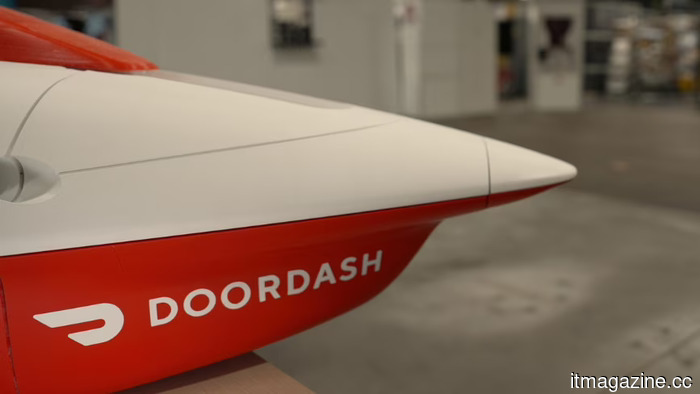
The drone is now the property of DoorDash, developed through DoorDash Labs, its robotics division. This custom-built aircraft, showcased as a white drone featuring the company’s red branding in a hangar, signifies a transition from leasing technology to owning it.
Up to this point, DoorDash has utilized the capabilities of other companies. It has conducted drone deliveries through Alphabet's Wing in the Dallas-Fort Worth area and in Australia since early 2020, as well as through the Israeli company Flytrex, partnerships that will continue alongside its in-house initiative.
Owning the drone alters the financial dynamics. By constructing the aircraft internally, DoorDash gains control over costs and design, instead of paying a partner for each flight, similar to its decision to create its own sidewalk robots rather than purchasing them.
The emphasis is on speed for short distances. DoorDash claims that drone deliveries within a five-mile radius average under 25 minutes, a figure that may be favorable in demonstrations, but the reality may differ once thousands of orders vie for the same airspace.
Executives were careful to present a pragmatic view. Co-founder and chief product officer Stanley Tang noted, “We didn’t start with the question, what’s the coolest autonomous tech we could make,” describing the drone as a component among many rather than a groundbreaking leap forward.
Harrison Shih, the head of DoorDash Air, framed the initiative as infrastructure. “We want drone delivery to work for any merchant, anywhere. We’re building the full stack,” he explained, detailing a plan that encompasses the aircraft, ground equipment, and customer handoff.
Drones represent just one part of an expanding network. DoorDash already operates sidewalk robots known as Dot and has experimented with bicycle delivery, with the drone being integrated into a system designed to choose the most cost-effective method for each order instead of completely replacing couriers.
The broader industry has been making similar promises for some time. The gap between flashy launches and routine service has frustrated a decade of announcements, including those from Amazon's Prime Air, and each new certificate comes with memories of past instances that led to little change.
However, competition is finally gaining momentum. Zipline has made strides in healthcare and retail, Manna is establishing a U.S. factory to compete with Wing, and the financials are gradually becoming more favorable, especially in suburban areas where drones are most effective.
The challenges, however, are still fundamentally physical. Range, battery life, and particularly weather conditions continue to dictate when and where drones can operate. This is a significant reason why DoorDash, despite its own aircraft and new certification, advises customers not to expect drones to take over deliveries just yet.
Other articles
 NextEra and Brookfield are planning a $100 billion data center campus in Kentucky.
Bloomberg reports that NextEra and Brookfield are planning a data-center campus in Kentucky, valued at as much as $100 billion, combining the largest utility in the U.S. with a $100 billion AI investment fund.
NextEra and Brookfield are planning a $100 billion data center campus in Kentucky.
Bloomberg reports that NextEra and Brookfield are planning a data-center campus in Kentucky, valued at as much as $100 billion, combining the largest utility in the U.S. with a $100 billion AI investment fund.
 Apple Upgrade offers the option to lease an iPhone starting at $17.99 per month.
Apple Upgrade enables US customers to lease an iPhone starting at $17.99 per month via Klarna, while discontinuing the 2015 iPhone Upgrade Program. It alters the perception of the price without changing the actual amount.
Apple Upgrade offers the option to lease an iPhone starting at $17.99 per month.
Apple Upgrade enables US customers to lease an iPhone starting at $17.99 per month via Klarna, while discontinuing the 2015 iPhone Upgrade Program. It alters the perception of the price without changing the actual amount.
 AI agents have the capability to browse the internet. They now require a means to make payments for this service.
With AI agents beginning to engage in online transactions, traditional payment systems designed for humans are struggling to keep pace. The x402 Foundation, supported by Visa, Mastercard, Google, and Stripe, is developing a standard for machine-to-machine commerce, while blockchain initiatives such as Casper are establishing stablecoins as the foundation for settlement infrastructure.
AI agents have the capability to browse the internet. They now require a means to make payments for this service.
With AI agents beginning to engage in online transactions, traditional payment systems designed for humans are struggling to keep pace. The x402 Foundation, supported by Visa, Mastercard, Google, and Stripe, is developing a standard for machine-to-machine commerce, while blockchain initiatives such as Casper are establishing stablecoins as the foundation for settlement infrastructure.
 Increased cursor prices are driving companies to explore alternatives like Claude Code and others.
Cursor's price increases are driving businesses towards Claude Code. However, companies are also sidestepping both options by utilizing open-source tools that reduce AI coding expenses by as much as 97%.
Increased cursor prices are driving companies to explore alternatives like Claude Code and others.
Cursor's price increases are driving businesses towards Claude Code. However, companies are also sidestepping both options by utilizing open-source tools that reduce AI coding expenses by as much as 97%.
 AI agents are capable of browsing the internet. They now require a method to make payments for this capability.
As AI agents begin to engage in online transactions, existing payment systems designed for humans struggle to adapt. The x402 Foundation, supported by Visa, Mastercard, Google, and Stripe, is developing a standard for commerce between machines, while blockchain initiatives such as Casper are establishing stablecoins as the foundation for settlement infrastructure.
AI agents are capable of browsing the internet. They now require a method to make payments for this capability.
As AI agents begin to engage in online transactions, existing payment systems designed for humans struggle to adapt. The x402 Foundation, supported by Visa, Mastercard, Google, and Stripe, is developing a standard for commerce between machines, while blockchain initiatives such as Casper are establishing stablecoins as the foundation for settlement infrastructure.
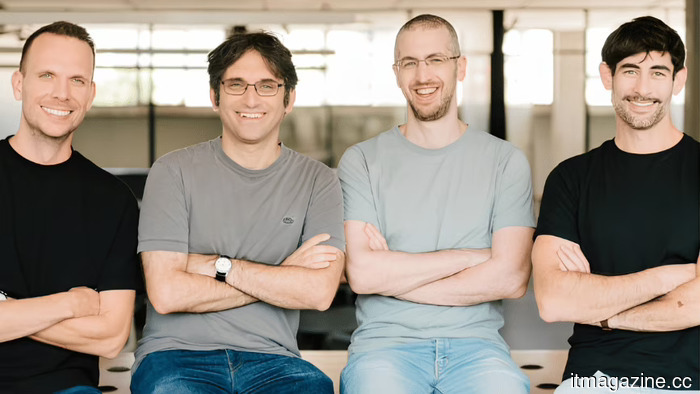 Act Security emerges from stealth mode with $60 million to address the patching issue.
Act Security emerges from stealth with $60 million investment from the founders of Medigate. The strategy is that AI will advance faster than patching, allowing them to eliminate the existing dormant cloud access vulnerabilities.
Act Security emerges from stealth mode with $60 million to address the patching issue.
Act Security emerges from stealth with $60 million investment from the founders of Medigate. The strategy is that AI will advance faster than patching, allowing them to eliminate the existing dormant cloud access vulnerabilities.
DoorDash receives FAA approval for its internal drone initiative, DoorDash Air.
DoorDash has received FAA Part 135 certification for its internal drone program, DoorDash Air, although it acknowledges that most deliveries will still be managed by humans.