
AI agents are capable of browsing the internet. They now require a method to make payments for this capability.
TL;DRAI agents are increasingly required to make purchases, yet current payment systems are built on the assumption that a human is involved. The x402 initiative from the Linux Foundation, supported by over 40 organizations like Visa, Mastercard, and Stripe, aims to establish internet-native payments for software. Casper Network has enhanced its csprUSD stablecoin for x402 micropayments. Regardless of whether blockchain or traditional methods prevail, the infrastructure for machine-to-machine commerce is currently in development.
In the past two years, the AI sector has concentrated on enhancing model intelligence. Each new version promises improved reasoning, longer context windows, or more capable autonomous agents. More people are starting to expect that software will not only answer questions but also carry out tasks for us. However, a concern that hasn't received much focus is what occurs when these agents need to make purchases.
For instance, a travel assistant might require payment for premium flight database access. A coding agent might need to rent computing resources for a short period to process a complex task. A research assistant could have to pay to access a paywalled academic paper or a proprietary API. None of these transactions necessitate human intervention; they simply need to occur swiftly for the software to function properly.
Today’s payment systems were not designed to accommodate this reality. Most online commerce still presumes a human is involved in the transaction process. Credit cards require names, billing addresses, and authentication. Subscription services anticipate a person to consciously subscribe and decide whether to renew monthly. Even digital wallets typically need a human's approval before a transaction can occur. These assumptions pose challenges when software is the customer, making numerous low-value purchasing decisions every hour.
The economics are also complex. Charging $20 per month for API access is reasonable when targeting businesses or individuals but becomes less justifiable when an AI agent only needs a single request that costs a tiny fraction of a cent. Charging by the request seems like a logical solution, yet current payment systems were not designed for transactions of such small, frequent, or automated nature. This issue is starting to gain significant attention beyond the crypto sector.
Recently, the Linux Foundation announced the formation of the x402 Foundation, backed by over 40 organizations, including Visa, Mastercard, American Express, Google, AWS, Stripe, Coinbase, Circle, and Cloudflare. Its objective is to establish a common standard for internet-native payments that can be initiated automatically by software, leveraging the seldom-used HTTP 402 "Payment Required" status code for machine-to-machine commerce.
The participant roster is significant for uniting companies that typically do not collaborate on emerging technologies. Payment networks, cloud providers, blockchain firms, and internet infrastructure companies are all recognizing this shared challenge. If AI agents are to become vital players in the digital economy, they require a mechanism to exchange value as seamlessly as they exchange information.
For blockchain networks, this provides a distinct opportunity compared to what they aimed for over the past decade. Many early crypto ambitions centered around replacing traditional financial systems or persuading consumers to utilize digital assets. Adoption has been slower than expected, predominantly because conventional payment systems operate effectively for most users. Software has different priorities.
An AI agent is indifferent to whether a payment is processed through a conventional banking interface or a blockchain network. What matters is the reliability of the payment settlement, predictability of costs, and whether fees are low enough that they do not outweigh the transaction value.
This shift explains why some blockchain initiatives are now concentrating on AI infrastructure versus consumer payment solutions. Casper Network is an example of this trend. Today, it announced an upgraded version of its dollar-pegged stablecoin, csprUSD, designed to function as the primary settlement asset for AI agents utilizing x402 payment flows on its network.
According to the announcement, the upgrade enhances compatibility with Casper 2.0 and CEP-3009, the standard for authorized transfers on the network. This allows payment authorizations to be signed off-chain and settled on-chain as part of a standard HTTP request. The network has also lowered minimum transaction costs to make low-value machine payments economically feasible, integrating its ProofLayer infrastructure to provide evidence of collateral and redemption activities.
On its own, the launch of another stablecoin might struggle to stand out in a market filled with them. However, viewed through the AI lens, this announcement signifies a broader shift within the industry. Stablecoins are increasingly being viewed not solely as trading instruments or payment methods for individuals but as essential operating infrastructure for software. If AI agents are to become consistent users of online services, they will need access to stable digital assets that can move automatically, settle promptly, and integrate directly into internet protocols.
It remains uncertain whether blockchain will ultimately emerge as the primary foundation for these payments. The involvement of companies like Visa, Mastercard, and Stripe suggests that traditional financial systems will play a crucial role alongside crypto-native solutions. The eventual framework will likely incorporate elements from both, especially if developers prioritize compatibility over ideological stances. The underlying trend is becoming increasingly hard to
Other articles
 eBay agrees to pay $56 million following its harassment campaign involving bloody pig masks.
eBay and three ex-executives are set to pay close to $56 million to the couple they tormented with cockroaches and a bloody pig mask. The larger cost: no non-disclosure agreement.
eBay agrees to pay $56 million following its harassment campaign involving bloody pig masks.
eBay and three ex-executives are set to pay close to $56 million to the couple they tormented with cockroaches and a bloody pig mask. The larger cost: no non-disclosure agreement.
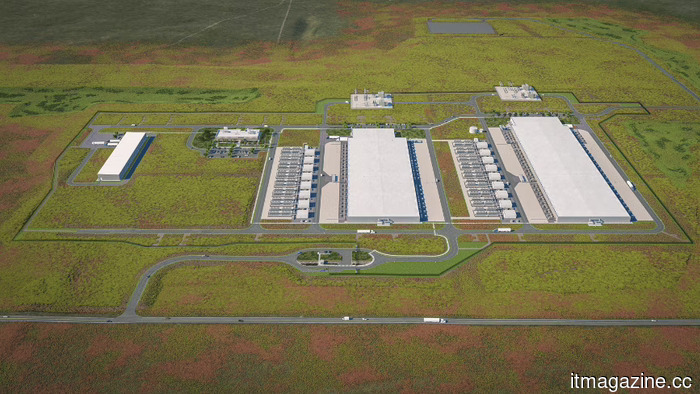 Trump grants exemptions from environmental regulations for data centers and rockets.
In a single day, the Trump administration took steps to exclude power plants at data centers from acid-rain regulations and to exempt rocket launches from environmental assessments.
Trump grants exemptions from environmental regulations for data centers and rockets.
In a single day, the Trump administration took steps to exclude power plants at data centers from acid-rain regulations and to exempt rocket launches from environmental assessments.
 PayPal responds to Stripe’s $53 billion offer: willing to consider, but not at that valuation.
PayPal responded to Stripe's $53 billion offer with a stronger-than-expected Q2 earnings report and a clear message: they are willing to consider a deal, but not at a price of $60.50 per share. One analyst estimates the value to be closer to $70.
PayPal responds to Stripe’s $53 billion offer: willing to consider, but not at that valuation.
PayPal responded to Stripe's $53 billion offer with a stronger-than-expected Q2 earnings report and a clear message: they are willing to consider a deal, but not at a price of $60.50 per share. One analyst estimates the value to be closer to $70.
 eBay agrees to pay $56 million regarding its harassment campaign involving bloody pig masks.
eBay and three former executives will compensate the couple they harassed with cockroaches and a bloody pig mask nearly $56 million. The more significant consequence: no non-disclosure agreement.
eBay agrees to pay $56 million regarding its harassment campaign involving bloody pig masks.
eBay and three former executives will compensate the couple they harassed with cockroaches and a bloody pig mask nearly $56 million. The more significant consequence: no non-disclosure agreement.
 Trump grants exemptions from environmental regulations for data centers and rockets.
In a single day, the Trump administration took action to exempt power plants associated with data centers from acid rain regulations and to exclude rocket launches from environmental assessments.
Trump grants exemptions from environmental regulations for data centers and rockets.
In a single day, the Trump administration took action to exempt power plants associated with data centers from acid rain regulations and to exclude rocket launches from environmental assessments.
 Increased cursor prices are driving companies to explore alternatives like Claude Code and others.
Cursor's price increases are driving businesses towards Claude Code. However, companies are also sidestepping both options by utilizing open-source tools that reduce AI coding expenses by as much as 97%.
Increased cursor prices are driving companies to explore alternatives like Claude Code and others.
Cursor's price increases are driving businesses towards Claude Code. However, companies are also sidestepping both options by utilizing open-source tools that reduce AI coding expenses by as much as 97%.
AI agents are capable of browsing the internet. They now require a method to make payments for this capability.
As AI agents begin to engage in online transactions, existing payment systems designed for humans struggle to adapt. The x402 Foundation, supported by Visa, Mastercard, Google, and Stripe, is developing a standard for commerce between machines, while blockchain initiatives such as Casper are establishing stablecoins as the foundation for settlement infrastructure.