
Meta and BlackRock have established a $14 billion partnership to develop an AI data center in El Paso.
Meta has combined its partially constructed El Paso data center into a joint venture with BlackRock, establishing a framework that removes most of the $14 billion project from its own financial statements.
According to the agreement, funds managed by BlackRock will possess 80% of the Texas campus, while Meta retains the remaining 20%. Meta will continue to act as the construction manager, property manager, and sole tenant once the servers are operational in 2028.
This venture brings the total development cost to about $14 billion, and the division of this sum is the crux of the deal. BlackRock is contributing approximately $4.9 billion in cash at the financial closure, while Meta is transferring the land and ongoing construction it has already invested in, valued at around $2.3 billion. Additionally, Meta will receive a one-time distribution of $1 billion to align ownership interests.
The remaining $12.5 billion will come through debt raised against the project rather than Meta itself, allowing the company to account for its use of the campus as rent instead of capital expenditure. This distinction is particularly significant this year as Meta has projected capital expenditures of $125 billion to $145 billion for 2026—a range it increased in April—and it is under pressure to demonstrate that its investment in AI will prove beneficial.
The financing has been developing over several weeks, with BlackRock securing the necessary borrowings for the campus earlier this month after Meta had already put together a financial package that briefly set a new benchmark for AI financing at a single site. The debt amount grew from the approximate $12 billion to $13 billion range discussed in earlier meetings to the now confirmed $12.5 billion figure.
BlackRock is managing the deal through Global Infrastructure Partners and HPS Investment Partners, two branches targeted at data center assets since its acquisition of Aligned Data Centers for $40 billion. The firm is executing both sides of these arrangements—originating the infrastructure and subsequently selling the debt that finances it—while El Paso aligns closely with this model.
For Meta, the appeal lies in a strategy it has employed previously. In rural Louisiana, it kept most of its $200 billion Hyperion campus off its balance sheet by allocating 80% to an external investor and leasing the site back, and the El Paso structure mirrors this approach nearly identically.
The initial lease term is four years, with four options for extension that could extend the agreement to two decades. Separately, Meta has stated its intention to invest approximately $600 billion in U.S. infrastructure through 2028, although this figure represents a commitment rather than a dedicated budget.
The structure is not without risk, as the debt associated with these campuses tends to have long durations, while the servers inside depreciate over just a few years, creating a possibility that the lease duration may be shorter than that of the equipment it houses.
The campus is designed to provide a gigawatt of computing power for Meta's AI systems and its core advertising operations, with power expected by 2028, which would categorize it as one of the larger facilities the company has committed to outside of Louisiana.
BlackRock reports that around 2,300 individuals are already employed at the site, construction should peak above 4,000 jobs, and about 300 permanent positions will remain once the campus is operational. The company has also committed to training around 12,000 electricians over three years through a program called Future Builders, recognizing the labor shortage affecting large data center projects.
Mark Zuckerberg highlighted the venture as a means to expedite progress, stating that the collaboration with BlackRock “enables us to move faster and at greater scale,” linking it to Meta's ambition of establishing infrastructure for what he terms superintelligence. Larry Fink, BlackRock’s CEO, framed it as evidence of the capabilities his firm is building, asserting that the deal exemplified “the strength and scale of our combined capabilities with GIP and HPS.”
Neither executive addressed the crucial question behind the figures: what would happen if the computational resources Meta is acquiring at this scale take longer than 2028 to become profitable.
Other articles
 Microsoft aims for AI to identify hackers before they launch an attack.
Microsoft's latest initiative, Project Perception, employs AI agents to track down hackers before they launch their attacks, potentially transforming the landscape of cybersecurity.
Microsoft aims for AI to identify hackers before they launch an attack.
Microsoft's latest initiative, Project Perception, employs AI agents to track down hackers before they launch their attacks, potentially transforming the landscape of cybersecurity.
 Consider carefully before downloading your next app for Windows 11 from Google.
Over 70 websites are impersonating well-known Windows utilities, featuring convincing replicas that rank in search results, and some are already distributing trojanized installers to unaware users.
Consider carefully before downloading your next app for Windows 11 from Google.
Over 70 websites are impersonating well-known Windows utilities, featuring convincing replicas that rank in search results, and some are already distributing trojanized installers to unaware users.
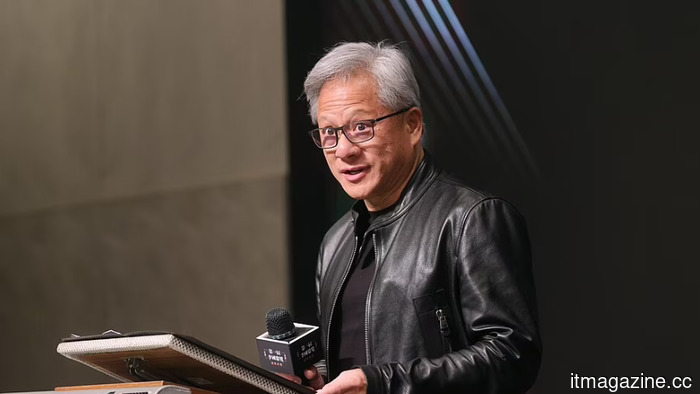 Nvidia's $750 billion AI agreements have driven its credit default swaps to an all-time high.
Nvidia's CDS spread reached a historic 82bps following $750 billion in AI transactions, raising concerns about circular financing. Jensen Huang dismissed the criticism as "ridiculous."
Nvidia's $750 billion AI agreements have driven its credit default swaps to an all-time high.
Nvidia's CDS spread reached a historic 82bps following $750 billion in AI transactions, raising concerns about circular financing. Jensen Huang dismissed the criticism as "ridiculous."
 A UK MP is requesting that the High Court compel xAI to prevent Grok from creating sexualized images of her.
Labour MP Jess Asato is seeking a court order that would require xAI to implement permanent safeguards for Grok, in a legal case examining the responsibility of an AI company for its outputs.
A UK MP is requesting that the High Court compel xAI to prevent Grok from creating sexualized images of her.
Labour MP Jess Asato is seeking a court order that would require xAI to implement permanent safeguards for Grok, in a legal case examining the responsibility of an AI company for its outputs.
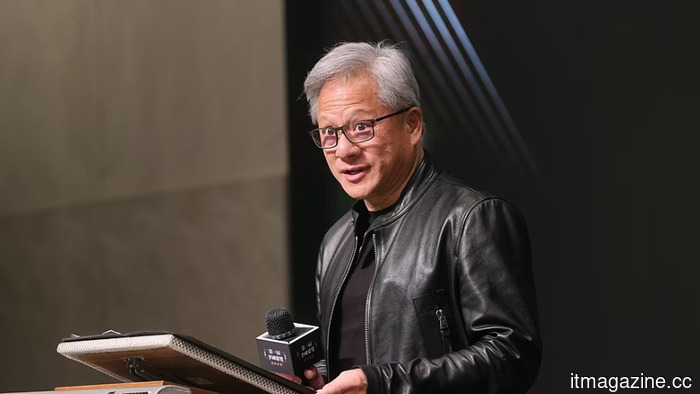 Nvidia's $750 billion AI agreements have driven its credit default swaps to an all-time high.
Nvidia's CDS spread reached an all-time high of 82 bps following $750 billion in AI transactions that sparked concerns about circular financing. Jensen Huang described the criticism as "ridiculous."
Nvidia's $750 billion AI agreements have driven its credit default swaps to an all-time high.
Nvidia's CDS spread reached an all-time high of 82 bps following $750 billion in AI transactions that sparked concerns about circular financing. Jensen Huang described the criticism as "ridiculous."
 Meta AI is entering your Threads direct messages, the perfect place for awkward AI conversations.
Meta is providing Threads users with a more private option to interact with its AI chatbot, allowing them to pose questions and receive context on posts directly within their DMs.
Meta AI is entering your Threads direct messages, the perfect place for awkward AI conversations.
Meta is providing Threads users with a more private option to interact with its AI chatbot, allowing them to pose questions and receive context on posts directly within their DMs.
Meta and BlackRock have established a $14 billion partnership to develop an AI data center in El Paso.
Meta and BlackRock have established a $14 billion joint venture for a one-gigawatt data center in El Paso, where BlackRock's funds will hold 80% ownership while Meta will lease it back.