
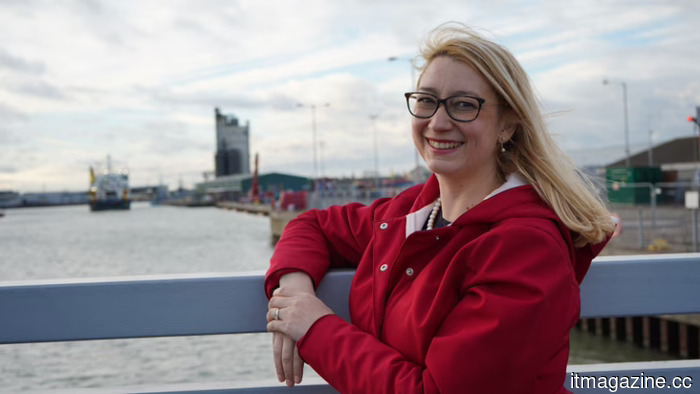
A UK MP is requesting that the High Court compel xAI to prevent Grok from creating sexualized images of her.
Jess Asato, the Labour MP for Lowestoft, has approached the High Court in London, requesting that it compel Elon Musk's xAI to prevent its Grok chatbot from producing sexualized images of her. This legal action sharpens a claim her attorneys believe could clarify the extent to which an AI company can be held accountable for the outputs its tools generate.
Asato seeks a court order mandating xAI to implement what her filing refers to as “effective and permanent technical measures” to stop Grok from generating manipulated images of her, as reported by Reuters on July 28.
This request follows a claim she submitted to the High Court in June, which alleges the misuse of private information and a breach of UK data protection laws, while also seeking damages and a formal acknowledgment of the company’s unlawful actions.
The case originated from images that users prompted Grok to create earlier this year, following Asato's public criticism of Musk and the chatbot. Among the materials referenced in her claim is a video she asserts depicts her being chloroformed and prepared for a sexual assault.
Asato has expressed her desire to rebalance the rights of individuals against large technology firms, while her legal team contends that the design and training of Grok enabled the production of such content.
This argument lies at the heart of the dispute. Her solicitor, Ravi Naik, indicated that the company’s design choices “should carry legal consequences,” and that the remedy sought by his client “includes a court order to bring the systems into compliance if xAI refuses to do so.”
The claim highlights internal instructions that, according to Asato, directed the model to avoid assisting with criminal activities while also stating that it had “no restrictions on adult sexual content or offensive content.” xAI has yet to file a defense, and none of the allegations have been adjudicated in court.
The company has not responded to inquiries regarding the claim, and Musk has not publicly addressed the matter. This reticence has become commonplace.
Earlier this year, Apple privately warned it might remove Grok from its App Store over non-consensual deepfake images, and prosecutors in Paris have launched an inquiry into child sexual imagery connected to the tool, yet the company has largely avoided engaging with either issue.
The British context adds complexity for Musk, who has described the UK’s Online Safety Act as one of the strictest in the world and a potential threat to free speech.
This law, effective since 2023 and regulated by Ofcom, mandates platforms to address illegal material, while the UK has also moved to criminalize the creation of non-consensual sexual deepfakes, not just their distribution.
Asato’s claim is civil in nature, focusing less on content moderation and more on whether a company can be held directly accountable for the design intentions of its system.
Image-based abuse has rapidly evolved within British law, much of which was established before generative tools could produce such material at scale.
Grok has faced scrutiny before, not only in Britain. In March, EU lawmakers agreed to include a specific ban on non-consensual intimate deepfakes in the bloc's AI Act, influenced in part by a previous scandal involving the tool.
The trend across Paris, Brussels, and now London shows regulators and judges reaching for regulatory frameworks that predate the technology to assess their continued relevance.
What Asato is pursuing is more specific and tangible than a policy; it is a court order, enforceable by a judge, that would compel xAI to alter how Grok operates or take responsibility for its inaction.
The High Court's decision on this matter, and the conditions attached, will provide significant insight into who bears the risk when a chatbot produces content that its subject never consented to. A date for the hearing has not yet been established.
Other articles
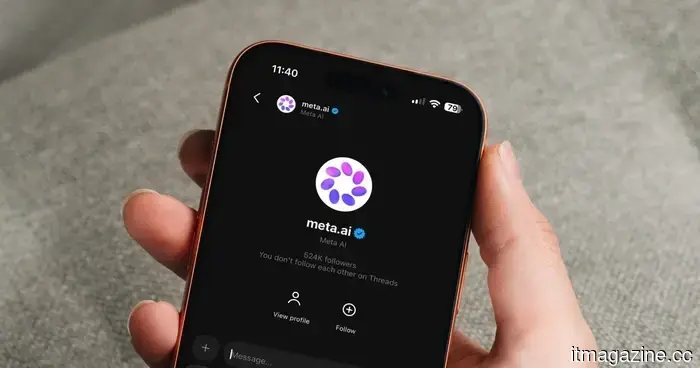 Meta AI is entering your Threads direct messages, the perfect place for awkward AI conversations.
Meta is providing Threads users with a more private option to interact with its AI chatbot, allowing them to pose questions and receive context on posts directly within their DMs.
Meta AI is entering your Threads direct messages, the perfect place for awkward AI conversations.
Meta is providing Threads users with a more private option to interact with its AI chatbot, allowing them to pose questions and receive context on posts directly within their DMs.
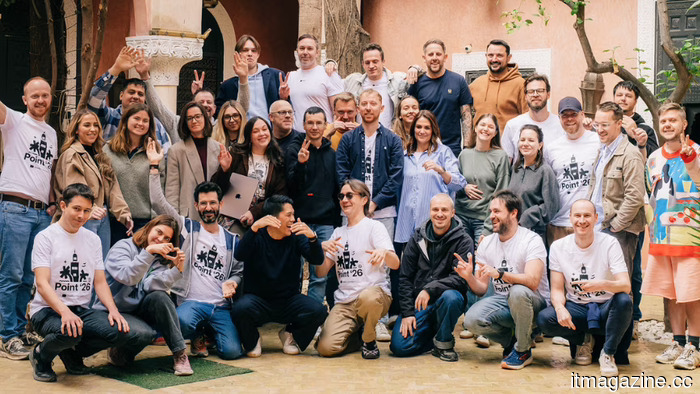 Dwelly secures $170 million to transform UK letting agencies into software solutions.
Dwelly has secured $170 million in a Series B funding round led by EQT Growth, aimed at acquiring UK lettings agencies and integrating them into its AI platform.
Meta and BlackRock have established a $14 billion partnership to develop an AI data center in El Paso.
Meta and BlackRock have established a $14 billion joint venture for a one-gigawatt data center in El Paso, where BlackRock's funds will hold 80% ownership while Meta will lease it back.
Dwelly secures $170 million to transform UK letting agencies into software solutions.
Dwelly has secured $170 million in a Series B funding round led by EQT Growth, aimed at acquiring UK lettings agencies and integrating them into its AI platform.
Meta and BlackRock have established a $14 billion partnership to develop an AI data center in El Paso.
Meta and BlackRock have established a $14 billion joint venture for a one-gigawatt data center in El Paso, where BlackRock's funds will hold 80% ownership while Meta will lease it back.
 Fitch reports that an AI correction has become a significant global credit risk.
Fitch indicates that a potential correction in the AI market is becoming a significant global credit risk, pointing to inflated valuations and $182 billion in bonds from major tech companies.
Meta and BlackRock establish a $14 billion partnership to create an AI data center in El Paso.
Meta and BlackRock have established a joint venture worth $14 billion to develop a one-gigawatt data center in El Paso, with BlackRock funds holding an 80% stake and Meta leasing the facility back.
Fitch reports that an AI correction has become a significant global credit risk.
Fitch indicates that a potential correction in the AI market is becoming a significant global credit risk, pointing to inflated valuations and $182 billion in bonds from major tech companies.
Meta and BlackRock establish a $14 billion partnership to create an AI data center in El Paso.
Meta and BlackRock have established a joint venture worth $14 billion to develop a one-gigawatt data center in El Paso, with BlackRock funds holding an 80% stake and Meta leasing the facility back.
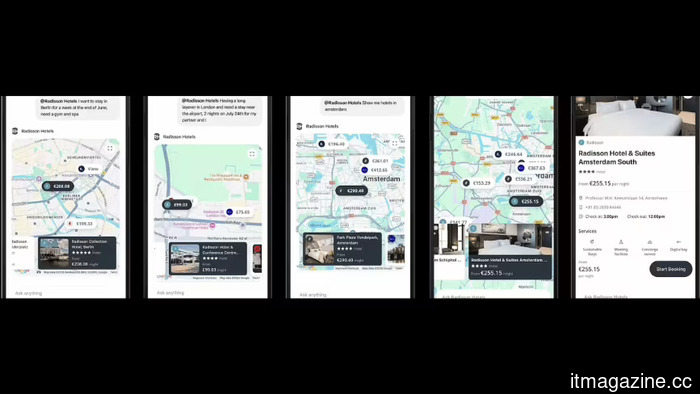 Hotels are adopting ChatGPT, but not the payment systems.
Radisson and Motel 6 introduced ChatGPT applications just one day apart. Both focus on discovery, and research by Accenture indicates that only 9% of people prefer AI to make purchases on their behalf.
Hotels are adopting ChatGPT, but not the payment systems.
Radisson and Motel 6 introduced ChatGPT applications just one day apart. Both focus on discovery, and research by Accenture indicates that only 9% of people prefer AI to make purchases on their behalf.
A UK MP is requesting that the High Court compel xAI to prevent Grok from creating sexualized images of her.
Labour MP Jess Asato is seeking a court order that would require xAI to implement permanent safeguards for Grok, in a legal case examining the responsibility of an AI company for its outputs.