

A quarter of the S&P now reports tangible benefits from AI.
Wall Street has spent the last three years investing in companies that create AI technology. Now, it is beginning to invest in companies that utilize AI.
This shift comes with statistics. Morgan Stanley conducted a systematic analysis of earnings call transcripts and found that 25% of S&P 500 companies reported measurable advantages from AI integration in the second quarter, up from 14% the previous year.
“The market is starting to shift towards quality, marking a typical mid-cycle transition as the economic cycle progresses,” stated Mike Wilson, the bank’s leading stock strategist, in a memo shared by Business Insider. “Going forward, margin growth will likely rely less on early-cycle operating leverage and more on the adoption of AI.”
The bank anticipates approximately 100 basis points of net margin growth from AI adoption alone through 2027.
Identifying Adopters
Morgan Stanley released a screener revealing that the adopters are not just the usual suspects. In addition to Alphabet and Apple, companies such as Roblox, CVS, Shopify, Dick’s Sporting Goods, and Constellation Energy were also listed.
Wilson mentioned that the sectors viewed as most vulnerable to AI are actually positioned well to benefit from it, specifically citing transport, software and services, and professional services.
Other financial institutions reached similar conclusions through different analyses. Analysts at Citi remarked, “the Mag 7 is deceased,” while Piper Sandler referred to it as a mega-rotation away from technology.
The supply side is having a rough week
The other aspect of this trade is evident in the semiconductor sector. According to the Associated Press, Micron dropped 8.4% on Tuesday, and Advanced Micro Devices fell by 7.7%. South Korea’s Kospi index saw a decline of 10.8%, leading to temporary trading halts in Seoul.
The Philadelphia semiconductor index is now 21% lower than its peak close in June, as reported by Reuters, although it remains 63% higher for the year.
These two figures encapsulate the entire narrative. Demand hasn't plummeted, as executives continue to assert that order books are full. The discrepancy lies in expectations rather than actual orders. Korea, where memory manufacturers dominate the index, has emerged as an early indicator for this trade.
Cited does not equal measured
However, the aforementioned 25% statistic warrants further examination. It counts companies that mentioned measurable AI benefits during earnings calls but does not account for those that actually published verifiable metrics.
Earnings calls often serve as marketing platforms. Asserting that AI has enhanced margins requires no cost and could result in significant rewards in mid-2026.
Independent evidence, however, appears less convincing. The UK’s Office for National Statistics observed that while adoption is broadening, it is not deepening. More companies are engaging with AI in various capacities, but few are utilizing it extensively.
Research featured in the Harvard Business Review identified a phenomenon known as "workslop," where the output of AI necessitates additional cleanup work that consumes the time it saved.
Some firms do provide quantifiable data. For instance, JPMorgan has informed investors that AI is reducing costs and increasing margins.
The underlying question
Vanguard framed the discussion in a more constructive manner than the rotation analysis did.
“The next chapter of the AI narrative revolves around whether current investments will yield productivity advancements for the global economy,” the firm stated.
Shaan Raithatha, the senior economist at Vanguard, remarked that investors are increasingly skeptical about whether major tech players will achieve sufficient returns on their investments.
This represents a more transparent perspective. The adopter strategy hinges on the assumption that productivity gains will materialize. The transcript metric indicates that companies are eager for investors to believe that those gains have already occurred.
What would clarify the situation
Microsoft, Amazon, Meta, and Apple are all scheduled to report this week. Analysts predict that overall S&P 500 earnings for the second quarter will rise by 39% compared to the previous year, with AI-related stocks contributing significantly, according to LSEG I/B/E/S data cited by Reuters.
Providing specific disclosures would be more beneficial than mere mentions. A company that offers a precise figure, function, and baseline can be validated. Conversely, a company that simply claims benefits during a call cannot.
Until more specific disclosures emerge, the trend towards AI adopters relies on the same factors that drove the trend towards AI developers. It remains a confident forecast.
Other articles
 Tokyo allows AI to act as a matchmaker, resulting in hundreds of couples already getting married.
An AI-driven dating app in Tokyo has facilitated 265 marriages since 2024, as the city implements an unconventional government initiative to address Japan's declining birth rate issue.
Tokyo allows AI to act as a matchmaker, resulting in hundreds of couples already getting married.
An AI-driven dating app in Tokyo has facilitated 265 marriages since 2024, as the city implements an unconventional government initiative to address Japan's declining birth rate issue.
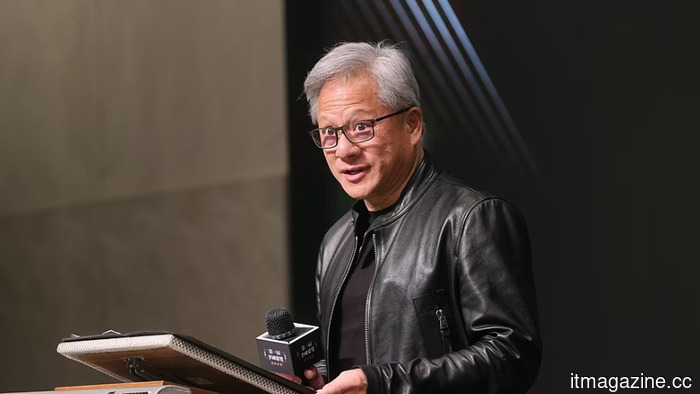 Nvidia's $750 billion AI agreements have driven its credit default swaps to an all-time high.
Nvidia's CDS spread reached an all-time high of 82 bps following $750 billion in AI transactions that sparked concerns about circular financing. Jensen Huang described the criticism as "ridiculous."
Nvidia's $750 billion AI agreements have driven its credit default swaps to an all-time high.
Nvidia's CDS spread reached an all-time high of 82 bps following $750 billion in AI transactions that sparked concerns about circular financing. Jensen Huang described the criticism as "ridiculous."
 Tokyo allows AI to act as a matchmaker, resulting in hundreds of couples already having gotten married.
Since 2024, Tokyo's AI-driven dating app has facilitated 265 marriages, as the city implements a unique government-led solution to combat Japan's declining birth rate crisis.
Tokyo allows AI to act as a matchmaker, resulting in hundreds of couples already having gotten married.
Since 2024, Tokyo's AI-driven dating app has facilitated 265 marriages, as the city implements a unique government-led solution to combat Japan's declining birth rate crisis.
 Queensland and the Northern Territory oppose Australia's regulations on data center energy usage.
Australia's groundbreaking regulations requiring data centers to contribute as much power as they consume have encountered obstacles, as Queensland and the Northern Territory oppose many of the proposed measures.
Queensland and the Northern Territory oppose Australia's regulations on data center energy usage.
Australia's groundbreaking regulations requiring data centers to contribute as much power as they consume have encountered obstacles, as Queensland and the Northern Territory oppose many of the proposed measures.
 Only 27% of hospitals in the US are capable of performing an EEG. Epitel has secured $26 million in funding.
Epitel's $26 million Series B funding supports a wireless EEG that can be worn for as long as 30 days. The FDA classifications refer to it as a monitor rather than a diagnostic tool, and it operates using four sensors.
Only 27% of hospitals in the US are capable of performing an EEG. Epitel has secured $26 million in funding.
Epitel's $26 million Series B funding supports a wireless EEG that can be worn for as long as 30 days. The FDA classifications refer to it as a monitor rather than a diagnostic tool, and it operates using four sensors.
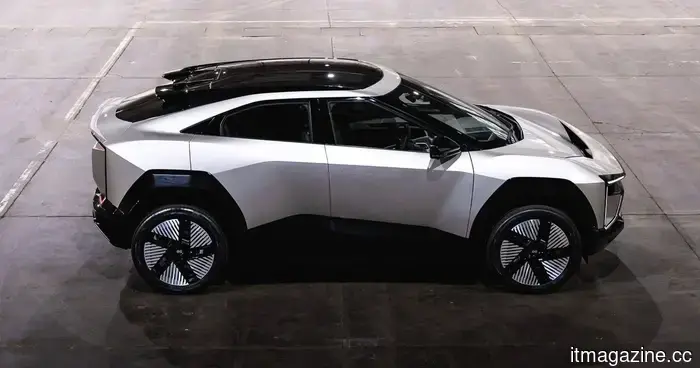 Two Indian automobile manufacturers have just surpassed Tesla in an area where you would typically anticipate Tesla to excel.
Tata Motors and Mahindra, Indian automobile manufacturers, outperformed Tesla and BYD in a recent global ranking for battery efficiency, although both are still behind in terms of charging speed and range.
Two Indian automobile manufacturers have just surpassed Tesla in an area where you would typically anticipate Tesla to excel.
Tata Motors and Mahindra, Indian automobile manufacturers, outperformed Tesla and BYD in a recent global ranking for battery efficiency, although both are still behind in terms of charging speed and range.
A quarter of the S&P now reports tangible benefits from AI.
Morgan Stanley reports that 25% of S&P 500 companies noted tangible advantages from AI in Q2, an increase from 14%. However, the evidence supporting this shift is not as substantial as it may appear.