

Friendsurance was sold for its documentation rather than its innovative concept.
Cover Genius has acquired Friendsurance, a Berlin-based company known for inventing peer-to-peer insurance. The agreement is effective immediately, but the financial details were not disclosed by either party.
Friendsurance gained recognition through a straightforward concept: small groups of policyholders band together, and those who remain free of claims receive cash back at the end of the year. Its German-language website still refers to Friendsurance as the pioneer of peer-to-peer insurance and credits the company with introducing the claims-free bonus in 2010. However, neither the acquisition announcement nor any quotes within it mention peer-to-peer insurance.
What Cover Genius actually acquired is explicitly stated by the buyer, focusing on the less glamorous aspect of the business. “Friendsurance has spent over a decade building the technology, the extensive banking networks, and the institutional compliance necessary to make that happen,” said Angus McDonald, chief executive and co-founder of Cover Genius, in the company announcement.
More specific details are addressed later in the text. Cover Genius highlights an architecture based on PSD2 open banking guidelines and a framework tailored for regional GDPR regulations, known as DSGVO in Germany. This combination, they say, “helps mitigate the complex regional regulatory landscapes that often hinder digital product deployments.”
Friendsurance’s website also notes an additional asset: its platform connects with over 175 insurers and processes unstructured data through machine learning.
Both companies are targeting what the announcement refers to as Bancassurance 2.0. This model involves banks selling insurance directly to their customers through their own apps, allowing them to record revenue as non-interest income. Friendsurance’s German homepage presents a straightforward message to banks: keep all your customers' money with you and manage their insurance as well, before someone else offers it.
Tim Kunde, co-founder and chief executive of Friendsurance, described the sale as a solution to a scaling issue. “We built Friendsurance to address a clear friction point. Banks want to provide modern, customer-centric protection, but outdated infrastructure and compliance challenges make it extremely difficult,” he explained.
The demand for such services appears significant. A YouGov survey commissioned by Friendsurance revealed that 52% of Germans are interested in managing their insurance contracts via online banking. Interest peaked at 67% among those aged 35 to 44, while it dropped to 42% for individuals over 55.
The timing of the acquisition is noteworthy. On July 14, Cover Genius announced it had secured $100 million from Vista Credit Partners at a valuation of $1.9 billion. Just two weeks later, it purchased a company. Vista Credit Partners provides credit rather than equity, indicating this was funding instead of a new round of ownership.
Cover Genius is a significant buyer, operating in over 60 countries and all 50 U.S. states, and has partnerships with firms like Klarna, Revolut, Stripe, Booking.com, eBay, and Uber. Both Klarna and Revolut are also venturing into regulated banking, making them potential customers for an insurance layer.
Regarding embedded protection, Cover Genius offers insurance that is integrated within another company’s checkout process. Its XCover platform manages policies, XClaim processes approved claims in over 90 currencies, and BrightWrite provides real-time pricing for offers. The company has safeguarded over 73 million customers through 240 million policies, amounting to $3.2 billion in gross written sales.
Selling insurance through banks presents more challenges than doing so with airlines. Offering a policy alongside a current account activates regulations that do not apply to travel checkouts, which is where Friendsurance is expected to bridge the gap.
The journey to this point has been more difficult for Friendsurance than early reports suggested. In March 2016, it raised $15.3 million in a funding round led by Horizons Ventures, as reported by EU-Startups. By 2020, however, the company began exploring debt options, with Carrier Management reporting in June that it had obtained nearly $1.7 million through the lending platform creditshelf.
European fintech has been anticipating consolidation for some time, with valuations at the top of insurtech rising, as seen with Ominimo at $1.4 billion and Alan surpassing $5 billion, while smaller platforms seek buyers. The lack of disclosed terms often indicates a price that may not be favorable. The peer-to-peer concept made Friendsurance well-known, but it is the compliance framework that ultimately made it attractive for sale.
Other articles
 Why Home Smart Strength Training Is Becoming More Accurate
The contemporary home gym is influenced equally by the available space as it is by fitness goals. In apartments, multipurpose rooms, and homes where exercise equipment often shares space, it can be challenging to rationalize a large setup. This necessity has driven product design to focus on systems that remain compact while still accommodating substantial strength training needs.
Why Home Smart Strength Training Is Becoming More Accurate
The contemporary home gym is influenced equally by the available space as it is by fitness goals. In apartments, multipurpose rooms, and homes where exercise equipment often shares space, it can be challenging to rationalize a large setup. This necessity has driven product design to focus on systems that remain compact while still accommodating substantial strength training needs.
 Anthropic's latest pharmaceutical agreement focuses on documentation rather than molecules.
ICON plans to implement Claude for its 40,200 personnel involved in clinical trials. Anthropic mentions that enrollment issues, rather than scientific factors, contribute to delays in as much as 80% of these trials.
Anthropic's latest pharmaceutical agreement focuses on documentation rather than molecules.
ICON plans to implement Claude for its 40,200 personnel involved in clinical trials. Anthropic mentions that enrollment issues, rather than scientific factors, contribute to delays in as much as 80% of these trials.
 Code generated by AI was delivered with controls but bypassed the verification process.
Sygnia discovered AI-generated code containing tokens, expiration details, and audit logs, and subsequently granted access to anyone possessing an applicant identifier.
Code generated by AI was delivered with controls but bypassed the verification process.
Sygnia discovered AI-generated code containing tokens, expiration details, and audit logs, and subsequently granted access to anyone possessing an applicant identifier.
 Anthropic's latest pharmaceutical agreement focuses on documentation rather than chemical compounds.
ICON plans to implement Claude for its 40,200 employees involved in clinical trials. According to Anthropic, enrollment issues, rather than scientific factors, are responsible for up to 80% of the delays.
Anthropic's latest pharmaceutical agreement focuses on documentation rather than chemical compounds.
ICON plans to implement Claude for its 40,200 employees involved in clinical trials. According to Anthropic, enrollment issues, rather than scientific factors, are responsible for up to 80% of the delays.
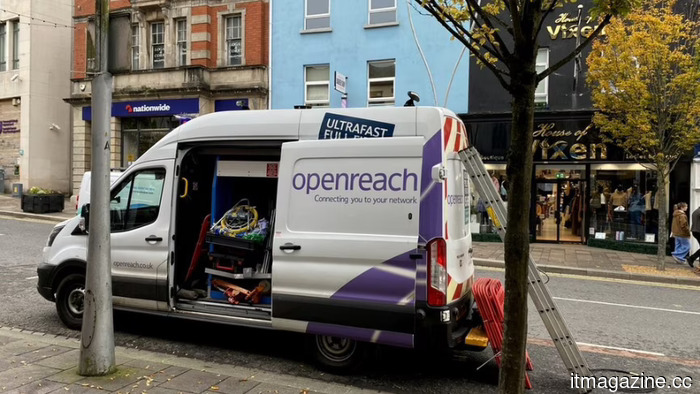 Ofcom takes steps to prevent Openreach from offering its fibre discount for the first time.
Ofcom has stated that Openreach's GBP 9.50 discount for new full-fibre customers is "unfair and unreasonable" and would put pressure on alternative networks. Competitors argue that the actions should be more stringent.
Ofcom takes steps to prevent Openreach from offering its fibre discount for the first time.
Ofcom has stated that Openreach's GBP 9.50 discount for new full-fibre customers is "unfair and unreasonable" and would put pressure on alternative networks. Competitors argue that the actions should be more stringent.
 Tokyo allows AI to act as a matchmaker, resulting in hundreds of couples already getting married.
An AI-driven dating app in Tokyo has facilitated 265 marriages since 2024, as the city implements an unconventional government initiative to address Japan's declining birth rate issue.
Tokyo allows AI to act as a matchmaker, resulting in hundreds of couples already getting married.
An AI-driven dating app in Tokyo has facilitated 265 marriages since 2024, as the city implements an unconventional government initiative to address Japan's declining birth rate issue.
Friendsurance was sold for its documentation rather than its innovative concept.
Cover Genius has acquired Friendsurance, the Berlin-based company that pioneered peer-to-peer insurance in 2010. The terms of the deal have not been disclosed, occurring two weeks after a $100 million fundraising round.