
Why Home Smart Strength Training Is Becoming More Accurate
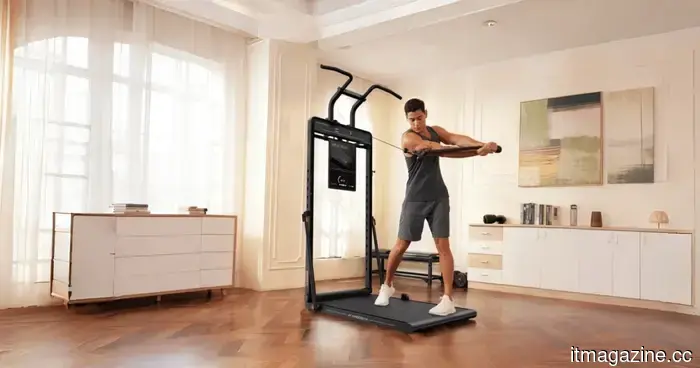
The contemporary home gym is influenced equally by available space and fitness needs. A sizable setup can be difficult to justify in apartments, multifunctional rooms, and homes where exercise gear must coexist with daily activities. This reality has led to the design of products that remain compact while still accommodating serious strength training. Recent advancements in fitness technology from companies like INNODIGYM have strongly embraced this trend, integrating software, sensors, and motor-driven resistance into equipment designed for a broader range of exercises.
This shift has given rise to a new type of strength equipment suitable for home use. Smart strength systems now consolidate presses, rows, squats, and pull-downs into a single platform with a smaller footprint, providing a more interconnected training experience. The appeal lies in features such as resistance control, workout tracking, customizable training settings, and hardware that integrates seamlessly into daily life.
Why the Traditional Home Gym Model Feels Constrained
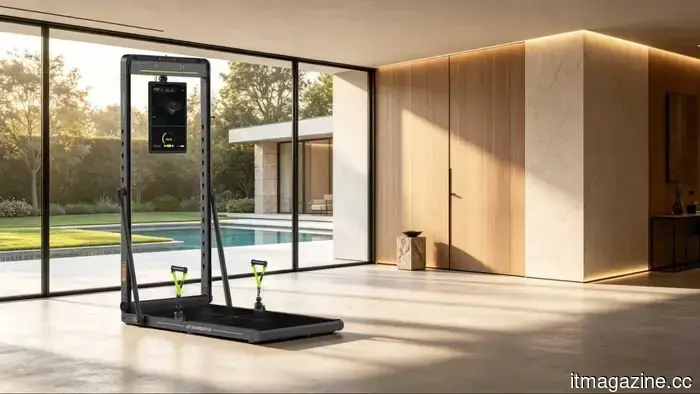
Conventional home strength training has typically required compromises. The new generation of compact strength systems is addressing that need through innovative design. Equipment like INNODIGYM’s OMNI X1 minimizes space, making it more portable than traditional rack-based setups, and eliminates the lengthy installation processes that often accompany home equipment. Once set up, it utilizes a 360-degree cable structure to facilitate a wide variety of movements, allowing users more freedom to train without hopping between different stations.
How Technology Enhances the Experience
Digital resistance has emerged as one of the most evident indications that home strength equipment is evolving into a more specialized phase. The INNODIGYM OMNI X1 employs dual servo motors to provide up to 120 kilograms of resistance, enabling users to easily adjust settings for various training objectives without the hassle of changing plates or attachments frequently.
This technology also supports various training paradigms, including standard resistance, eccentric resistance, spring mode, and isokinetic mode. Such options alter the training experience in ways traditional equipment typically cannot.
Beginners in strength training can find it more accessible, while advanced users can fine-tune their workouts with greater accuracy. Smart equipment is beginning to offer home users access to training formats that were previously associated with commercial or performance spaces.
INNODIGYM
A Reinforced Software Component
A companion app can log workouts, monitor progress, and guide training over time, effectively integrating the machine into a broader connected system. Future updates for the OMNI X1 are anticipated to introduce additional personalized coaching features.
Safety technology represents another critical aspect of this evolution. Solo strength training at home has always involved some level of risk, particularly during heavy lifts. AI-assisted spotting directly addresses this concern by detecting fatigue or unstable movements and reducing resistance as needed, transforming the experience of training alone. This feature enhances users' confidence to tackle challenging workouts with embedded support from the machine itself.
A recent surface electromyography study has also lent the OMNI X1 greater credibility. In exercises such as the lat pulldown, cable crunch, and bench press, the system demonstrated significant engagement of target muscles and maintained tension throughout the range of motion. Such results reinforce the notion that compact home equipment can provide substantial performance when designed with engineering excellence.
INNODIGYM
The Future of This Category
The emergence of smart strength systems indicates a broader transformation in home fitness. Individuals seek equipment that suits actual living spaces, caters to varying levels of experience, and incorporates connected features into the training process without cumbersome setups. INNODIGYM’s OMNI X1 embodies this concept, combining a compact design with digital resistance, AI safety features, quiet operation, and a commercial-grade feel within an aluminum alloy frame.
Home strength training is becoming increasingly technical, adaptable, and reflective of real-life living conditions. This may represent the most significant change of all. The future of the home gym appears to be a single system capable of performing much more than what traditional machines have offered.
Digital Trends collaborates with external contributors, ensuring that all contributed content is reviewed by the Digital Trends editorial team.

Other articles
 Vulnerabilities identified by AI are rarely being taken advantage of.
VulnCheck discovered that AI-identified vulnerabilities are emerging at double the rate of last year, yet only 1.3% were exploited in the first half of 2026.
Vulnerabilities identified by AI are rarely being taken advantage of.
VulnCheck discovered that AI-identified vulnerabilities are emerging at double the rate of last year, yet only 1.3% were exploited in the first half of 2026.
 Two Indian automobile manufacturers have just surpassed Tesla in an area where you would typically anticipate Tesla to excel.
Tata Motors and Mahindra, Indian automobile manufacturers, outperformed Tesla and BYD in a recent global ranking for battery efficiency, although both are still behind in terms of charging speed and range.
Two Indian automobile manufacturers have just surpassed Tesla in an area where you would typically anticipate Tesla to excel.
Tata Motors and Mahindra, Indian automobile manufacturers, outperformed Tesla and BYD in a recent global ranking for battery efficiency, although both are still behind in terms of charging speed and range.
 Code generated by AI was delivered with controls but bypassed the verification process.
Sygnia discovered AI-generated code containing tokens, expiration details, and audit logs, and subsequently granted access to anyone possessing an applicant identifier.
Code generated by AI was delivered with controls but bypassed the verification process.
Sygnia discovered AI-generated code containing tokens, expiration details, and audit logs, and subsequently granted access to anyone possessing an applicant identifier.
 How artificial intelligence is simplifying corporate travel logistics.
AI is transforming traditional travel procurement portals into predictive systems that apply policy at the time of purchase, reschedule disrupted travel plans, and automatically negotiate vendor pricing.
How artificial intelligence is simplifying corporate travel logistics.
AI is transforming traditional travel procurement portals into predictive systems that apply policy at the time of purchase, reschedule disrupted travel plans, and automatically negotiate vendor pricing.
 Foldable phones have developed significantly. PITAKA’s new case collection showcases this change.
Foldable smartphones are setting new standards for high-end mobile design. Selecting the appropriate case is equally important. PITAKA's newest collection adopts an innovative perspective on protection with a series crafted to enhance Samsung's latest foldable devices.
Foldable phones have developed significantly. PITAKA’s new case collection showcases this change.
Foldable smartphones are setting new standards for high-end mobile design. Selecting the appropriate case is equally important. PITAKA's newest collection adopts an innovative perspective on protection with a series crafted to enhance Samsung's latest foldable devices.
 How AI is optimizing corporate travel logistics
AI is transforming traditional travel procurement portals into predictive systems that implement policies at the point of sale, automatically rebook altered itineraries, and negotiate vendor rates without human intervention.
How AI is optimizing corporate travel logistics
AI is transforming traditional travel procurement portals into predictive systems that implement policies at the point of sale, automatically rebook altered itineraries, and negotiate vendor rates without human intervention.
Why Home Smart Strength Training Is Becoming More Accurate
The contemporary home gym is influenced equally by the available space as it is by fitness goals. In apartments, multipurpose rooms, and homes where exercise equipment often shares space, it can be challenging to rationalize a large setup. This necessity has driven product design to focus on systems that remain compact while still accommodating substantial strength training needs.