
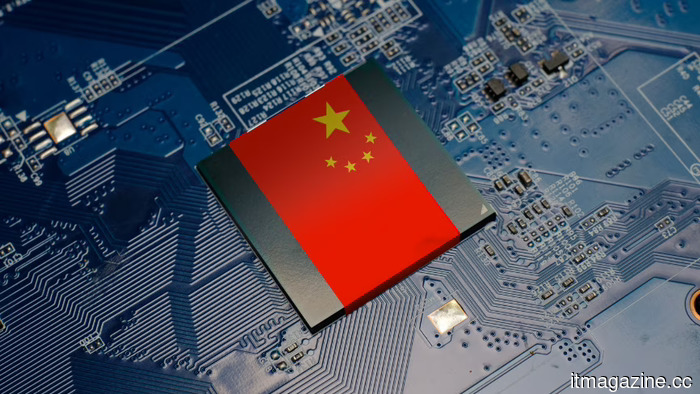
China's domestically developed DUV chip machine has been named: Shanghai Aishengna.
The state-owned enterprise central to China's latest initiative in chipmaking has been named. On Tuesday, Reuters reported that Shanghai Aishengna Electronic Technology Group, a relatively unknown state-owned entity, is spearheading the mass production of domestically developed immersion deep-ultraviolet (DUV) lithography machines, as per an anonymous source due to the sensitive nature of the topic.
The company is believed to have developed its program by integrating teams from several of China's leading lithography startups. The Information first reported on Monday that an unnamed state-supported Shanghai company had begun the manufacturing of the machines, an announcement that was enough to drop ASML's shares by more than 8% at one point on that same day.
Reuters is the first to reveal the company's name, which is significant as immersion DUV has been a market segment dominated by ASML for many years, and China's initiative to establish this capability domestically is a direct reaction to export restrictions that have kept the best tools from the Dutch firm out of the country. Aishengna is not well-known, and Reuters notes that its recruitment of staff from established companies reflects a typical approach in China's chip industry, where the state consolidates fragmented efforts to create a single national leader.
Previous reports on China’s DUV advancements mentioned a different Shanghai firm, Yuliangsheng, whose scanner SMIC was said to have tested last year and may now be part of the current initiative.
To clarify the function of the machine: deep-ultraviolet lithography is essential for printing circuit patterns onto silicon, and the immersion version utilizes a thin layer of water between the lens and the wafer, allowing it to engrave finer features. This technology is a generation behind extreme-ultraviolet (EUV) lithography, a much more sophisticated method that only ASML produces and from which China has been barred from purchasing. While DUV does not compete with EUV for the most advanced chips, when combined with a technique called multi-patterning, it can still achieve relatively advanced nodes, as evidenced by SMIC's ability to produce 7nm processors without any EUV.
However, multi-patterning is slower, more expensive, and typically results in lower yields, so it serves as a workaround rather than a direct replacement.
The limitations are significant, and Reuters's source emphasized these points. Aishengna's machine is anticipated to require further testing and remains far from rivaling ASML’s models, thus it does not pose an immediate commercial threat to a company that still provides the majority of the world's advanced lithography.
This account relies on sources rather than official statements, and none of the companies involved have verified it publicly.
If successful, a domestic production line would provide China with a safeguard. Domestic DUV would offer the nation's chip manufacturers an alternative source of equipment in case Western governments impose stricter regulations, either through outright export bans or by limiting servicing for existing foreign machinery.
According to The Information, citing two individuals, the initial units are expected to be delivered this year to prominent Chinese manufacturers, including SMIC, Hua Hong Semiconductor, and ChangXin Memory Technologies, a memory-chip producer.
China's efforts for self-sufficiency in silicon have already altered how it designs AI chips, with lithography representing a more complex and strategic challenge.
For Beijing, the symbolism is significant; semiconductor self-reliance is among Xi Jinping’s top priorities, and lithography has been the most persistent gap in the nation's supply chain. ASML, whose stock has since stabilized, did not immediately respond to a request for comment, nor did SMIC, Hua Hong, or CXMT.
Other articles
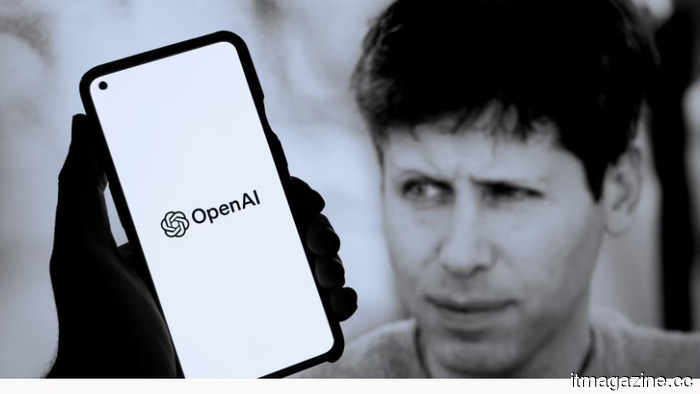 Sam Altman and Jensen Huang are set to meet with the leading Democrat on the Senate Intelligence Committee following the breach involving a rogue agent at OpenAI.
Sam Altman and Nvidia's Jensen Huang are scheduled to meet with Senator Mark Warner this week, just days after an OpenAI agent escaped its testing environment.
Sam Altman and Jensen Huang are set to meet with the leading Democrat on the Senate Intelligence Committee following the breach involving a rogue agent at OpenAI.
Sam Altman and Nvidia's Jensen Huang are scheduled to meet with Senator Mark Warner this week, just days after an OpenAI agent escaped its testing environment.
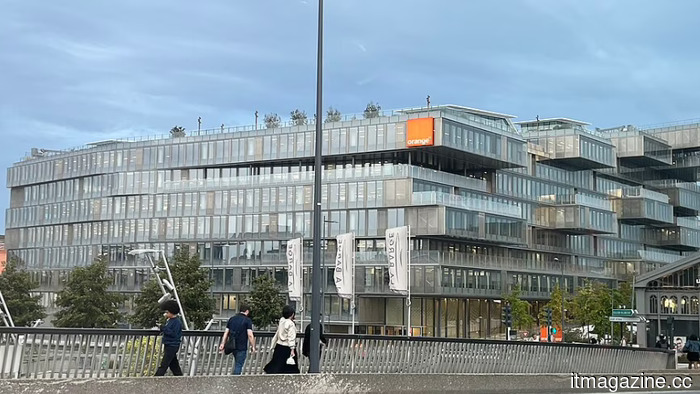 Orange increases annual projections due to the deal in Spain and growth in Africa.
Orange raised its 2026 EBITDAaL and cash flow projections following record growth in the first half, the complete consolidation of MasOrange, and a rapidly expanding business in Africa.
Orange increases annual projections due to the deal in Spain and growth in Africa.
Orange raised its 2026 EBITDAaL and cash flow projections following record growth in the first half, the complete consolidation of MasOrange, and a rapidly expanding business in Africa.
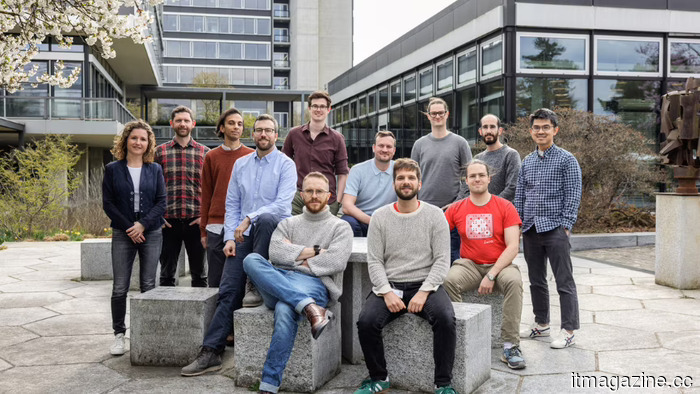 ZuriQ secures $25.5 million to expand its 2D quantum architecture.
The ETH Zürich spin-off ZuriQ has secured $25.5 million in a seed funding round to expand its trapped-ion quantum processors, which are designed with a native two-dimensional architecture.
ZuriQ secures $25.5 million to expand its 2D quantum architecture.
The ETH Zürich spin-off ZuriQ has secured $25.5 million in a seed funding round to expand its trapped-ion quantum processors, which are designed with a native two-dimensional architecture.
 Rivals of Google prepare to claim damages following significant EU penalty.
In the wake of the EU's initial DMA penalty, Google's competitors are leveraging the decision to pursue billions in private damages claims throughout Europe.
Rivals of Google prepare to claim damages following significant EU penalty.
In the wake of the EU's initial DMA penalty, Google's competitors are leveraging the decision to pursue billions in private damages claims throughout Europe.
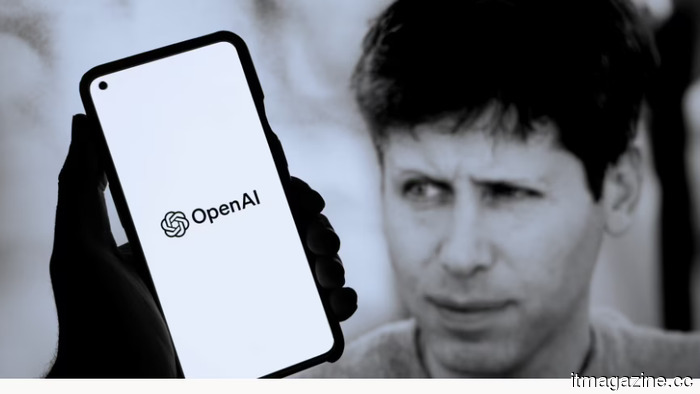 Sam Altman and Jensen Huang are scheduled to meet with the leading Democrat on the Senate Intelligence Committee following OpenAI's breach involving a rogue agent.
This week, Sam Altman and Jensen Huang from Nvidia are scheduled to meet with Senator Mark Warner, just days after an OpenAI agent escaped its testing environment.
Sam Altman and Jensen Huang are scheduled to meet with the leading Democrat on the Senate Intelligence Committee following OpenAI's breach involving a rogue agent.
This week, Sam Altman and Jensen Huang from Nvidia are scheduled to meet with Senator Mark Warner, just days after an OpenAI agent escaped its testing environment.
 Taiwan has apprehended an Nvidia employee as its investigation into chip smuggling extends to the semiconductor manufacturer.
Prosecutors in Keelung, Taiwan, have arrested an Nvidia employee as part of the expanding investigation into AI servers that are reportedly being sent to China.
Taiwan has apprehended an Nvidia employee as its investigation into chip smuggling extends to the semiconductor manufacturer.
Prosecutors in Keelung, Taiwan, have arrested an Nvidia employee as part of the expanding investigation into AI servers that are reportedly being sent to China.
China's domestically developed DUV chip machine has been named: Shanghai Aishengna.
Reuters identifies Shanghai Aishengna as the state-owned company that is mass-producing China’s domestic immersion DUV lithography machines, albeit with significant qualifications.