
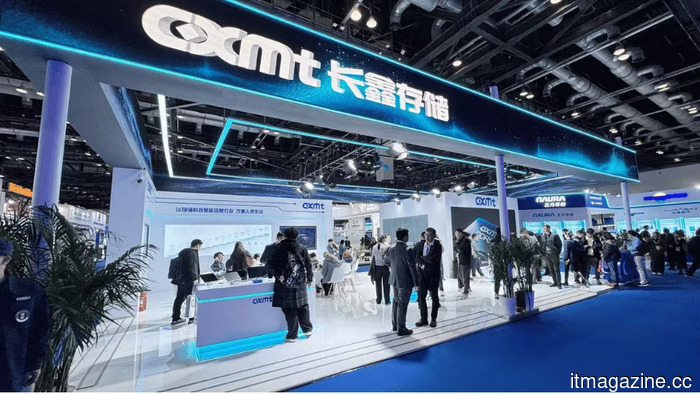
The founder of CXMT has committed $5.6 billion worth of his shares to employees.
Zhu Yiming increased his wealth by approximately $10 billion on Monday and has vowed to donate around $5.6 billion, though not to charity. As the chairman of CXMT, his fortune surged by nearly 300% to $13.9 billion when the memory chipmaker's stock surged 466% upon its debut in Shanghai, as reported by the Bloomberg Billionaires Index. Approximately 40% of this amount is allocated for his employees, according to Bloomberg.
This commitment is not new, although the amount is. Zhu had committed to this in the IPO prospectus for CXMT back in May, before anyone anticipated the developments of Monday. He pledged to transfer 767.9 million shares into employee incentive programs. At the debut closing price of 49 yuan, these shares are valued at about $5.6 billion. If the stock had only maintained its initial sale price of 8.66 yuan, this same pledge would have been worth less than $1 billion.
He also agreed to a 10-year restriction on selling his own shares. Bloomberg notes that these commitments are atypical in the context of companies listed on the mainland of China.
However, there are several caveats. No one will receive payments soon, as bonuses will begin after three years and will be distributed over the course of a decade. CXMT has also not disclosed who qualifies for the benefits; the prospectus does not clarify if the incentives apply to some or all employees, and the company has not responded to Bloomberg's inquiries.
The scale of this commitment can be gauged from CXMT's employee count, which stood at 19,298 at the end of 2025. Assuming an even distribution—though the company has not confirmed this—$5.6 billion would translate to roughly $290,000 per employee. This figure is comparable to what competitors are already offering; for instance, Samsung chip employees received an average bonus of about $340,000 this year, while SK Hynix has issued similar payouts.
This scenario is more about talent retention than charity. Founders in China are now tasked with pleasing the state while also retaining engineers. The latter challenge is one that financial resources can address. "This is definitely a newly emerging phenomenon," remarked Meng Shen, a director at investment bank Chanson & Co. "Talent retention is indeed a crucial factor."
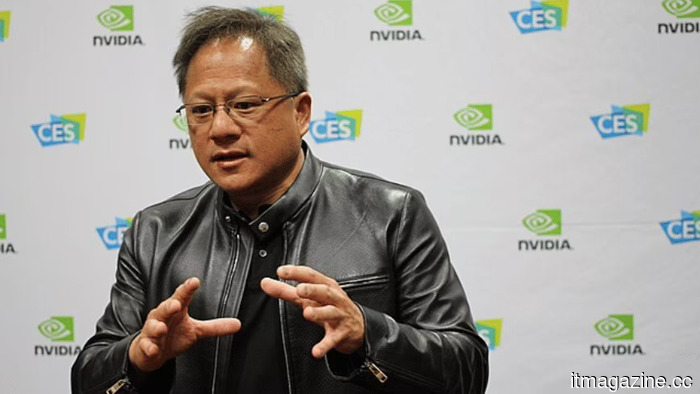
Shen also pointed out that success in high-growth tech cannot be achieved by any single founder; it requires a significant influx of top talent. Jensen Huang recently echoed this sentiment, stating that companies should compensate their workers as much as feasible. In Korea, a similar approach has led to issues such as appliance staff protesting over bonuses diverted to chip units, alongside concerns about inflation risks associated with these payouts.
Zhu has a history of symbolic sacrifices. In 2018, he stepped back from GigaDevice Semiconductor, his first successful public venture, to lead CXMT in collaboration with the Hefei municipal government, pledging not to take a salary until the project became profitable—a multibillion-dollar gamble on a company without a product.
That gamble has paid off, as CXMT is now China's largest producer of DRAM, the type of memory used to support server databases and AI tasks, and ranks as the fourth largest globally. Other founders, such as Yan Junjie of MiniMax, have also pledged to abstain from salaries until reaching specific milestones, while redistributing their shares to long-serving employees.
In this narrative, there is a significant shareholder beyond Zhu: the state. Before the IPO, the Hefei municipal government controlled over 30% through local state entities, and China’s Big Fund II held more than 8%. The Big Fund, formally known as the China Integrated Circuit Industry Investment Fund, aims to bolster the country’s semiconductor self-sufficiency.
Considering Zhu and the state’s earnings on Monday, the $5.6 billion commitment is relatively modest. The generosity is genuine, yet financially manageable.
The future of this pledge is uncertain. Commitments that commence in three years and extend over ten years are lengthy. Shen, who described the trend as genuinely new, emphasized that the actual fulfillment of these promises depends on their enforceability. He candidly noted, "For founders at this stage, wealth ultimately becomes just a number," and acknowledged that it could be a number with potential negative implications.
Zhu dedicated seven years to build this company without taking a salary. He has now agreed to abstain from selling the company for a decade and to begin distributing a portion of it three years from now. On Monday, the market determined the value of that portion at $5.6 billion.
Other articles
 Nvidia announces the formation of an open AI security alliance, excluding OpenAI.
The Open Secure AI Alliance consists of 37 members, none of which are from China, despite the fact that the Hugging Face breach involved an open model developed in China.
Nvidia announces the formation of an open AI security alliance, excluding OpenAI.
The Open Secure AI Alliance consists of 37 members, none of which are from China, despite the fact that the Hugging Face breach involved an open model developed in China.
 Volkswagen is seeking tariff protection following the capture of 28% of Europe's PHEV market by Chinese brands.
VW CEO Blume is urging the EU to impose tariffs on Chinese PHEVs following the emergence of the BYD Seal U, BYD Atto 2, and Jaecoo 7, which have surpassed the Tiguan in sales. Chinese manufacturers now account for 28.3% of the PHEV market in Europe.
Volkswagen is seeking tariff protection following the capture of 28% of Europe's PHEV market by Chinese brands.
VW CEO Blume is urging the EU to impose tariffs on Chinese PHEVs following the emergence of the BYD Seal U, BYD Atto 2, and Jaecoo 7, which have surpassed the Tiguan in sales. Chinese manufacturers now account for 28.3% of the PHEV market in Europe.
 Setting up your dorm desk? Here are the phone stands I would genuinely invest in.
Ranging from a $3.98 two-pack, which is just slightly more expensive than a cup of coffee, to a three-in-one Apple charging dock, these eight phone stands strike a good balance between affordability and the everyday practicality required for a dorm desk.
Setting up your dorm desk? Here are the phone stands I would genuinely invest in.
Ranging from a $3.98 two-pack, which is just slightly more expensive than a cup of coffee, to a three-in-one Apple charging dock, these eight phone stands strike a good balance between affordability and the everyday practicality required for a dorm desk.
 Cisco discovered that no AI model is entirely immune to inquiries about bioweapons, with attack success rates reaching 88%.
Cisco researchers were able to circumvent AI safety filters on leading chatbots within five interactions to obtain information about biological weapons. None of the models were completely immune. The CDC was also restricted.
Cisco discovered that no AI model is entirely immune to inquiries about bioweapons, with attack success rates reaching 88%.
Cisco researchers were able to circumvent AI safety filters on leading chatbots within five interactions to obtain information about biological weapons. None of the models were completely immune. The CDC was also restricted.
 Lenovo has introduced a metallic Hall effect keyboard and a 59g mouse as their newest enhancements for stylish gaming configurations.
Lenovo has unveiled new Legion gaming equipment, featuring a metallic Hall effect keyboard and a 59g mouse, both of which support 8,000Hz polling.
Lenovo has introduced a metallic Hall effect keyboard and a 59g mouse as their newest enhancements for stylish gaming configurations.
Lenovo has unveiled new Legion gaming equipment, featuring a metallic Hall effect keyboard and a 59g mouse, both of which support 8,000Hz polling.
 Discord and Meta are being sued as product entities rather than as publishers.
A Jane Doe lawsuit claims a design flaw, rather than issues of publication, to circumvent Section 230. It asserts that Discord neglected to implement age verification measures to enable seamless onboarding.
Discord and Meta are being sued as product entities rather than as publishers.
A Jane Doe lawsuit claims a design flaw, rather than issues of publication, to circumvent Section 230. It asserts that Discord neglected to implement age verification measures to enable seamless onboarding.
The founder of CXMT has committed $5.6 billion worth of his shares to employees.
Zhu Yiming's wealth reached $13.9 billion after CXMT surged by 466%. He has committed to allocating 40% of it to employees, beginning in three years.