

Ominimo reaches a valuation of €1.4 billion two years post-launch.
A development bank has recently created a unicorn, achieving this milestone in two years. Ominimo, a motor insurance startup based in Budapest and founded by Serbian and Hungarian entrepreneurs, has secured a Series B funding round led by the European Bank for Reconstruction and Development's venture arm. This round totals €20.1 million, approximately $22.5 million, and values the company at €1.4 billion, according to EU-Startups. Ominimo confirmed the funding round, stating their valuation at $1.6 billion and labeling the EBRD as “an exceptionally founder-friendly and pragmatic investor.”
The company was launched in 2024 and attained a billion-euro valuation more rapidly than any of the EBRD’s previous unicorns, such as PandaDoc, DocPlanner, and PicsArt, which took several years to achieve this status, according to Tech Funding News. Ominimo completed its Series A funding in 2025 with a valuation of €200 million, just a year after its launch, with Zurich Insurance joining as a distribution partner and minority stakeholder. This reflects a sevenfold revaluation in roughly a year, partly attributed to the increase in premiums.
The annual gross written premium has surged from €26.3 million in 2024 to €157.8 million in 2025, and currently stands near €307 million, marking almost a twelvefold increase over two years, with nearly a million customers. The company has been profitable since its inception in Hungary, which is unusual for a rapidly scaling insurtech and noteworthy in its own right.
However, Ominimo's valuation complexity lies in its operational model—it does not underwrite insurance. Instead, it functions as a managing general agent, assessing risk, selling policies, owning customer relationships, and managing claims, while the underwriting risk is carried by partner insurers. Its partners include Signal Iduna in Hungary and DA Direkt, Zurich’s German division, across Poland, the Netherlands, and Sweden. On its website, Ominimo refers to Signal Iduna as its sponsor.
The company asserts its competitive advantage lies in pricing, claiming to utilize hundreds of data points for driver assessments, compared to the five or six typically employed by traditional insurers. This claim is supported by its workforce, with about two-thirds of its approximately 130 employees in data science or software, including eight Mathematics Olympiad medalists and one Physics Olympiad medalist. The staff count aims to increase to 150 by year-end.
Founder and CEO Dusan Komar claims that Ominimo has gathered “the highest concentration of data science, software engineering, and insurance talent in Europe,” a statement that reflects typical self-promotion without external verification. Part of the newly acquired funds will be allocated to obtaining its own insurance license, allowing Ominimo to retain profits currently shared with its partner carriers and necessitating capital reserves against risk. Tech Funding News estimates that roughly 20 cents of regulatory capital is needed for each euro of premium underwritten. However, licenses are not a certainty; for instance, Wise was recently denied a US trust bank charter, while Revolut successfully obtained an Australian banking license at a valuation of $115 billion.
The sector’s past experiences have been costly. Tech Funding News highlights wefox, once Europe's most highly funded insurtech at a $4.5 billion valuation, which is now downsizing and seeking emergency funding after expanding without adequate underwriting discipline. Ominimo positions itself as a corrective alternative, prioritizing profitability before expansion.
Other companies are adopting different strategies. Alan raised €480 million from Prosus with a disciplined approach in health coverage, Sweden’s Lassie reached $100 million in Annual Recurring Revenue before its next funding round, and Corgi attained unicorn status by establishing a full-stack carrier from the start rather than renting one.
Ominimo currently operates in Hungary, Poland, the Netherlands, and Sweden, with plans to launch in Belgium and Romania this summer, followed by expansions into Spain, Italy, and France. It aims to enter the United States market in 2027, while also planning to diversify its offerings beyond motor coverage, venturing into risks that its pricing model has yet to be tested against.
The EBRD's involvement is notable in isolation, as its venture arm generally invests between €2 million and €30 million and focuses on economic development across Central and Eastern Europe, the Middle East, North Africa, and Central Asia, rather than purely supporting consumer fintech successes. The development lender's role in creating a billion-euro insurer in Budapest represents a distinctive outcome of this mandate.
An important consideration is that Ominimo is valued at €1.4 billion based on its distribution capabilities and data science, not yet as an insurer since it does not currently assume insurance risk. Acquiring the insurance license will change this dynamic, transforming it from a capital-light intermediary to a business required to reserve for its own claims, marking the moment when its pricing model must meet real-world expectations
Other articles
 OpenAI is creating 250 jobs in Dublin as Ireland experiences a decline in tech positions due to AI shifts elsewhere.
OpenAI plans to lease 88,000 square feet at Dublin's Tropical Fruit Warehouse and will create 250 new jobs. Meanwhile, Meta and TikTok have recently reduced their workforce in Ireland. Anthropic is also growing its presence in the area.
OpenAI is creating 250 jobs in Dublin as Ireland experiences a decline in tech positions due to AI shifts elsewhere.
OpenAI plans to lease 88,000 square feet at Dublin's Tropical Fruit Warehouse and will create 250 new jobs. Meanwhile, Meta and TikTok have recently reduced their workforce in Ireland. Anthropic is also growing its presence in the area.
 Apple’s smart glasses are delayed as the company aims to avoid causing a privacy controversy.
Apple's smart glasses might not be available to consumers until late 2027, as the company is addressing the challenge of incorporating cameras without infringing on privacy.
Apple’s smart glasses are delayed as the company aims to avoid causing a privacy controversy.
Apple's smart glasses might not be available to consumers until late 2027, as the company is addressing the challenge of incorporating cameras without infringing on privacy.
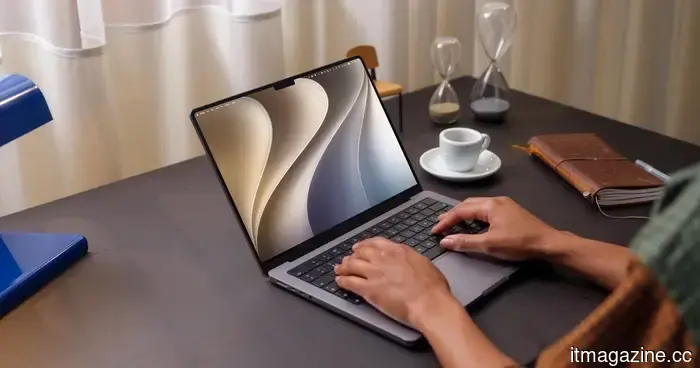 I discovered five desk organization tools that I would gladly suggest for Back-to-School.
Are you dealing with tangled cords, lost keys, and a desk that resembles a black hole? Here are five gadgets that can truly help you organize your workspace.
I discovered five desk organization tools that I would gladly suggest for Back-to-School.
Are you dealing with tangled cords, lost keys, and a desk that resembles a black hole? Here are five gadgets that can truly help you organize your workspace.
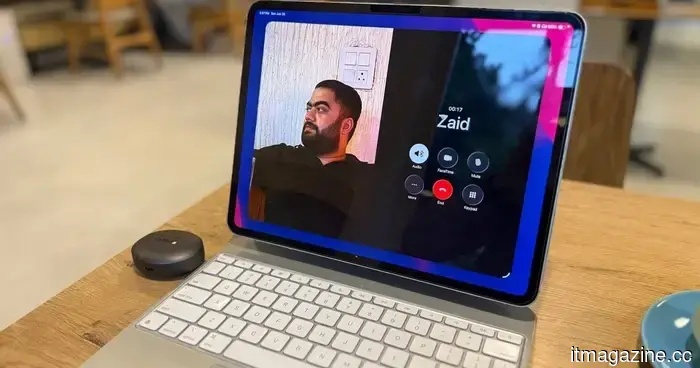 From lecture notes to design tasks, I have selected the ideal iPads that should be in your bag.
Whether you're seeking a digital notebook or a portable creative workstation, Apple's current iPad range offers a student-friendly choice for almost every type of workload and budget.
From lecture notes to design tasks, I have selected the ideal iPads that should be in your bag.
Whether you're seeking a digital notebook or a portable creative workstation, Apple's current iPad range offers a student-friendly choice for almost every type of workload and budget.
 Lenovo's newest enhancements for stylish gaming setups include a metallic Hall effect keyboard and a 59g mouse.
Lenovo has introduced new gaming equipment under the Legion brand, featuring a metallic Hall effect keyboard and a 59g mouse, both of which support 8,000Hz polling.
Lenovo's newest enhancements for stylish gaming setups include a metallic Hall effect keyboard and a 59g mouse.
Lenovo has introduced new gaming equipment under the Legion brand, featuring a metallic Hall effect keyboard and a 59g mouse, both of which support 8,000Hz polling.
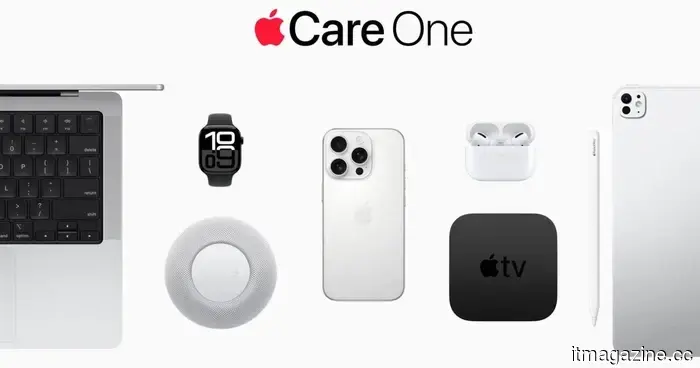 Apple's top device protection offer is finally departing from the US.
AppleCare One is set to expand outside the US for the first time, offering bundled protection for several Apple devices in four new countries starting August 4.
Apple's top device protection offer is finally departing from the US.
AppleCare One is set to expand outside the US for the first time, offering bundled protection for several Apple devices in four new countries starting August 4.
Ominimo reaches a valuation of €1.4 billion two years post-launch.
The venture arm of the EBRD headed a €20.1 million Series B round for Budapest-based motor insurer Ominimo, which is valued at €1.4 billion. The company is profitable and has not yet begun underwriting.