
Nuclear Turbines has secured £15M in funding for compact reactors that it claims could compete with fossil fuels on price.
Nuclear power typically comes with substantial costs and extended timelines. However, Nuclear Turbines, a startup from Manchester that originated from BAE Systems, has secured £15M to demonstrate that this does not have to be the case, especially as nuclear power startups across Europe are attracting unprecedented amounts of investment.
The initial funding round was led by IQ Capital, with participation from Rhapsody Venture Partners, Zero Carbon Capital, and Empirical Ventures. The funds will be utilized to validate the company’s reactor design, construct large-scale testing facilities, and expand the team in preparation for producing its first fuel elements. The company claims its technology goes beyond traditional small modular reactors that are currently competing for contracts in the UK.
The innovation involves a replacement strategy. Nuclear Turbines substitutes the conventional steam turbine systems with high-temperature turbine technology adapted from jet engines and gas power stations. By removing the steam infrastructure, the reactor can become compact enough to be situated 'behind the meter' at industrial sites, directly powering data centres, factories, and manufacturing plants instead of supplying the grid.
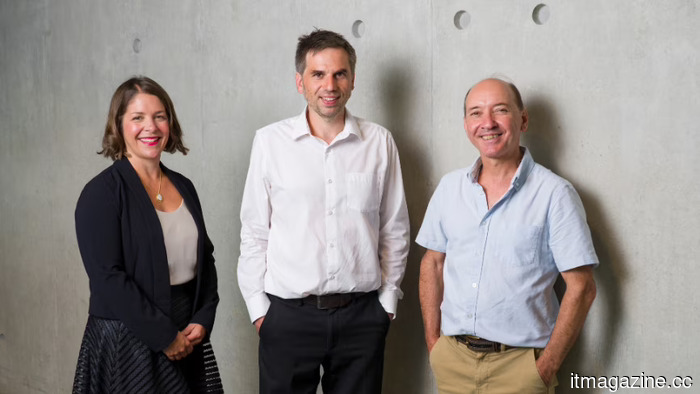
The startup was co-founded by Jeremy Owston, a former Principal Engineer at BAE Systems, and Tim Abram, a nuclear engineer and professor at the University of Manchester, in collaboration with Empirical Ventures’ venture studio. It emerged from BAE’s internal “Launchpad” program, which highlights the intersection of reactor engineering and defense.
The figures the funding round is based on are compelling. Nuclear Turbines claims that its technology could produce electricity at a cost that is one-fifth of current nuclear plants and could even bring nuclear prices below those of fossil fuels, though these are projections rather than proven outcomes.
“Our approach flips the traditional model on its head: we began with the most cost-effective method to generate power and designed a reactor around that,” said co-founder Owston. “To achieve our climate goals while reindustrializing, we need energy that is both clean and affordable. We believe we have developed the only technology that meets both criteria, originating from the UK.”
The commercial viability is underscored by a real issue impacting UK businesses. According to Deloitte, they face some of the highest electricity costs in Europe, about 50% more than companies in France and Germany, and approximately four times what businesses in the US pay.
In contrast, conventional nuclear projects often cost tens of billions of pounds and take decades to complete, which is a reason why reactor developers targeting data centres are receiving positive responses.
"This is the first genuinely economical and sustainable SMR design I’ve come across, especially given the current market dynamics, government aspirations, and regulatory changes that are creating unique opportunities,” stated Jordan Billiald, a principal at IQ Capital, which led the funding round. Supporters of the raise also included backers from Empirical Ventures, Rhapsody Venture Partners, Zero Carbon Capital, and BAE Systems.
Additionally, Nuclear Turbines has appointed Lauren Dickerson as Chief Commercial and Strategy Officer. She previously served as Strategy Director at Centrica for over four years. Her hiring indicates that the company is considering customer needs early in its development process.
The timing of the initiative aligns strategically with UK policies, including the 2025 Nuclear Regulatory Review, which is anticipated to be a “radical reset,” the Clean Energy Industries Sector Plan, and the government’s Advanced Nuclear Framework. Britain is also developing a new uranium enrichment facility to supply the high-assay fuel required by advanced reactors, addressing a supply chain gap that led another UK nuclear startup to establish operations abroad.
At present, the claims made by Nuclear Turbines are ahead of the tangible technology. The company has a design, a secured plan to test it, and ambitious forecasts. The next few years, along with the testing facilities, will be critical in determining whether the jet engine-inspired technology can achieve its promises in the nuclear domain.
Other articles
 God of War Laufey has finally received a release date, and there's positive news for fans of Kratos as well.
Santa Monica Studio has announced that God of War Laufey is set to be released on February 16, 2027, and has disclosed that another title featuring Kratos is currently in development.
God of War Laufey has finally received a release date, and there's positive news for fans of Kratos as well.
Santa Monica Studio has announced that God of War Laufey is set to be released on February 16, 2027, and has disclosed that another title featuring Kratos is currently in development.
 Xbox is addressing one of the largest frustrations with download speeds in the PC app.
Microsoft is trialing a Smart Download Client for Xbox that automatically connects to the fastest download server, which promises to speed up game installations on both PC and consoles.
Xbox is addressing one of the largest frustrations with download speeds in the PC app.
Microsoft is trialing a Smart Download Client for Xbox that automatically connects to the fastest download server, which promises to speed up game installations on both PC and consoles.
 Apple's smartwatches are expected to retain their current design for at least the next year or two.
According to Bloomberg, Apple's upcoming Watch lineup will retain the same appearance as previous models, as the company emphasizes internal updates rather than design changes in its 2026 refresh.
Apple's smartwatches are expected to retain their current design for at least the next year or two.
According to Bloomberg, Apple's upcoming Watch lineup will retain the same appearance as previous models, as the company emphasizes internal updates rather than design changes in its 2026 refresh.
 A new iPhone application can detect Meta smart glasses in the vicinity.
Earlier this year, Android users were introduced to a unique privacy feature that could notify them when smart glasses were in the vicinity. Now, five months later, iPhone users have access to a comparable tool, and its title clearly expresses its stance on Meta. AntiZuck is a $2.99 iPhone application that detects Bluetooth signals linked to smart glasses and sends alerts […]
A new iPhone application can detect Meta smart glasses in the vicinity.
Earlier this year, Android users were introduced to a unique privacy feature that could notify them when smart glasses were in the vicinity. Now, five months later, iPhone users have access to a comparable tool, and its title clearly expresses its stance on Meta. AntiZuck is a $2.99 iPhone application that detects Bluetooth signals linked to smart glasses and sends alerts […]
 Lenovo’s $99 280Hz gaming monitor is designed for those on a tight budget.
Lenovo has introduced two budget-friendly 280Hz gaming monitors aimed at competitive gamers, spearheaded by a 23.8-inch version priced locally at approximately $99.
Lenovo’s $99 280Hz gaming monitor is designed for those on a tight budget.
Lenovo has introduced two budget-friendly 280Hz gaming monitors aimed at competitive gamers, spearheaded by a 23.8-inch version priced locally at approximately $99.
 Google now provides a guarantee of $44 billion for rent belonging to others.
Google has consented to cover as much as $44 billion in lease payments for data centers that it does not own, an increase from $6.5 billion in September. This is part of its strategy for selling TPUs.
Google now provides a guarantee of $44 billion for rent belonging to others.
Google has consented to cover as much as $44 billion in lease payments for data centers that it does not own, an increase from $6.5 billion in September. This is part of its strategy for selling TPUs.
Nuclear Turbines has secured £15M in funding for compact reactors that it claims could compete with fossil fuels on price.
BAE Systems' spinout, Nuclear Turbines, has secured £15 million to develop compact reactors that claim to generate nuclear power at just one-fifth of the current expenses.