
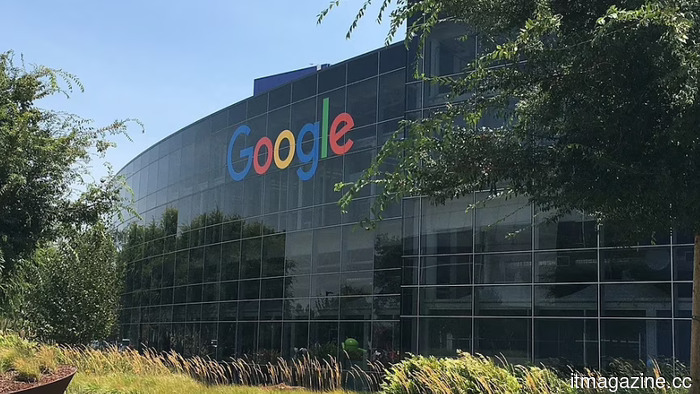
Google now provides a guarantee of $44 billion for rent belonging to others.
Begin with the figure, as it has changed rapidly.
Google has agreed to assume up to $44 billion in lease payments for data centers owned by third parties in the event that the tenant fails to make payments. This amount was disclosed last week. At the end of September, the previous figure was $6.5 billion, according to The Information.
This represents an increase of nearly seven times in just nine months.
The commitment is straightforward in its description but challenging to quantify. Google does not own or occupy the facilities; it has informed lenders that if the tenant ceases to pay, Google will step in.
Why a search engine company is backing other tenants’ rent
The reason is semiconductors. Google seeks customers for its tensor processing units, which it is positioning as an alternative to Nvidia's offerings.
A guarantee from a company with Google's financial strength allows a data center developer to borrow at lower costs. Reduced borrowing costs make the project viable, which helps secure purchases of TPUs that the AI company Anthropic will rent.
Readers may be familiar with this process. In June, we reported how Google adopted Nvidia’s strategy, including a $3.2 billion guarantee at Lake Mariner in New York, $7 billion at River Bend in Louisiana, and $1.4 billion in Texas.
What’s new is the overall amount and its rapid growth. Those individual guarantees have now merged into a single disclosed total that has nearly expanded sevenfold since September.
A different kind of financial structure
Until recently, large corporations had straightforward financials. Cash easily covered debts multiple times. That is no longer the case.
Now, they employ strategies long used on Wall Street, expanding operations without taking on all the associated risks themselves. The guarantee exemplifies this: it has no current cost yet could result in significant liability in adverse situations.
We have discussed the total before. Five major US companies hold $1.65 trillion of off-balance-sheet AI obligations, exceeding what they report directly. This narrative is told through the lens of one company and one financial item.
The mechanics and legality
Moody’s outlined the process earlier this year. The five largest US hyperscalers had accumulated $969 billion in future lease obligations by the end of 2025, with approximately $662 billion not yet initiated, meaning this portion is not reflected on their balance sheets, as reported by Fortune. This hidden amount represents 113% of the adjusted debt of the five firms.
The reason lies in the equipment. Data center leases traditionally lasted 10 to 15 years, while AI hardware is beneficial for only four to six. As a result, tenants are seeking shorter leases with renewal options, and landlords require security before constructing.
This security is typically a residual value guarantee. If a tenant defaults and the building's value falls below a set threshold, the tenant must cover the difference.
Accounting regulations allow this to remain off the books. A renewal is counted as a liability only if it is deemed “reasonably certain,” a bar set above 70%. As it is impossible to predict AI hardware needs for 2031, companies can argue that a renewal is likely without asserting certainty, allowing the guarantee to be merely noted in footnotes.
Meta demonstrates this scale. It reported data center leases starting in 2029 valued at around $12.3 billion, coupled with a residual value guarantee with a $28 billion threshold. It deemed the likelihood of payoff to be improbable, so no liability was recorded. Its $50 billion Hyperion campus in Louisiana utilizes a similar structure.
‘Every nook and cranny’
The impetus for this creativity is the growing financial demands that have outpaced traditional funding mechanisms.
John Greenwood, Goldman Sachs’s global head of infrastructure and real asset finance, mentioned he is “searching for capital in every nook and cranny” to support the anticipated $7.5 trillion in spending on chips, data centers, and power over the next five years, according to The Information.
The search continues beyond this. Much of this funding is allocated toward chips that require replacement every few years, leading to recurring expenses.
The challenge that money cannot resolve quickly
Capital is not the sole limitation. Nvidia asserts that the greater constraint is physical resources.
“What’s limiting access to compute capacity is the difficulty in finding powered data centers and suitable land,” stated Raj Mirpuri, Nvidia’s vice president of global AI clouds and infrastructure.
This explains the existence of the guarantees. A commitment from a trillion-dollar balance sheet is the quickest means to transform a plot with a grid connection into a facility filled with chips. Nvidia is adopting a similar approach, utilizing its own resources to assist customers in affording chips and helping partners finance the infrastructure to house them.
Why it is significant on Wednesday
Meta and Microsoft are set to report on Wednesday, followed by Amazon and Apple on Thursday. Alphabet was the first to report
Другие статьи
 Сэм Альтман обновляет свою идею «демократического ИИ», в то время как Anthropic занимает более жесткую позицию.
Сэм Альтман рассматривает гонку ИИ как противостояние демократий и авторитарных режимов. Anthropic Дарио Амодеи хочет более строгих контролей за экспортом чипов, а не более свободных.
Shein раскрывает замедление прибыли и квартальный убыток перед IPO в Гонконге
Проект проспекта Shein показывает выручку в 41,8 миллиарда долларов в 2025 году, падение прибыли на 38,7% и квартальный убыток в 99 миллионов долларов в условиях роста тарифов.
Сэм Альтман обновляет свою идею «демократического ИИ», в то время как Anthropic занимает более жесткую позицию.
Сэм Альтман рассматривает гонку ИИ как противостояние демократий и авторитарных режимов. Anthropic Дарио Амодеи хочет более строгих контролей за экспортом чипов, а не более свободных.
Shein раскрывает замедление прибыли и квартальный убыток перед IPO в Гонконге
Проект проспекта Shein показывает выручку в 41,8 миллиарда долларов в 2025 году, падение прибыли на 38,7% и квартальный убыток в 99 миллионов долларов в условиях роста тарифов.
 Сгенерированные ИИ «врачи», продающие поддельные лекарства на TikTok, представляют собой «огромную опасность», предупреждают эксперты
Исследование показало, что контент, созданный ИИ, встречается в 40% лучших видео о здоровье на TikTok, что побудило врачей и чиновников NHS предупредить о потенциальной угрозе общественной безопасности.
Сгенерированные ИИ «врачи», продающие поддельные лекарства на TikTok, представляют собой «огромную опасность», предупреждают эксперты
Исследование показало, что контент, созданный ИИ, встречается в 40% лучших видео о здоровье на TikTok, что побудило врачей и чиновников NHS предупредить о потенциальной угрозе общественной безопасности.
 Уличные торговцы едой Нью-Йорка переходят на электричество в рамках испытания на чистый воздух
Нью-Йорк тестирует пищевые тележки на аккумуляторах, чтобы снизить уровень шума, загрязнение воздуха и расход топлива, одновременно улучшая условия труда для уличных торговцев.
Уличные торговцы едой Нью-Йорка переходят на электричество в рамках испытания на чистый воздух
Нью-Йорк тестирует пищевые тележки на аккумуляторах, чтобы снизить уровень шума, загрязнение воздуха и расход топлива, одновременно улучшая условия труда для уличных торговцев.
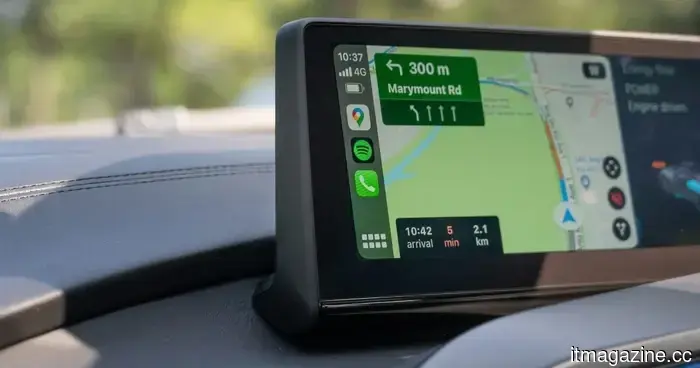 Самое большое обновление Google Maps для Android Auto достигает большего числа пользователей
Google расширяет Иммерсивную навигацию и живой спидометр в Android Auto, предоставляя более подробные карты и лучшую информацию о вождении большему числу пользователей.
Самое большое обновление Google Maps для Android Auto достигает большего числа пользователей
Google расширяет Иммерсивную навигацию и живой спидометр в Android Auto, предоставляя более подробные карты и лучшую информацию о вождении большему числу пользователей.
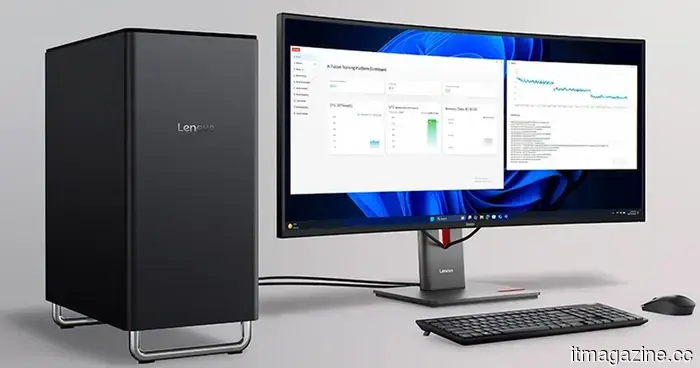 Следующий настольный компьютер ThinkCenter от Lenovo готов выйти на рынок, но цена заставит вас дважды моргнуть.
Настольный компьютер Lenovo ThinkCentre X выходит на рынок США с до 256 ГБ ОЗУ, двумя графическими картами RTX 5060 Ti и флагманской конфигурацией, стоимость которой составляет почти 14 000 долларов.
Следующий настольный компьютер ThinkCenter от Lenovo готов выйти на рынок, но цена заставит вас дважды моргнуть.
Настольный компьютер Lenovo ThinkCentre X выходит на рынок США с до 256 ГБ ОЗУ, двумя графическими картами RTX 5060 Ti и флагманской конфигурацией, стоимость которой составляет почти 14 000 долларов.
Google now provides a guarantee of $44 billion for rent belonging to others.
Google has consented to cover as much as $44 billion in lease payments for data centers that it does not own, an increase from $6.5 billion in September. This is part of its strategy for selling TPUs.