

According to a watchdog, Facebook and Instagram displayed ads for a nudify application from a sole Chinese company.
A watchdog organization claims that Meta has run thousands of advertisements for apps that digitally undress women, with the ad network traced back to a single company in China. This revelation comes as Meta has spent over a year asserting progress in combating such issues, despite facing separate lawsuits concerning scam ads on its platforms.
The Tech Transparency Project released findings that identified 210 Facebook pages linked to a Chinese company referred to as GatherOne. Collectively, these pages ran approximately 30,800 ads for face-swapping and AI tools, with 43 of them promoting over 7,600 ads for apps designed to create non-consensual images of women, according to the report.
GatherOne, associated with entities registered in Beijing and Hong Kong and a main shareholder named Wang Hao, is at the heart of this operation. Following the report's release, the company announced it would halt new ad applications for its AI nudify services.
Meta's enforcement record further illustrates the situation. Of the 210 pages, 179—representing 85%—ran ads that the company later removed for violating its policies regarding adult sexual exploitation, sexual solicitation, and nudity, with many featuring women simulating sexual acts.
Throughout the investigation, Meta removed ads and disabled accounts, but the watchdog found parts of the network still operational. A spokesperson mentioned that the company takes “aggressive steps” against such applications but did not address the group's specific inquiries.
In early 2025, Meta shared over 3,800 URLs for nudify apps with other tech companies as part of an industry initiative called Lantern and claimed to have developed detection tools for this type of advertisement. The report suggests these tools are not sufficiently countering the advertisers exploiting them.
This situation is not new. In June 2025, Meta sued Joy Timeline HK Limited, the Hong Kong developer of an app called CrushAI, after it ran over 87,000 ads on at least 135 Facebook pages. The company indicated it had been taking action against this advertiser since 2023, reflecting an Indian directive from the previous year to remove child abuse ads from Instagram.
These advertisements were quite blatant, with many promoting the capability to “erase any clothes” from photographs, primarily targeting users in the US, Canada, the UK, Australia, and Germany. CBS News highlighted hundreds of such ads months prior to Meta's lawsuit.
The lawsuit did not halt the advertisements. Researchers from the American Sunlight Project and Indicator documented an additional 4,215 nudify ads in the three months following Meta's introduction of new detection technology, which reached an estimated 359,547 users in the EU and UK alone. Even when the company blocked ads from a flagged website, the operators frequently managed to run hundreds more through new pages and accounts.
Some advertisers had registered under names like “ddd” and “111,” which researchers noted violate the transparency requirements of the EU's Digital Services Act, a law mandating that platforms disclose the identities of those funding each ad. This discrepancy is significant because a network concealed behind nonsensical names is difficult for regulators to trace to a bank account.
These reports emerge as regulators intensify their scrutiny. The TAKE IT DOWN Act, enacted into US law in May 2025, mandates platforms to remove non-consensual intimate imagery within 48 hours of a valid request and grants the Federal Trade Commission enforcement authority, with a major compliance deadline this year.
In the UK, there are movements to criminalize the creation of sexually explicit deepfakes, a part of a broader reckoning that turned the deluge of Taylor Swift deepfakes into a wake-up call for lawmakers. The underlying issue across these developments is that the ads continue to proliferate due to automated reviews allowing them to pass, and the funding is coming from sources that Meta claims it cannot fully trace.
Other articles
 Thrift-maxxing jeopardizes the IPOs of OpenAI and Anthropic.
A million AI words are priced at $50 from Anthropic and 87 cents from DeepSeek. American companies are incorporating Chinese models, and the IPO valuations of the labs are under scrutiny.
Thrift-maxxing jeopardizes the IPOs of OpenAI and Anthropic.
A million AI words are priced at $50 from Anthropic and 87 cents from DeepSeek. American companies are incorporating Chinese models, and the IPO valuations of the labs are under scrutiny.
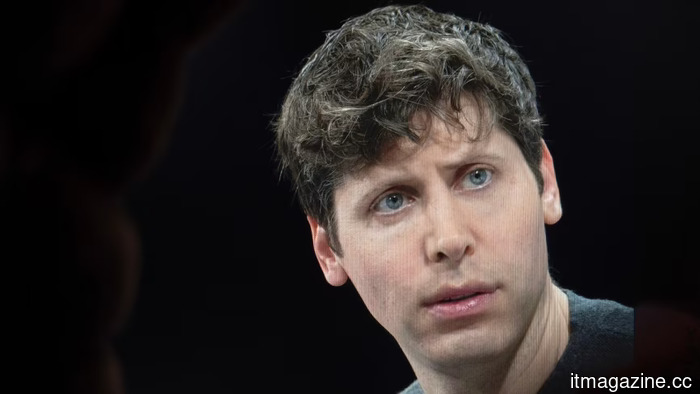 Sam Altman reiterates his ‘democratic AI’ message while Anthropic takes a firmer stance.
Sam Altman portrays the AI competition as a struggle between democracies and authoritarian regimes. Dario Amodei’s company, Anthropic, advocates for stricter chip export regulations instead of more relaxed ones.
Sam Altman reiterates his ‘democratic AI’ message while Anthropic takes a firmer stance.
Sam Altman portrays the AI competition as a struggle between democracies and authoritarian regimes. Dario Amodei’s company, Anthropic, advocates for stricter chip export regulations instead of more relaxed ones.
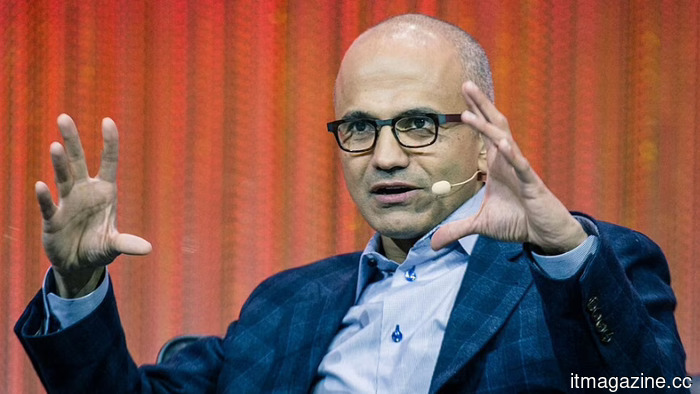 Nadella establishes a requirement for the AI surge on CNN.
Nadella refrains from labeling it a bubble, but indicates that AI needs to boost GDP, or the outcome will be unfavorable. In the meantime, Copilot receives chips prior to Azure customers.
Nadella establishes a requirement for the AI surge on CNN.
Nadella refrains from labeling it a bubble, but indicates that AI needs to boost GDP, or the outcome will be unfavorable. In the meantime, Copilot receives chips prior to Azure customers.
 The European operator Eutelsat is poised to receive $504 million as part of the US C-band spectrum initiative.
Eutelsat is set to receive $504 million for clearing the upper C-band airwaves as part of the FCC's new spectrum auction plan in the US, with the payment scheduled for 2031.
The European operator Eutelsat is poised to receive $504 million as part of the US C-band spectrum initiative.
Eutelsat is set to receive $504 million for clearing the upper C-band airwaves as part of the FCC's new spectrum auction plan in the US, with the payment scheduled for 2031.
 Nvidia is in discussions to support $250 billion of financing for OpenAI's data centers.
According to a report from the WSJ, Nvidia is said to be negotiating to secure approximately $250 billion in funding for an OpenAI data center in Ohio, although neither company has verified this information.
Shein reports a decline in profits and a quarterly loss before its IPO in Hong Kong.
Shein's preliminary prospectus indicates projected revenue of $41.8 billion for 2025, a profit decline of 38.7%, and a quarterly loss of $99 million due to the impact of tariffs.
Nvidia is in discussions to support $250 billion of financing for OpenAI's data centers.
According to a report from the WSJ, Nvidia is said to be negotiating to secure approximately $250 billion in funding for an OpenAI data center in Ohio, although neither company has verified this information.
Shein reports a decline in profits and a quarterly loss before its IPO in Hong Kong.
Shein's preliminary prospectus indicates projected revenue of $41.8 billion for 2025, a profit decline of 38.7%, and a quarterly loss of $99 million due to the impact of tariffs.
According to a watchdog, Facebook and Instagram displayed ads for a nudify application from a sole Chinese company.
A watchdog organization reports that Facebook and Instagram displayed thousands of advertisements for AI applications that undress women, linked to a network that can be traced back to one Chinese company.