
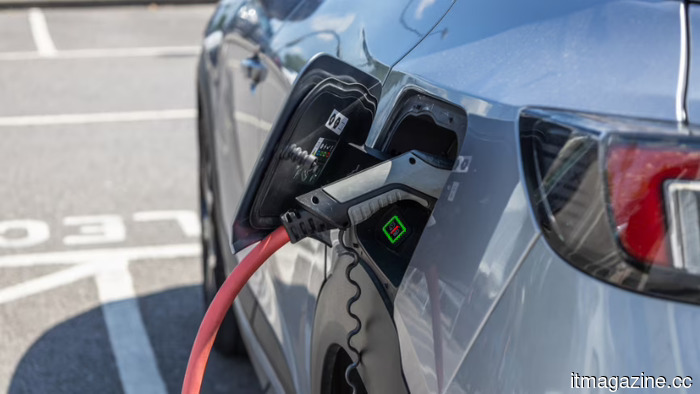
According to JD Power, electric vehicle owners are more satisfied with their cars compared to those who drive gasoline vehicles.
According to JD Power's 2026 Automotive Performance, Execution, and Layout (APEAL) study, electric vehicle (EV) owners rate their cars more favorably than owners of gasoline vehicles across nearly all categories assessed. The survey, which included 78,514 owners of 2026 model-year vehicles, revealed that EVs scored 109 points higher on a 1,000-point scale for powertrain satisfaction alone, marking the largest discrepancy among all evaluated categories. Overall satisfaction with new vehicles reached 858 points, an increase of seven points from the previous year, representing the most significant single-year growth since 2018.
EVs showed the highest year-over-year improvement among all powertrain types, gaining 22 points compared to the previous year. This rise comes as advancements in the vehicles are apparent, such as the adoption of NACS charging ports in most new models, the inclusion of heat pumps in more trims, and manufacturers enhancing range with upgraded battery technology. JD Power assessed owners on 37 different aspects, from driver seat comfort to the response of the acceleration pedal, with EVs leading or matching combustion vehicles in most areas.
The satisfaction metrics challenge the notion that mainstream consumers are becoming disillusioned with EVs. Early adopters typically overlook drawbacks, such as limited charging infrastructure, but the expansion of the consumer base was expected to lower satisfaction scores. Surprisingly, even first-time EV buyers reported high satisfaction levels, indicating that the barriers to EV adoption relate more to pricing and policies than to the ownership experience itself.
Additionally, a separate study by CDK Global found that 90 percent of current EV owners intend to purchase another electric vehicle, with 73 percent indicating their household will always have at least one EV. Only one percent expressed intentions to return solely to gasoline-powered vehicles. These loyalty rates have risen steadily from 82 percent a year earlier, attributed to improved ownership experiences and a growing used EV market providing more affordable options.
Nevertheless, there remains a disconnect between owner satisfaction and overall sales in the US EV market. This year has seen the discontinuation of more than a dozen EV models due to factors such as tariffs, the loss of federal tax credits, and declining demand affecting the economics of electric car sales. While EV owners report high levels of satisfaction, non-owners are purchasing fewer EVs, and the current policy landscape complicates efforts for automakers to bridge that gap.
Other articles
 Apple's smart glasses have been delayed due to concerns about igniting a privacy controversy.
Apple's smart glasses might not be available to consumers until late 2027, as the company is figuring out how to integrate cameras without compromising privacy.
Apple's smart glasses have been delayed due to concerns about igniting a privacy controversy.
Apple's smart glasses might not be available to consumers until late 2027, as the company is figuring out how to integrate cameras without compromising privacy.
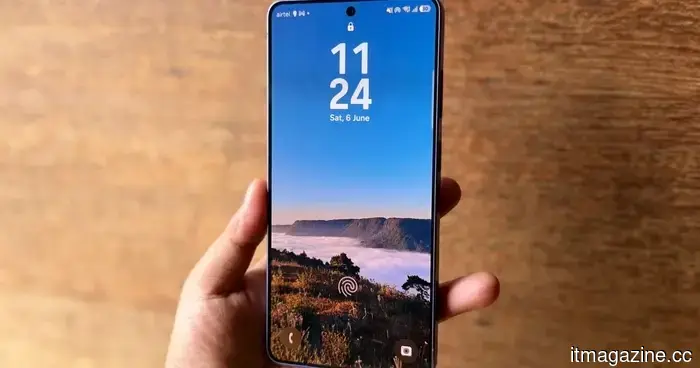 If you enter the incorrect PIN 13 times, your Galaxy phone will be permanently locked.
Galaxy devices that come with One UI 9.0 will permanently lock after 13 unsuccessful PIN entries, making a factory reset the only method to regain access.
If you enter the incorrect PIN 13 times, your Galaxy phone will be permanently locked.
Galaxy devices that come with One UI 9.0 will permanently lock after 13 unsuccessful PIN entries, making a factory reset the only method to regain access.
 The EU states that TikTok is still not taking sufficient measures to safeguard children.
The European Commission has stated that TikTok might be breaching the Digital Services Act by not sufficiently safeguarding the accounts and privacy of minors on its platform.
The EU states that TikTok is still not taking sufficient measures to safeguard children.
The European Commission has stated that TikTok might be breaching the Digital Services Act by not sufficiently safeguarding the accounts and privacy of minors on its platform.
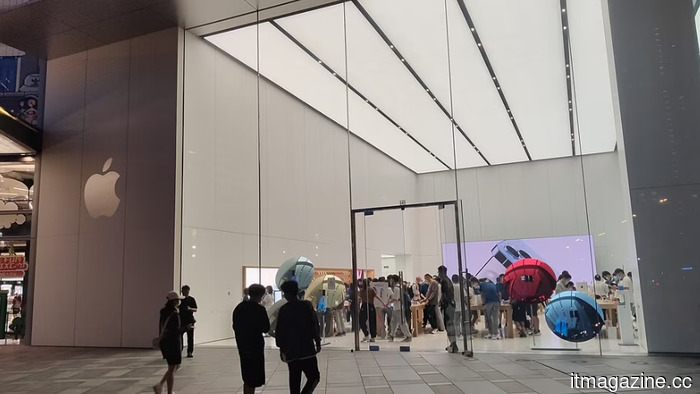 Apple aims for WWDC 2027 to launch smart glasses but is still deliberating on the camera feature.
Apple aims to introduce its first smart glasses at WWDC 2027, but is still uncertain about incorporating a camera due to increasing privacy concerns.
Apple aims for WWDC 2027 to launch smart glasses but is still deliberating on the camera feature.
Apple aims to introduce its first smart glasses at WWDC 2027, but is still uncertain about incorporating a camera due to increasing privacy concerns.
 Lenovo's newest enhancements for stylish gaming setups include a metallic Hall effect keyboard and a 59g mouse.
Lenovo has introduced new gaming equipment under the Legion brand, featuring a metallic Hall effect keyboard and a 59g mouse, both of which support 8,000Hz polling.
Lenovo's newest enhancements for stylish gaming setups include a metallic Hall effect keyboard and a 59g mouse.
Lenovo has introduced new gaming equipment under the Legion brand, featuring a metallic Hall effect keyboard and a 59g mouse, both of which support 8,000Hz polling.
According to JD Power, electric vehicle owners are more satisfied with their cars compared to those who drive gasoline vehicles.
JD Power's 2026 APEAL study revealed that electric vehicles surpassed combustion cars by 109 points in powertrain satisfaction and achieved the largest year-over-year improvements.