
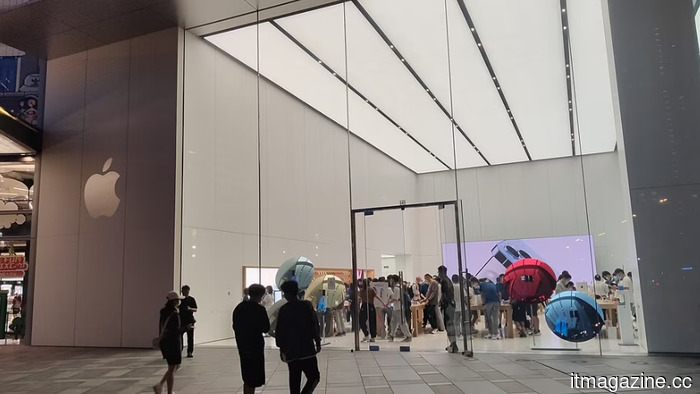
Apple aims for WWDC 2027 to launch smart glasses but is still deliberating on the camera feature.
Apple is planning to introduce its first smart glasses at the Worldwide Developers Conference in June 2027, with an expected consumer release by the end of that year, as reported by Bloomberg's Mark Gurman. However, the company's engineering and marketing teams are currently grappling with a crucial decision: whether to incorporate a camera into the glasses. The team, working on the device codenamed N50 within Apple’s Vision hardware division, prioritizes privacy concerns, according to Gurman.
This cautious approach arises from the backlash that Meta faced over privacy issues. While Meta has sold over seven million pairs of its Ray-Ban smart glasses, the built-in camera has raised significant privacy concerns, including incidents of women being secretly recorded in public and reports from Kenyan data workers who were asked to review private footage captured by the glasses. Apple executives are well aware that entering this market could jeopardize the strong privacy reputation their company has cultivated over the past decade.
Apple intends to implement privacy safeguards that exceed those offered by Meta and Samsung. The company is likely to prioritize on-device processing, avoid facial recognition technologies, and steer clear of anything similar to Meta's proposed “super-sensing” mode, which would analyze a wearer’s surroundings without activating a recording light. Moreover, Apple does not plan to adopt Meta's practice of allowing contractors to review video footage captured by the glasses, having already navigated a similar controversy concerning its Siri voice assistant.
One possibility under consideration by Apple executives is to include a complete camera system but disable both photo and video recording, limiting the cameras to providing visual data for AI applications that identify objects and locations. An alternative prototype eliminates the camera entirely, retaining functionalities such as hands-free Siri access, music playback, and phone calls without any recording features. Both options would sacrifice the key appeal of Meta’s glasses: the ability to effortlessly capture first-person video of memorable events.
The privacy concerns are far from theoretical. Apple is embarking on a critical product cycle, with anticipated launches including the 20th anniversary iPhone, a second-generation foldable, camera-equipped AirPods, and new Macs in 2027. In New York State, smart glasses have already been banned from courtrooms, and Royal Caribbean has prohibited their use in casinos, restrooms, and children’s areas. Samsung has referred to the privacy situation as an “industry-shared problem” demanding a collective resolution.
The glasses were initially slated for launch this year under the N50 codename, but Apple postponed the timeline to refine its privacy messaging. The company recognizes that good intentions do not prevent misuse; for instance, AirTags, designed for locating belongings, quickly became associated with stalking. Camera-equipped glasses will likely encounter similar issues, and Apple may spend years updating software and collaborating with regulators to tackle these challenges.
Other articles
 Apple's smart glasses have been delayed due to concerns about igniting a privacy controversy.
Apple's smart glasses might not be available to consumers until late 2027, as the company is figuring out how to integrate cameras without compromising privacy.
Apple's smart glasses have been delayed due to concerns about igniting a privacy controversy.
Apple's smart glasses might not be available to consumers until late 2027, as the company is figuring out how to integrate cameras without compromising privacy.
 Looking for back-to-school laptops? Here are the budget options I would genuinely suggest.
I researched the specifications, ratings, and prices of six of Amazon's top-selling budget laptops so you don't have to. Here's what is truly worth purchasing.
Looking for back-to-school laptops? Here are the budget options I would genuinely suggest.
I researched the specifications, ratings, and prices of six of Amazon's top-selling budget laptops so you don't have to. Here's what is truly worth purchasing.
 Apple’s smart glasses are delayed as the company aims to avoid causing a privacy controversy.
Apple's smart glasses might not be available to consumers until late 2027, as the company is addressing the challenge of incorporating cameras without infringing on privacy.
Apple’s smart glasses are delayed as the company aims to avoid causing a privacy controversy.
Apple's smart glasses might not be available to consumers until late 2027, as the company is addressing the challenge of incorporating cameras without infringing on privacy.
 The EU states that TikTok is still not taking sufficient measures to safeguard children.
The European Commission has stated that TikTok might be breaching the Digital Services Act by not sufficiently safeguarding the accounts and privacy of minors on its platform.
The EU states that TikTok is still not taking sufficient measures to safeguard children.
The European Commission has stated that TikTok might be breaching the Digital Services Act by not sufficiently safeguarding the accounts and privacy of minors on its platform.
 Lenovo has introduced a metallic Hall effect keyboard and a 59g mouse as their newest enhancements for stylish gaming configurations.
Lenovo has unveiled new Legion gaming equipment, featuring a metallic Hall effect keyboard and a 59g mouse, both of which support 8,000Hz polling.
Lenovo has introduced a metallic Hall effect keyboard and a 59g mouse as their newest enhancements for stylish gaming configurations.
Lenovo has unveiled new Legion gaming equipment, featuring a metallic Hall effect keyboard and a 59g mouse, both of which support 8,000Hz polling.
 Shopping for a phone for back-to-school while on a tight budget? There’s one phone I would wholeheartedly recommend.
Shopping for back to school typically involves choosing from a few reliable budget-friendly choices. This year, though, the selection is limited, with one standout option I would suggest for the upcoming school year, along with a strong alternative that has a drawback.
Shopping for a phone for back-to-school while on a tight budget? There’s one phone I would wholeheartedly recommend.
Shopping for back to school typically involves choosing from a few reliable budget-friendly choices. This year, though, the selection is limited, with one standout option I would suggest for the upcoming school year, along with a strong alternative that has a drawback.
Apple aims for WWDC 2027 to launch smart glasses but is still deliberating on the camera feature.
Apple aims to introduce its first smart glasses at WWDC 2027, but is still uncertain about incorporating a camera due to increasing privacy concerns.