
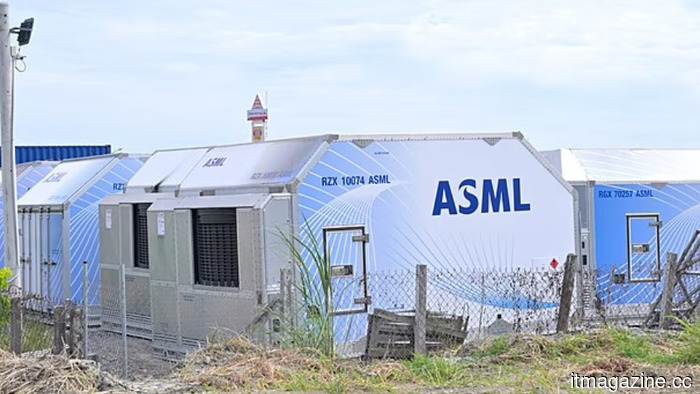
ASML's stock dropped by 6.5% following a report indicating that China has begun the mass production of DUV lithography equipment.
TL;DR: ASML's stock dropped 6.5% following a report from The Information that a company in Shanghai has started mass-producing DUV lithography tools. China's share of ASML’s sales decreased to 14% in Q2, down from 19% in Q1.
ASML shares in Amsterdam fell by as much as 6.5% on Monday after The Information reported that a Shanghai firm is now mass-producing immersion deep ultraviolet lithography tools. These are the kinds of machines ASML is prohibited from selling to China due to Dutch and US export controls. If the report holds true, it signifies precisely what the controls were meant to prevent: China developing domestic capabilities due to the inability to source them internationally.
ASML did not provide an immediate comment regarding the news. The share of China's contribution to ASML's net system sales declined to 14% in the second quarter, down from 19% in the first quarter. This decrease is indicative of tightening export restrictions and the potential that Chinese chipmakers are exploring alternative suppliers. Earlier this year, China was ASML's largest market, but the relationship has been deteriorating each quarter as the Dutch government, influenced by US interests, limits shipments of its NXT:2050i and NXT:2100i systems.
While DUV lithography is not considered cutting-edge by ASML's standards, as the company’s most advanced tools utilize extreme ultraviolet (EUV) technology—which China cannot replicate and has never been able to purchase—DUV machines can produce chips for the majority of electronics, ranging from vehicles to smartphones and AI inference accelerators. A domestic Chinese capability in DUV would weaken the commercial rationale for ASML's sales in China without bridging the technological divide at the forefront.
The US aims to completely restrict China's access to chip equipment, and the MATCH Act would compel the Netherlands and Japan to align their DUV restrictions with US regulations within 150 days. If China can now manufacture its own DUV tools, the leverage from these restrictions diminishes. ASML's stock performance reflects a market reassessing the risk to its revenue from China—not from regulatory actions, but from competition. The export controls were intended to slow China's progress, but they may have inadvertently motivated it to accelerate its development.
Other articles
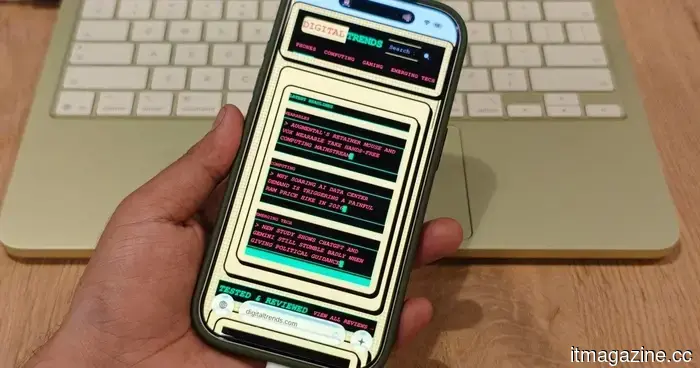 Gem Browser envisions a web where every website can be reimagined by you.
Gem Browser leverages Gemini to reconstruct actual web pages based on reader prompts, providing enhanced control over the interface but also prompting challenging inquiries regarding the fate of a publisher's original layout.
Gem Browser envisions a web where every website can be reimagined by you.
Gem Browser leverages Gemini to reconstruct actual web pages based on reader prompts, providing enhanced control over the interface but also prompting challenging inquiries regarding the fate of a publisher's original layout.
 FDA selects Dexcom for TEMPO pilot, bypassing premarket review.
The FDA designated Dexcom as its inaugural TEMPO participant, enabling digital health devices to be accessible to Medicare patients prior to authorization in return for real-world data.
FDA selects Dexcom for TEMPO pilot, bypassing premarket review.
The FDA designated Dexcom as its inaugural TEMPO participant, enabling digital health devices to be accessible to Medicare patients prior to authorization in return for real-world data.
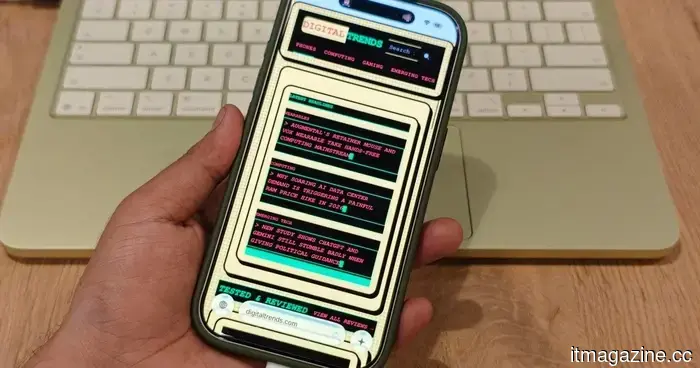 Gem Browser envisions an internet where you can reimagine the design of every website.
Gem Browser utilizes Gemini to reconstruct authentic web pages based on reader prompts, providing enhanced control over the interface but also raising difficult questions regarding the fate of a publisher's original design.
Gem Browser envisions an internet where you can reimagine the design of every website.
Gem Browser utilizes Gemini to reconstruct authentic web pages based on reader prompts, providing enhanced control over the interface but also raising difficult questions regarding the fate of a publisher's original design.
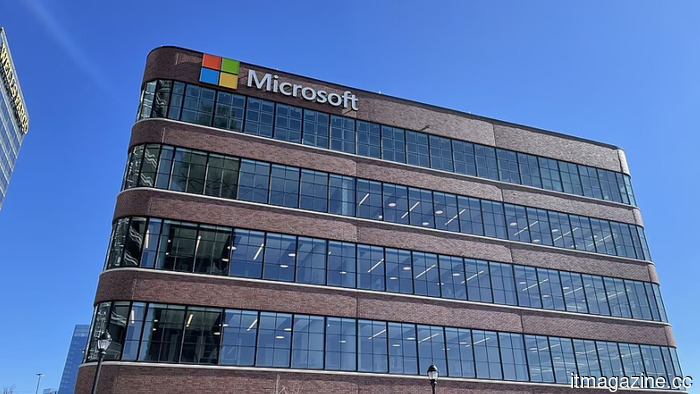 Microsoft seeks to appeal to the Supreme Court in the £270 million software resale case.
Microsoft is requesting permission from the Supreme Court to appeal following its loss at the Competition Appeal Tribunal and the Court of Appeal regarding the resale of pre-owned software licenses.
Microsoft seeks to appeal to the Supreme Court in the £270 million software resale case.
Microsoft is requesting permission from the Supreme Court to appeal following its loss at the Competition Appeal Tribunal and the Court of Appeal regarding the resale of pre-owned software licenses.
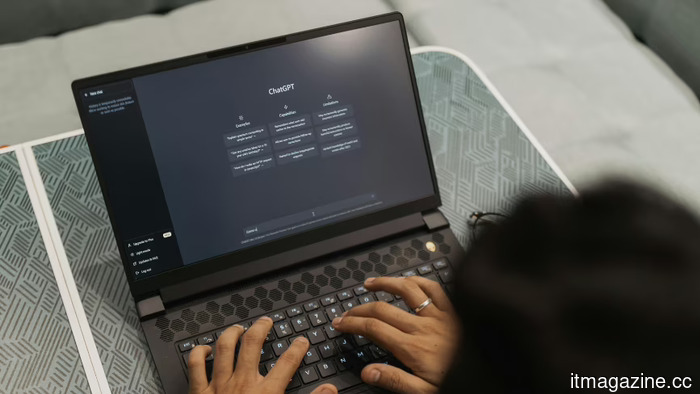 Young adults are utilizing ChatGPT to draft their face-to-face dialogues. Psychologists refer to this as an
An increasing number of young adults are utilizing AI chatbots to compose dating messages, icebreakers for parties, and instant replies during face-to-face conversations. Experts caution that this practice undermines self-confidence.
Enigma secured $70 million to enable anyone on the internet to manage its robots and understand how people truly wish to communicate with machines.
Enigma secured $70 million from Index and Ribbit to research human-robot interactions. Over 100 robots housed in hangars can be operated online. It was established by former hackers from Unit 8200.
Young adults are utilizing ChatGPT to draft their face-to-face dialogues. Psychologists refer to this as an
An increasing number of young adults are utilizing AI chatbots to compose dating messages, icebreakers for parties, and instant replies during face-to-face conversations. Experts caution that this practice undermines self-confidence.
Enigma secured $70 million to enable anyone on the internet to manage its robots and understand how people truly wish to communicate with machines.
Enigma secured $70 million from Index and Ribbit to research human-robot interactions. Over 100 robots housed in hangars can be operated online. It was established by former hackers from Unit 8200.
ASML's stock dropped by 6.5% following a report indicating that China has begun the mass production of DUV lithography equipment.
A company based in Shanghai has commenced the production of immersion DUV lithography machines, according to The Information. ASML's stock declined by 6.5%. China's contribution to ASML's sales decreased to 14%.