

FDA selects Dexcom for TEMPO pilot, bypassing premarket review.
On Tuesday, the US Food and Drug Administration (FDA) announced that Dexcom is the first manufacturer chosen for its Technology-Enabled Meaningful Patient Outcomes (TEMPO) pilot program. This initiative permits digital health devices to be made available to Medicare patients prior to official FDA authorization for such use.
The program operates under enforcement discretion. Instead of granting formal approval, the FDA agrees not to impose premarket authorization requirements for participating devices, as long as manufacturers gather and share real-world performance data of those devices.
What Dexcom is offering
The Dexcom Glucose Health Program aims to address two clinical use areas within the Centers for Medicare and Medicaid Services (CMS) ACCESS model. It is designed to enable patients and clinicians to track metabolic and nutritional health, receive personalized guidance, and obtain real-time data and AI-driven insights for behavioral changes.
According to the FDA, this program assists in screening for prediabetes and type 2 diabetes through integrated digital health metrics and may help improve glycemic control while reducing HbA1c levels in individuals with prediabetes. The agency has stated it will continue to assess the program's intended use throughout the pilot phase.
“For the millions of Americans with chronic health conditions, having access to the appropriate technology at the right moment can be transformative,” said Michelle Tarver, director of the FDA’s Center for Devices and Radiological Health. She remarked that this selection marks a significant step in generating “the real-world evidence needed to ensure these technologies truly deliver.”
The payment model underneath
TEMPO does not function independently; it is connected to ACCESS, a voluntary ten-year CMS payment model that launched its first cohort this month, including over 150 healthcare organizations.
ACCESS implements what CMS refers to as outcome-aligned payments, which are recurring payments related to whether participating organizations achieve measurable health improvements, as opposed to the quantity of services rendered. It focuses on chronic conditions that affect more than two-thirds of Medicare beneficiaries, such as hypertension, diabetes, chronic musculoskeletal pain, and depression.
“ACCESS creates a transparent payment framework that rewards quantifiable improvements in patient health, rather than the provision of individual services, while TEMPO aids in the responsible generation of the real-world evidence required to evaluate promising new technologies,” stated Abe Sutton, CMS deputy administrator and director of the Innovation Center.
A side door, with conditions
In December, law firm Hogan Lovells categorized the arrangement as a CMS-linked side door, indicating that the pilot might allow for the commercial use and promotion of products typically restricted under device regulations. Their analysis highlighted several unresolved issues regarding the extent of oversight.
Patients will not be left without information. ACCESS organizations utilizing a TEMPO device are required to obtain enhanced consent from beneficiaries, informing them that the device is part of an FDA pilot and that certain data will be communicated to the agency.
The FDA intends to choose up to approximately ten participants in each of the four ACCESS clinical use areas: early cardio-kidney-metabolic conditions, cardio-kidney-metabolic conditions, musculoskeletal pain, and behavioral health. The agency noted that its considerations will include the potential for significant risks to patient health, safety, or welfare.
The evidence question
The pilot hinges on the assumption that real-world data can partially replace the prospective trials that the FDA traditionally favors in device evaluations. Hogan Lovells observed that the use of real-world data to support device marketing applications has been limited, resulting in uncertainty surrounding the utility of TEMPO-generated evidence.
The FDA has also warned that participation in TEMPO does not guarantee a positive decision on any future marketing submission. The consequences for a device or the patients using it remain undefined if the real-world data yields inconclusive results.
A wider loosening
TEMPO emerges amid a broader transformation in the FDA's approach to consumer and AI-driven health technology. In January, the agency updated two guidance documents that reduced oversight on wearables and clinical decision support tools, allowing more AI-enabled health products to reach consumers without the necessity of premarket review.
The commercial landscape is advancing at a pace that outstrips the regulatory framework surrounding it. Amazon launched its Health AI assistant to all US customers this year, joining OpenAI's ChatGPT Health and Anthropic’s Claude for Healthcare in a competitive rush to provide AI-enabled health guidance to consumers.
Enterprise healthcare is also evolving. Bunkerhill Health secured $55 million to enable hospitals to develop and operate their own clinical AI agents instead of relying on fragmented vendor tools, while Microsoft introduced Copilot Health to scale AI solutions for consumer health inquiries.
Chronic disease remains the critical pressure point driving this trend. The WHO predicts that chronic conditions will account for 70% of global deaths by 2030, an increase from 61% in 2005, which underscores the pressing need for preventative and continuous monitoring technologies in both clinical and commercial contexts.
There is no specified deadline for manufacturers to express their interest in TEMPO. The FDA has indicated it will continue to send follow-up invitations to potential participants indefinitely.
Other articles
 Microsoft seeks to appeal to the Supreme Court in the £270 million software resale case.
Microsoft is requesting permission from the Supreme Court to appeal following its loss at the Competition Appeal Tribunal and the Court of Appeal regarding the resale of pre-owned software licenses.
Microsoft seeks to appeal to the Supreme Court in the £270 million software resale case.
Microsoft is requesting permission from the Supreme Court to appeal following its loss at the Competition Appeal Tribunal and the Court of Appeal regarding the resale of pre-owned software licenses.
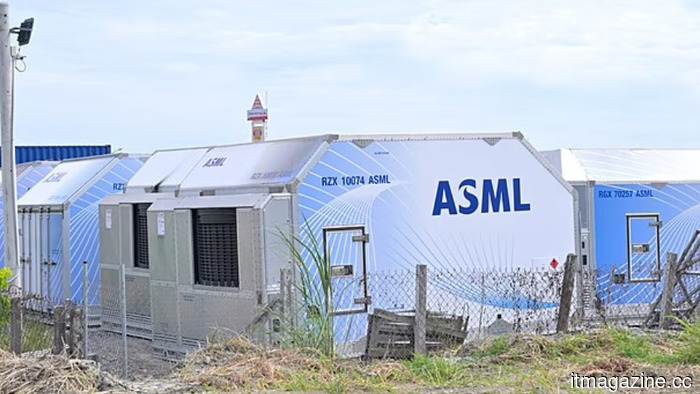 ASML's stock dropped by 6.5% following a report indicating that China has begun the mass production of DUV lithography equipment.
A company based in Shanghai has commenced the production of immersion DUV lithography machines, according to The Information. ASML's stock declined by 6.5%. China's contribution to ASML's sales decreased to 14%.
ASML's stock dropped by 6.5% following a report indicating that China has begun the mass production of DUV lithography equipment.
A company based in Shanghai has commenced the production of immersion DUV lithography machines, according to The Information. ASML's stock declined by 6.5%. China's contribution to ASML's sales decreased to 14%.
 Nvidia is in negotiations to secure $250 billion in debt for OpenAI's data centers.
Nvidia is allegedly considering a $250 billion support package for OpenAI's 10GW campus in Ohio, along with $350 billion in funding for chips. Critics have labeled this arrangement as circular.
Nvidia is in negotiations to secure $250 billion in debt for OpenAI's data centers.
Nvidia is allegedly considering a $250 billion support package for OpenAI's 10GW campus in Ohio, along with $350 billion in funding for chips. Critics have labeled this arrangement as circular.
 Microsoft developed a security system featuring AI agents from red, blue, and green teams. It will be available for public preview starting August 3.
Project Perception employs AI agents that continuously target, examine, and resolve security vulnerabilities. Microsoft's MAI-Cyber-1-Flash achieves a score of 96% on CyberGym, outperforming Mythos by 12 points.
Microsoft developed a security system featuring AI agents from red, blue, and green teams. It will be available for public preview starting August 3.
Project Perception employs AI agents that continuously target, examine, and resolve security vulnerabilities. Microsoft's MAI-Cyber-1-Flash achieves a score of 96% on CyberGym, outperforming Mythos by 12 points.
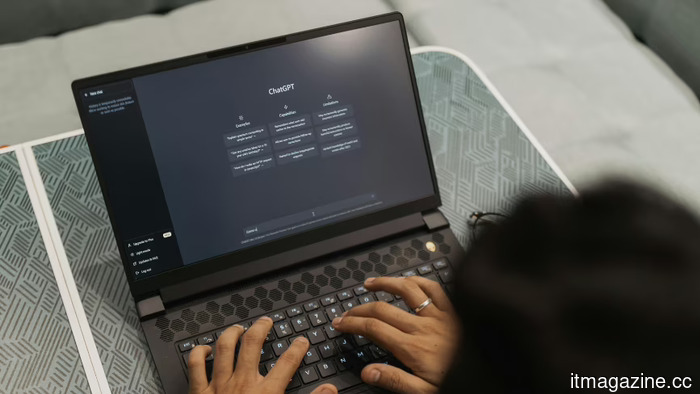 Young adults are utilizing ChatGPT to draft their face-to-face dialogues. Psychologists refer to this as an
An increasing number of young adults are utilizing AI chatbots to compose dating messages, icebreakers for parties, and instant replies during face-to-face conversations. Experts caution that this practice undermines self-confidence.
Young adults are utilizing ChatGPT to draft their face-to-face dialogues. Psychologists refer to this as an
An increasing number of young adults are utilizing AI chatbots to compose dating messages, icebreakers for parties, and instant replies during face-to-face conversations. Experts caution that this practice undermines self-confidence.
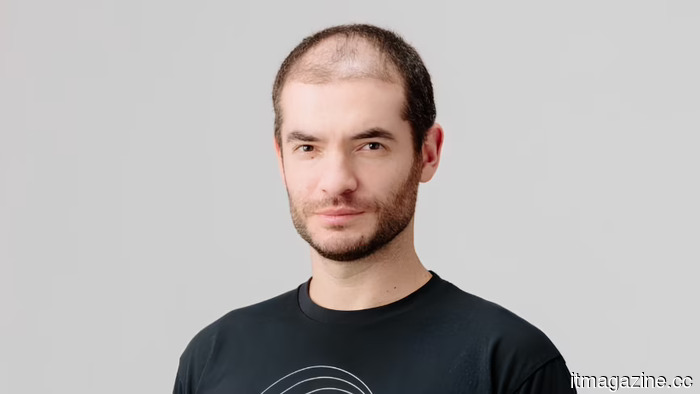 Nvidia invests in Sutskever's SSI to increase its computing power tenfold.
Nvidia has acquired a significant share in Safe Superintelligence, a lab that currently lacks a product. SSI claims that the funding will enable it to increase its computing power tenfold within the next year.
Nvidia invests in Sutskever's SSI to increase its computing power tenfold.
Nvidia has acquired a significant share in Safe Superintelligence, a lab that currently lacks a product. SSI claims that the funding will enable it to increase its computing power tenfold within the next year.
FDA selects Dexcom for TEMPO pilot, bypassing premarket review.
The FDA designated Dexcom as its inaugural TEMPO participant, enabling digital health devices to be accessible to Medicare patients prior to authorization in return for real-world data.