
Enigma secured $70 million to enable anyone on the internet to manage its robots and understand how people truly wish to communicate with machines.
TL;DREnigma secured a $70 million seed funding round from Index Ventures and Ribbit Capital to explore human-robot interaction on a large scale, with over 100 proprietary robots available for online control. The company was founded by Microsoft's youngest employee and a co-founder from Unit 8200.
Enigma, a robotics research lab that is less than a year old, has emerged from stealth mode, raising $70 million in a seed round led by Index Ventures and Ribbit Capital, with contributions from Sarah Guo’s Conviction Partners. Unlike others, the startup is not focused on creating a foundation model to enhance robotic abilities; instead, it aims to understand how humans prefer to interact with robots, positing that the interface challenge is more significant than the capability issue.
To explore this, Enigma is initiating a public experiment where anyone online can command over 100 of its proprietary robots located in facilities in Israel and California. These robots can engage in activities such as drawing with paintbrushes, dueling with swords, and conducting simple chemistry by mixing flasks. Enigma developed both the robotic arms and the underlying models independently. The experiment will examine various interaction methods, including text, voice, video demonstrations, and tap-and-drag, to uncover what co-founder Jonathan Jacobi describes as the “volume knob” of robotics: an interface so intuitive that users don’t need to think about it.
“If you had to do your dishes and spent 15 minutes telling a robot where to place everything, you’d eventually think, ‘Forget it, I’ll just do it myself,’” Jacobi explained to TechCrunch. “Right now, everyone feels that way, even with the most advanced models.” Jacobi, who was the youngest employee at Microsoft, was recruited by Wiz founder Asaf Rappaport. He co-founded Enigma with Gal Niv, a partnership that began when they competed in hacking contests as teenagers and served together in Israel’s Unit 8200. Neither co-founder is a roboticist. While NEURA Robotics raised $1.4 billion to develop physical AI from within, Enigma is banking on an outside-in approach, starting with the human experience rather than the robot's capabilities.
The business model is intentionally left vague. Jacobi did not disclose specific use cases, though he mentioned healthcare, logistics, and entertainment as potential early partners. The $70 million seed funding for a company lacking a product, revenue, and a defined launch strategy highlights investor trust in the team's capabilities over a detailed roadmap. Shield AI garnered $2 billion for its Hivemind autonomous pilot, and the robotics funding landscape currently favors teams with exceptional technical expertise and unconventional approaches. The key question is whether allowing the internet to engage in sword fights with robots will yield a groundbreaking interface or simply result in a costly research venture, which the $70 million is meant to explore.
Other articles
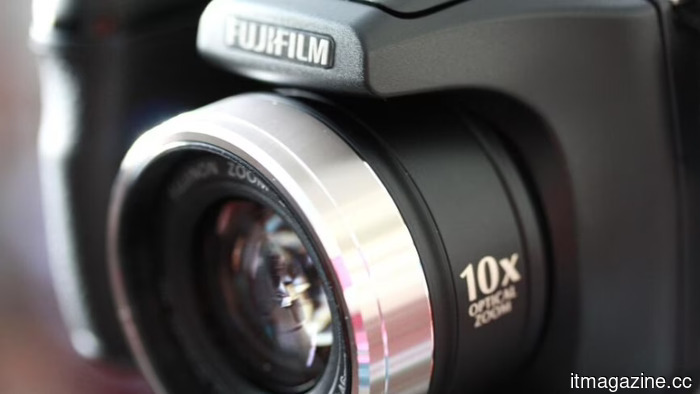 Fujifilm is increasing camera prices by as much as €500. The AI memory crisis has impacted the photography industry.
Fujifilm will increase the prices of five camera models starting September 1 due to rising DRAM costs. The X100 VI will see a price increase of €200, while the GFX100 II will rise by €500. Canon, Sony, and Nikon are anticipated to take similar actions.
Fujifilm is increasing camera prices by as much as €500. The AI memory crisis has impacted the photography industry.
Fujifilm will increase the prices of five camera models starting September 1 due to rising DRAM costs. The X100 VI will see a price increase of €200, while the GFX100 II will rise by €500. Canon, Sony, and Nikon are anticipated to take similar actions.
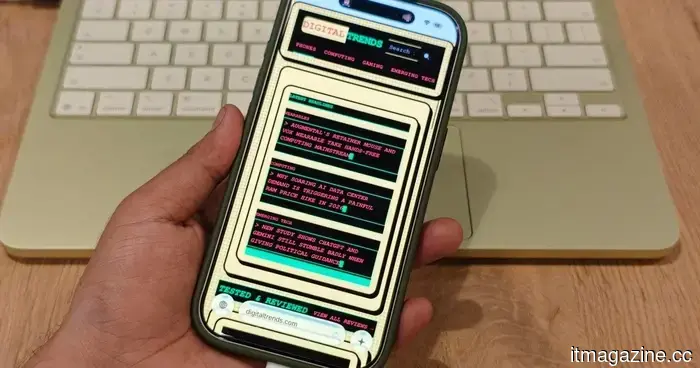 Gem Browser envisions an internet where you can reimagine the design of every website.
Gem Browser utilizes Gemini to reconstruct authentic web pages based on reader prompts, providing enhanced control over the interface but also raising difficult questions regarding the fate of a publisher's original design.
Dopl Technologies secures $6.3 million to introduce remote robotic ultrasound services in rural hospitals.
Dopl Technologies secured $6.3 million to develop a telerobotic ultrasound system. Sonographers will control it remotely using haptic controllers. The next step is obtaining FDA clearance. The system promises a 90% reduction in wait times.
Gem Browser envisions an internet where you can reimagine the design of every website.
Gem Browser utilizes Gemini to reconstruct authentic web pages based on reader prompts, providing enhanced control over the interface but also raising difficult questions regarding the fate of a publisher's original design.
Dopl Technologies secures $6.3 million to introduce remote robotic ultrasound services in rural hospitals.
Dopl Technologies secured $6.3 million to develop a telerobotic ultrasound system. Sonographers will control it remotely using haptic controllers. The next step is obtaining FDA clearance. The system promises a 90% reduction in wait times.
 Microsoft seeks to appeal to the Supreme Court in the £270 million software resale case.
Microsoft is requesting permission from the Supreme Court to appeal following its loss at the Competition Appeal Tribunal and the Court of Appeal regarding the resale of pre-owned software licenses.
Microsoft seeks to appeal to the Supreme Court in the £270 million software resale case.
Microsoft is requesting permission from the Supreme Court to appeal following its loss at the Competition Appeal Tribunal and the Court of Appeal regarding the resale of pre-owned software licenses.
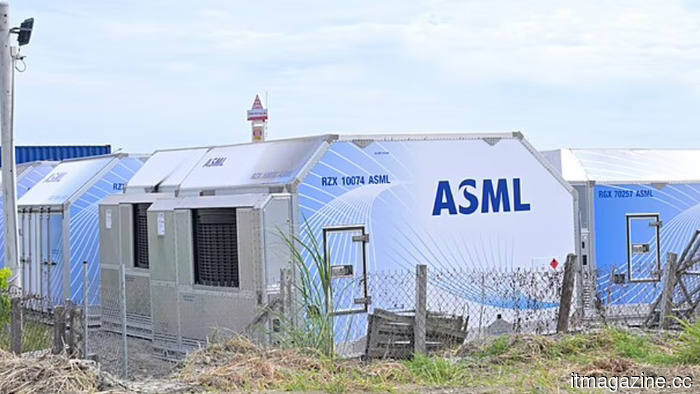 ASML's stock dropped 6.5% following a report indicating that China has commenced mass production of DUV lithography equipment.
A company located in Shanghai has started manufacturing immersion DUV lithography machines, according to The Information. ASML's stock declined by 6.5%, and China's portion of ASML's sales has decreased to 14%.
ASML's stock dropped 6.5% following a report indicating that China has commenced mass production of DUV lithography equipment.
A company located in Shanghai has started manufacturing immersion DUV lithography machines, according to The Information. ASML's stock declined by 6.5%, and China's portion of ASML's sales has decreased to 14%.
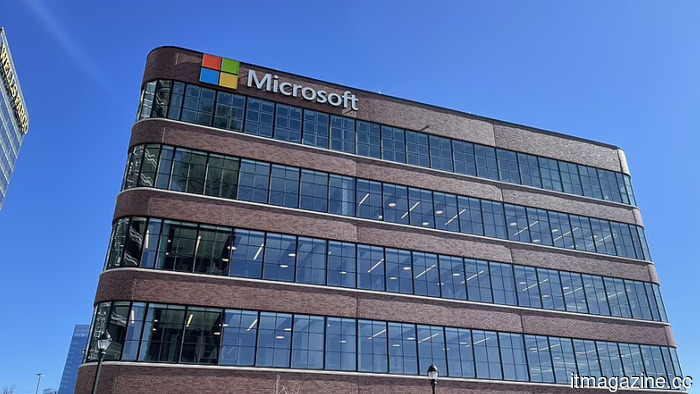 Microsoft is seeking to appeal to the Supreme Court in a £270 million case regarding software resale.
Microsoft is requesting permission from the Supreme Court to appeal following its defeats at the Competition Appeal Tribunal and the Court of Appeal regarding the resale of pre-owned software licenses.
Microsoft is seeking to appeal to the Supreme Court in a £270 million case regarding software resale.
Microsoft is requesting permission from the Supreme Court to appeal following its defeats at the Competition Appeal Tribunal and the Court of Appeal regarding the resale of pre-owned software licenses.
Enigma secured $70 million to enable anyone on the internet to manage its robots and understand how people truly wish to communicate with machines.
Enigma secured $70 million from Index and Ribbit to research human-robot interactions. Over 100 robots housed in hangars can be operated online. It was established by former hackers from Unit 8200.