
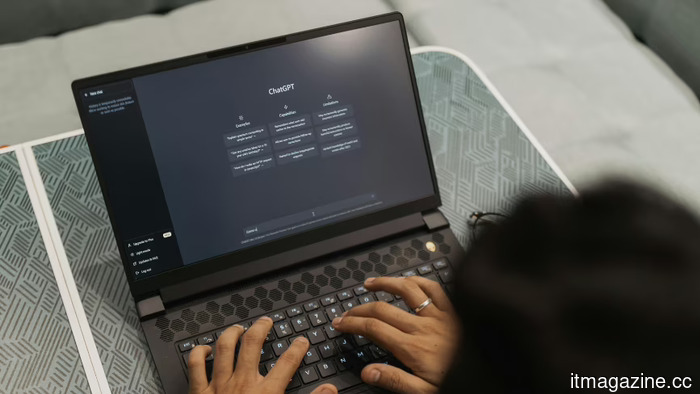
Young adults are utilizing ChatGPT to draft their face-to-face dialogues. Psychologists refer to this as an
TL;DR: Young adults are increasingly using AI chatbots to craft dating messages, icebreakers for parties, and real-time responses during conversations. Psychologists caution that this fosters “self-mistrust.” A relationship coach recommends limiting AI practice to once a week.
A rising number of young adults are turning to AI chatbots not just for their texts but also for face-to-face discussions, according to the Wall Street Journal. Niharika Abbaraju, a 20-year-old cancer researcher, utilizes ChatGPT for workplace research, but beyond work, it serves as her conversation assistant, generating lines for dating apps, party conversation starters, and immediate replies to nearby individuals. When a chat veers toward a book she hasn’t read, she resorts to an AI summary to navigate the topic.
She is not alone in this trend. Many young adults are allowing chatbots to guide their dating conversations and social interactions, particularly those with social anxiety. The outcomes can be noticeable: personal trainer Andrea Wallace observed a date’s suddenly improved texting grammar, which was a tell. Northwestern student Lucas Dvorak’s girlfriend described her experience with AI as feeling “creepy.” Kalin Lincoln, 20, uses ChatGPT to temper angry emails and prepare for tough conversations, but admits it misfired on one occasion, offering counterproductive advice.
Clinical psychologist Ashleigh Golden warns that relying on AI to validate the appropriateness of your texts subtly erodes trust in your instincts. Mental health experts label this trend an “epidemic of self-mistrust.” Relationship coach Alexandra Friedman recommends restricting AI usage for rehearsal to once per week and suggests that chatbots should help with content rather than delivery. Researchers from Wharton have termed “cognitive surrender” to describe individuals who defer to AI even when it is incorrect; the social equivalent reflects a similar phenomenon where reliance shifts to personality instead of facts. The AI version of a person may articulate better, but the in-person counterpart needs to manage the ongoing conversation.
A study indicated that AI-generated advice resulted in individuals being three times less accurate yet twice as confident, which mirrors the social experience: outsourcing dialogue boosts confidence in the scripted material rather than in oneself. Each moment of discomfort avoided translates to a missed opportunity for confidence growth. The chatbot manages the challenging aspects while the anxiety remains intact.
Other articles
 AI dramas require performers, leading Chinese platforms to convert human faces into stock assets.
Chinese platforms are compensating individuals for licensing their faces for AI-generated dramas, but the contracts may provide minimal protection once those digital likenesses are used outside the marketplace.
AI dramas require performers, leading Chinese platforms to convert human faces into stock assets.
Chinese platforms are compensating individuals for licensing their faces for AI-generated dramas, but the contracts may provide minimal protection once those digital likenesses are used outside the marketplace.
 Experts have discovered that it's relatively simple to trick AI chatbots into revealing recipes for bioweapons.
Researchers discovered that ongoing discussions could propel significant AI chatbots beyond their biological safety limits, as increasingly advanced models gain knowledge that concerns biosecurity specialists.
Angola secures $321 million in its largest IPO to date with the Unitel launch.
Angola divested a 15% share in Unitel for approximately $321 million, marking its largest initial public offering to date. The shares originate from a seizure in 2022 involving Isabel dos Santos.
Experts have discovered that it's relatively simple to trick AI chatbots into revealing recipes for bioweapons.
Researchers discovered that ongoing discussions could propel significant AI chatbots beyond their biological safety limits, as increasingly advanced models gain knowledge that concerns biosecurity specialists.
Angola secures $321 million in its largest IPO to date with the Unitel launch.
Angola divested a 15% share in Unitel for approximately $321 million, marking its largest initial public offering to date. The shares originate from a seizure in 2022 involving Isabel dos Santos.
 Microsoft seeks to appeal to the Supreme Court in the £270 million software resale case.
Microsoft is requesting permission from the Supreme Court to appeal following its loss at the Competition Appeal Tribunal and the Court of Appeal regarding the resale of pre-owned software licenses.
Microsoft seeks to appeal to the Supreme Court in the £270 million software resale case.
Microsoft is requesting permission from the Supreme Court to appeal following its loss at the Competition Appeal Tribunal and the Court of Appeal regarding the resale of pre-owned software licenses.
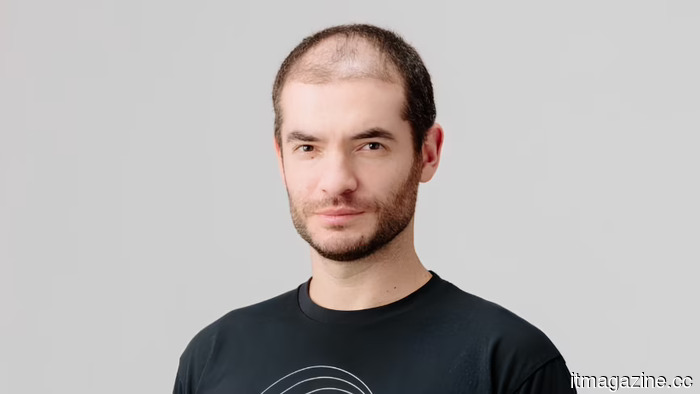 Nvidia invests in Sutskever's SSI to increase its computing power tenfold.
Nvidia has acquired a significant share in Safe Superintelligence, a lab that currently lacks a product. SSI claims that the funding will enable it to increase its computing power tenfold within the next year.
Nvidia invests in Sutskever's SSI to increase its computing power tenfold.
Nvidia has acquired a significant share in Safe Superintelligence, a lab that currently lacks a product. SSI claims that the funding will enable it to increase its computing power tenfold within the next year.
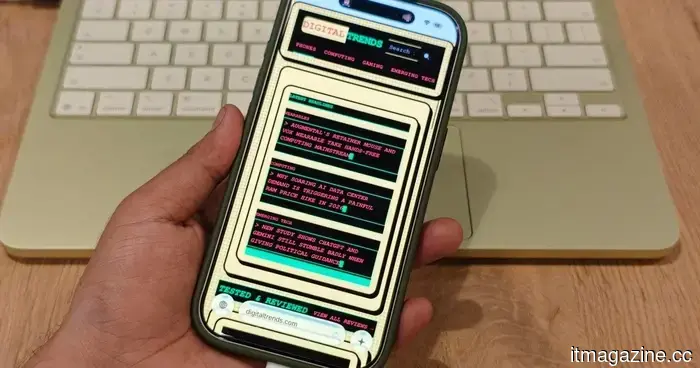 Gem Browser envisions an internet where you can reimagine the design of every website.
Gem Browser utilizes Gemini to reconstruct authentic web pages based on reader prompts, providing enhanced control over the interface but also raising difficult questions regarding the fate of a publisher's original design.
Gem Browser envisions an internet where you can reimagine the design of every website.
Gem Browser utilizes Gemini to reconstruct authentic web pages based on reader prompts, providing enhanced control over the interface but also raising difficult questions regarding the fate of a publisher's original design.
Young adults are utilizing ChatGPT to draft their face-to-face dialogues. Psychologists refer to this as an
An increasing number of young adults are utilizing AI chatbots to compose dating messages, icebreakers for parties, and instant replies during face-to-face conversations. Experts caution that this practice undermines self-confidence.