
Patreon reduces its workforce by 20% while being cautious about AI developments.
Patreon is reducing its workforce by 20%. The founder wants to clarify that this isn't due to AI. On Thursday, the creator-payments platform let go of 93 employees, approximately 20% of its staff, as first reported by 404 Media. CEO Jack Conte described the day as “painful” and took personal responsibility for the layoffs.
“The people at Patreon represent our core spirit,” he stated. “As the one accountable for this decision, I do not take it lightly.” He emphasized that the reason was not a struggling business, stating that the core remains "healthy and strong" with over 300,000 creators earning through the platform and billions being paid out annually with consistent monthly growth.
Conte attributed the layoffs to a market that has experienced “profound change in the last six months.” He explained that Patreon needed a more streamlined cost structure to remain “a stable, dependable rock for our creators.”
Regarding AI, Conte was cautious to clarify, “We are not making these changes because we believe AI replaces humans.” He remarked that while such tools are beneficial, they “are not substitutes for the creativity, judgment, or craftsmanship that our team possesses in abundance.”
However, he noted a significant caveat: “AI has fundamentally transformed the tech industry,” affecting “how we work, how we build products, how we communicate,” and ultimately “how we operate and organize.”
Thus, while AI is not responsible for job losses, it is reshaping the company that has made them. Conte has been more direct about the implications in other forums, stating on the Decoder podcast that Patreon must leverage these tools or risk becoming obsolete in three years.
The context of these layoffs is striking given recent financial figures. In April, Patreon announced its podcasters alone were projected to generate $629 million in 2025, a 33% increase from the previous year, featuring notable hosts like Quentin Tarantino and Bret Easton Ellis.
One observer expressed disbelief, noting, “And it had to cut staff?? Insane.” Conte explained that the transition towards becoming a “media and community network” demands time and financial support.
Those leaving will receive at least 16 weeks of pay, plus an additional week for each year of service. They also retain healthcare coverage through the end of the year and receive a $1,500 stipend for laptops. This is Patreon’s largest staff reduction since 2022, when around 80 positions were eliminated and the Dublin and Berlin offices were closed. Conte reassured that “this change enables us to continue building from a position of strength,” regardless of the chaotic circumstances.
The layoffs contrast with Patreon’s public stance on AI. Just a week earlier, the company announced it would block AI crawlers from scraping creators’ work for model training. Conte made the Cloudflare partnership announcement emphatically.
In March, he cautioned AI firms against deploying tools that would create “a bloodbath for the world’s creative people.” Internally, however, the company is adopting the same technology to become more efficient. It protects creators from AI while utilizing it to enhance its own operations.
Patreon is not an isolated case, as many companies are facing similar challenges. On the same day, Uber announced a 10% cut to its customer-service staff, also citing AI. Other companies such as Monday.com, Snap, Block, LinkedIn, and Meta have all reduced headcount in 2023 amidst the AI landscape.
Few attribute the layoffs directly to machines, echoing Conte's sentiments: AI has altered the way tasks are completed, necessitating change within companies. The question remains whether this is a genuine distinction or just a softer way to convey the same point—an inquiry that looms over the industry.
For the 93 employees departing from Patreon, this distinction may not hold much significance.
Other articles
 Trump's commitment to a data center power initiative has elicited skepticism from energy specialists.
Trump broadened a voluntary commitment to protect families from AI data center electricity expenses. Experts indicate that it lacks enforcement and effectiveness.
Trump's commitment to a data center power initiative has elicited skepticism from energy specialists.
Trump broadened a voluntary commitment to protect families from AI data center electricity expenses. Experts indicate that it lacks enforcement and effectiveness.
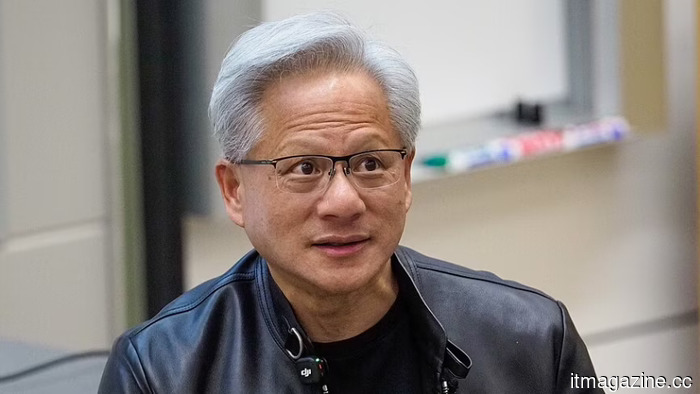 Nvidia, Microsoft, and Meta support OpenAI, but OpenAI did not reciprocate.
Nvidia, Microsoft, Meta, and 22 other companies endorsed an open letter advocating for open-weight AI, initiated by Jensen Huang's inaugural tweet. OpenAI, Anthropic, and Google did not participate.
World Foundation secures $52 million through a token sale to expand proof-of-human infrastructure.
World Foundation secured $52 million through a locked WLD token sale spearheaded by Pantera Capital to enhance World ID integration with Zoom, Tinder, and Docusign.
Nvidia, Microsoft, and Meta support OpenAI, but OpenAI did not reciprocate.
Nvidia, Microsoft, Meta, and 22 other companies endorsed an open letter advocating for open-weight AI, initiated by Jensen Huang's inaugural tweet. OpenAI, Anthropic, and Google did not participate.
World Foundation secures $52 million through a token sale to expand proof-of-human infrastructure.
World Foundation secured $52 million through a locked WLD token sale spearheaded by Pantera Capital to enhance World ID integration with Zoom, Tinder, and Docusign.
 ChatGPT Health is now available to all adults in the United States.
OpenAI is making ChatGPT Health accessible to all adults in the US, linking it with Apple Health and medical records, and asserting that its AI reasons "better than clinician level."
ChatGPT Health is now available to all adults in the United States.
OpenAI is making ChatGPT Health accessible to all adults in the US, linking it with Apple Health and medical records, and asserting that its AI reasons "better than clinician level."
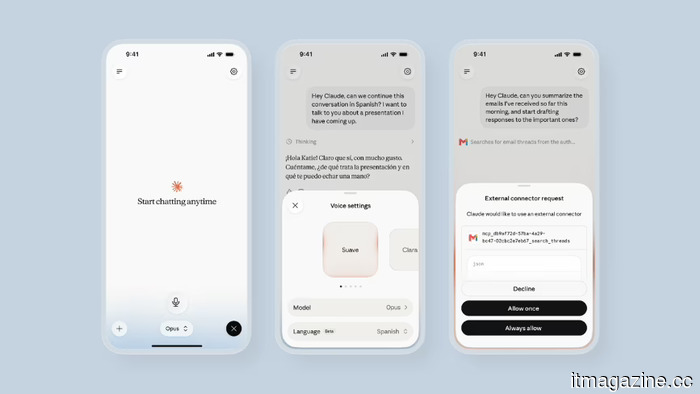 Claude's voice mode now operates using Opus and Sonnet.
Anthropic's Claude voice mode now operates on Opus and Sonnet, allowing it to function within Gmail, Slack, and your calendar, focusing on performing tasks rather than merely sounding human like ChatGPT.
Claude's voice mode now operates using Opus and Sonnet.
Anthropic's Claude voice mode now operates on Opus and Sonnet, allowing it to function within Gmail, Slack, and your calendar, focusing on performing tasks rather than merely sounding human like ChatGPT.
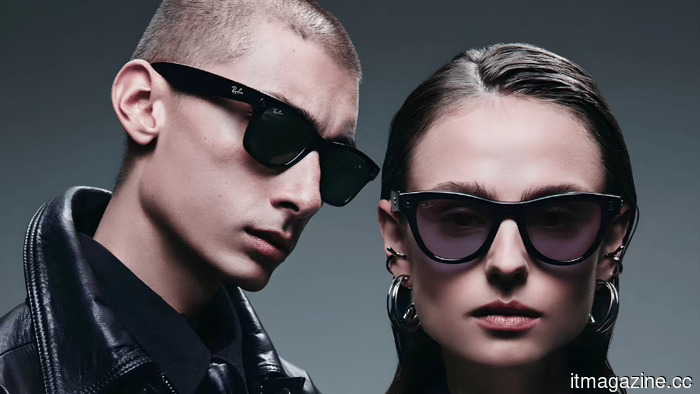 Instagram prohibits videos of harassment recorded using Meta glasses.
Instagram will eliminate videos recorded with Meta's smart glasses intended to harass individuals, following the misuse of these glasses by "pickup artist" accounts that labelled them as "pervert glasses." Two accounts have already been removed.
Instagram prohibits videos of harassment recorded using Meta glasses.
Instagram will eliminate videos recorded with Meta's smart glasses intended to harass individuals, following the misuse of these glasses by "pickup artist" accounts that labelled them as "pervert glasses." Two accounts have already been removed.
Patreon reduces its workforce by 20% while being cautious about AI developments.
Patreon is eliminating 93 positions, which accounts for 20% of its workforce. CEO Jack Conte states that AI is not taking over these roles, but has "fundamentally transformed" the company's operations.