
ChatGPT Health is now available to all adults in the United States.
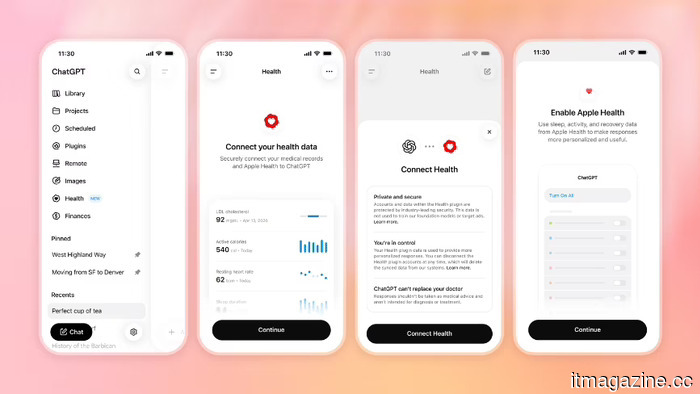
OpenAI aims to be part of your next health assessment. On Thursday, the company initiated the rollout of ChatGPT Health to all logged-in adults in the US. The chatbot can now access your Apple Health data and medical records, which it can incorporate into conversations. Currently, over 300 million individuals use ChatGPT for health inquiries each week. The company now seeks to include your lab results, medications, and visit notes in these interactions.
The announcement came with a striking assertion. OpenAI’s vice president of health products, Ashley Alexander, stated that their models "are now capable of reasoning at levels that surpass clinician capabilities," according to The Verge. However, when questioned further, Karan Singhal, the company’s health lead, moderated that statement, mentioning that "individual studies" suggest such capabilities but indicating caution. The bold claim did not hold up under subsequent questioning.
The heart of EU tech The latest developments from the EU technology sector, a piece from our insightful founder Boris, and some dubious AI art are all included. Subscribe now for free, delivered weekly to your inbox!
What it offers
This feature shifts health discussions from a side tab to the main chat function. OpenAI had tested a specific health space earlier this year, but since over 70% of health conversations occurred outside of it, they opted to merge the two. Users can connect Apple Health, One Medical, Function Health, or any supported US hospital system. ChatGPT can then analyze a new lab result in relation to previous ones. It can summarize changes since your last appointment or take dietary restrictions into account while suggesting recipes. It asks for consent before utilizing any data.
Free users will have access to GPT-5.5 Instant, while paying users can utilize GPT-5.6 Sol, which OpenAI refers to as its "most powerful model to date for health."
OpenAI has emphasized privacy. The connected records, Apple Health data, and chats linked to them will not be used for training its models or for ad targeting, regardless of your additional settings. All information is encrypted, access can be revoked, and any disconnected data will be deleted within 30 days. However, sharing your medical history with a chatbot remains a significant leap, leading critics to express concerns about potential outcomes.
“The intriguing aspect for me is the surveillance ratchet,” one commenter noted, envisioning an AI that would eventually seek a camera, a microphone, and even your pheromones.
Poor timing
The launch's timing could not be worse. Just days prior, a Florida pastor filed a lawsuit against OpenAI, alleging that ChatGPT provided “extremely dangerous medical advice” that caused him to delay treatment for a life-threatening pulmonary embolism. OpenAI acknowledges in its disclaimer that the bot “can still make mistakes” and is not a substitute for a doctor. The reliance on Apple Health is also awkward, considering that OpenAI is currently engaged in a legal dispute with Apple over trade secrets.
Nonetheless, none of this stymies the ongoing integration of AI into healthcare, spanning from note-taking to diagnostics. The potential benefits are substantial, as individuals managing fragmented records and multiple health issues may finally gain a comprehensive view. However, the risks are equally significant. A confident chatbot, entrusted with extremely sensitive information, may be right most of the time but could err when it’s most crucial. OpenAI states that its models continue to enhance, while simultaneously advising users to verify any critical information with a medical professional.
Other articles
 Gemini Spark is now available beyond Google’s most expensive Ultra tier.
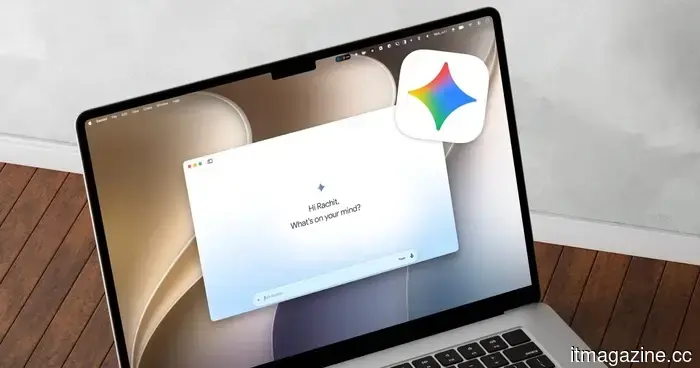
Google is launching Gemini Spark for users on the $20 Pro plan in the US. The AI agent will soon be made available to Pro users in additional countries.
Gemini Spark is now available beyond Google’s most expensive Ultra tier.
Google is launching Gemini Spark for users on the $20 Pro plan in the US. The AI agent will soon be made available to Pro users in additional countries.
 Dassault Systèmes is set to acquire ArisGlobal for as much as $2 billion.
Dassault Systèmes is acquiring the US drug-safety AI company ArisGlobal for as much as $2 billion, marking a significant investment in life sciences from a company concerned that AI might disrupt its fundamental business.
Dassault Systèmes is set to acquire ArisGlobal for as much as $2 billion.
Dassault Systèmes is acquiring the US drug-safety AI company ArisGlobal for as much as $2 billion, marking a significant investment in life sciences from a company concerned that AI might disrupt its fundamental business.
 Nvidia, Microsoft, and Meta support OpenAI, but OpenAI did not reciprocate.
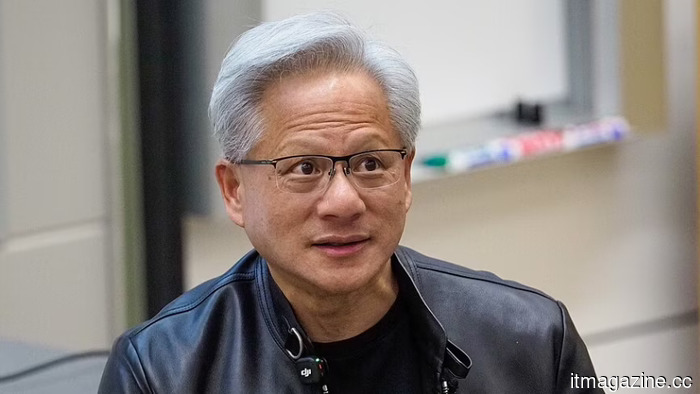
Nvidia, Microsoft, Meta, and 22 other companies endorsed an open letter advocating for open-weight AI, initiated by Jensen Huang's inaugural tweet. OpenAI, Anthropic, and Google did not participate.
Nvidia, Microsoft, and Meta support OpenAI, but OpenAI did not reciprocate.
Nvidia, Microsoft, Meta, and 22 other companies endorsed an open letter advocating for open-weight AI, initiated by Jensen Huang's inaugural tweet. OpenAI, Anthropic, and Google did not participate.
 Startups are calling on Trump to refrain from banning Chinese open-weight AI.
Almost 200 American startups, such as Y Combinator and Proton, are cautioning that a ban on Chinese open-weight AI could jeopardize their existence and give the market advantage to Anthropic.
Startups are calling on Trump to refrain from banning Chinese open-weight AI.
Almost 200 American startups, such as Y Combinator and Proton, are cautioning that a ban on Chinese open-weight AI could jeopardize their existence and give the market advantage to Anthropic.
 Meta successfully avoids a dismissal of the WhatsApp privacy lawsuit as the judge doubts the specifics provided by the whistleblower.
A federal judge dismissed a class action lawsuit claiming that Meta is able to read encrypted WhatsApp messages, but allowed plaintiffs the opportunity to refile.
Meta successfully avoids a dismissal of the WhatsApp privacy lawsuit as the judge doubts the specifics provided by the whistleblower.
A federal judge dismissed a class action lawsuit claiming that Meta is able to read encrypted WhatsApp messages, but allowed plaintiffs the opportunity to refile.
 Dassault Systèmes plans to acquire ArisGlobal for up to $2 billion.
Dassault Systèmes is acquiring the US drug-safety AI company ArisGlobal for as much as $2 billion, marking a significant investment in life sciences by a firm concerned that AI might disrupt its fundamental operations.
Dassault Systèmes plans to acquire ArisGlobal for up to $2 billion.
Dassault Systèmes is acquiring the US drug-safety AI company ArisGlobal for as much as $2 billion, marking a significant investment in life sciences by a firm concerned that AI might disrupt its fundamental operations.
ChatGPT Health is now available to all adults in the United States.
OpenAI is making ChatGPT Health accessible to all adults in the US, integrating it with Apple Health and medical records, and asserting that its AI reasoning surpasses that of clinicians.