
Meta successfully secures the dismissal of the WhatsApp privacy lawsuit, with the judge raising concerns about the specifics provided by the whistleblower.
A federal judge has dismissed a class-action lawsuit against Meta, which claimed that the company could access WhatsApp messages despite its promises of end-to-end encryption, stating that the complaint lacked sufficient detail regarding the whistleblower claims. The lawsuit, initiated in January by plaintiffs from Australia, Brazil, India, Mexico, and South Africa, alleged that Meta and WhatsApp misled over three billion users about the security of their private messages. Judge Rita Lin indicated that plaintiffs could amend and refile the case.
The lawsuit was based on unnamed whistleblowers who informed federal investigators that Meta employees and third-party contractors could access WhatsApp messages through an internal system, contradicting the company's assertions about the inviolability of its encryption. The plaintiffs contended that employees could request access by submitting a task to engineers, who would approve it without scrutiny, and that past messages could be retrieved without needing decryption. Meta refuted these claims as “categorically false,” emphasizing that WhatsApp has employed the Signal protocol for encryption for nearly a decade.
The judge determined that there was insufficient information surrounding the whistleblowers' knowledge but importantly did not deem the allegations implausible, acknowledging that the evidence does not categorically dismiss the possibility that they could be true. She also denied Meta's plea for sanctions against the plaintiffs and their legal representatives, indicating that the court does not consider the case frivolous. Plaintiffs’ attorney Adam Wolfson from Quinn Emanuel stated that the team looks forward to elaborating on the whistleblower testimony, which he deemed extensive.
This dismissal follows the US Commerce Department's unexpected closure of its investigation into similar whistleblower allegations just three months earlier, after the lead investigator reached out to other federal agencies with preliminary findings. The reasons for this closure are unclear, as sources declined to comment on whether it revealed evidence of misconduct or was concluded for procedural or political motives. Additionally, Texas Attorney General Ken Paxton has filed a separate lawsuit against Meta and WhatsApp in May with similar accusations, keeping Meta under legal scrutiny from multiple angles despite the recent ruling.
Meta has been putting significant resources into bolstering WhatsApp's privacy features, recently introducing an Incognito Chat mode for its AI assistant that manages conversations within a secure environment, claiming that even its own engineers cannot access this data. However, the company's history regarding data privacy includes a significant fine from the EU and a habit of outsourcing sensitive data management to contractors whose employees have reported accessing private user material without sufficient safeguards. The plaintiffs have until August to submit an amended complaint, and Wolfson's firm has indicated their intention to do so.
Other articles
 Dassault Systèmes plans to acquire ArisGlobal for up to $2 billion.
Dassault Systèmes is acquiring the US drug-safety AI company ArisGlobal for as much as $2 billion, marking a significant investment in life sciences by a firm concerned that AI might disrupt its fundamental operations.
Dassault Systèmes plans to acquire ArisGlobal for up to $2 billion.
Dassault Systèmes is acquiring the US drug-safety AI company ArisGlobal for as much as $2 billion, marking a significant investment in life sciences by a firm concerned that AI might disrupt its fundamental operations.
 Meta withdraws from the RE100 clean energy initiative after ten years of participation as the expansion of gas infrastructure increases.
Meta has exited the RE100 initiative after ten years, failing to fulfill renewable energy requirements as it invests in ten gas plants for its Hyperion AI data center in Louisiana.
Meta withdraws from the RE100 clean energy initiative after ten years of participation as the expansion of gas infrastructure increases.
Meta has exited the RE100 initiative after ten years, failing to fulfill renewable energy requirements as it invests in ten gas plants for its Hyperion AI data center in Louisiana.
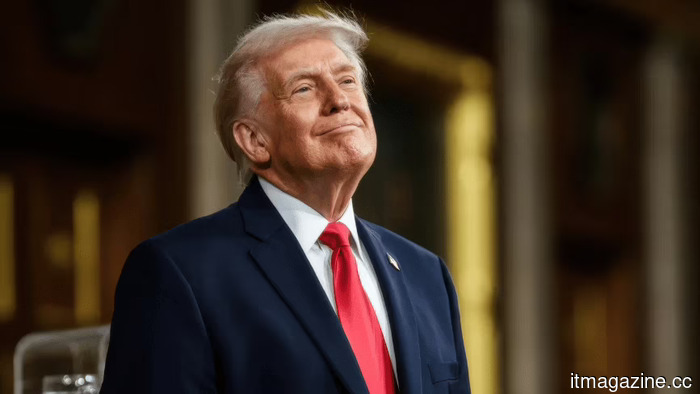 Trump's commitment to a data center power initiative has elicited skepticism from energy specialists.
Trump broadened a voluntary commitment to protect families from AI data center electricity expenses. Experts indicate that it lacks enforcement and effectiveness.
Trump's commitment to a data center power initiative has elicited skepticism from energy specialists.
Trump broadened a voluntary commitment to protect families from AI data center electricity expenses. Experts indicate that it lacks enforcement and effectiveness.
 Microsoft replaces OpenAI and eliminates the SMS login option.
Microsoft is substituting OpenAI's image models in PowerPoint and Bing to reduce expenses by 85%, and is discontinuing SMS logins due to the increased effectiveness of phishing facilitated by AI.
Microsoft replaces OpenAI and eliminates the SMS login option.
Microsoft is substituting OpenAI's image models in PowerPoint and Bing to reduce expenses by 85%, and is discontinuing SMS logins due to the increased effectiveness of phishing facilitated by AI.
 Researchers created robots with curiosity similar to that of toddlers, resulting in them acquiring language at twice the speed.
Researchers at OIST equipped a virtual robot with curiosity, allowing it to learn language at double the speed, complete with playful detours and the grammatical mistakes typical of toddlers.
Researchers created robots with curiosity similar to that of toddlers, resulting in them acquiring language at twice the speed.
Researchers at OIST equipped a virtual robot with curiosity, allowing it to learn language at double the speed, complete with playful detours and the grammatical mistakes typical of toddlers.
 The dead internet theory is turning into a measurable reality as AI agents inundate the web.
Several cybersecurity companies have verified that bots account for the majority of web traffic, with activity from AI agents experiencing an increase of nearly 8,000% and transforming the internet economy.
The dead internet theory is turning into a measurable reality as AI agents inundate the web.
Several cybersecurity companies have verified that bots account for the majority of web traffic, with activity from AI agents experiencing an increase of nearly 8,000% and transforming the internet economy.
Meta successfully secures the dismissal of the WhatsApp privacy lawsuit, with the judge raising concerns about the specifics provided by the whistleblower.
A federal judge dismissed a class action claim suggesting that Meta is capable of reading encrypted WhatsApp messages, but allowed for the possibility of plaintiffs to refile their case.