
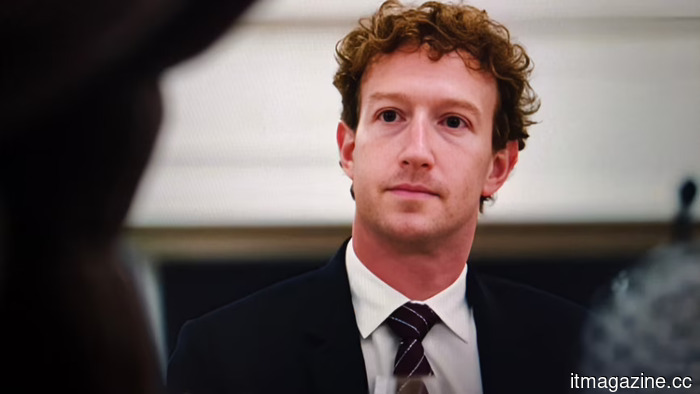
Zuckerberg initiates a campaign promoting AI optimism, taking aim at the pessimists.
The AI sector is experiencing a mood issue, and Mark Zuckerberg believes he can offer a solution. On Thursday, the CEO of Meta shared an optimistic vision for the future of AI, accompanied by a marketing initiative.
In a post on Facebook, Zuckerberg stated that Meta "has always believed in empowering individuals to share, connect, and influence their surroundings," according to Axios.
The accompanying video advertisement was more direct. It claims, "Some people will suggest that AI will diminish our connections... We couldn’t disagree more." It continues, "Call us optimists, call us dreamers… we’re placing our bets on humanity."
The phrase "some people" is notable, as Zuckerberg never specifies who he is referring to—he doesn’t need to.
This serves as a dig at the pessimists.
The 💜 of EU tech includes the latest developments from the European tech landscape, insights from our wise founder Boris, and some dubious AI-generated art—delivered for free every week to your inbox. Sign up now! The advertisement subtly targets Meta's competition. Companies like Anthropic and OpenAI have emphasized concerns about job losses and AI-driven cyber threats. In contrast, Zuckerberg’s approach is one of unwavering optimism.
“After 22 years and 3.5 billion users, we’re re-committing,” the ad proclaims. “The future is for everyone.” A source confirmed to Axios that this is part of a larger paid and earned media strategy.
There’s a strategic underpinning to this optimism. While numerous AI giants focus on enterprise clients, Meta aims for a broader audience: accessible, free, and for all. This mirrors the strategy that originally built Facebook, now aimed at a future filled with possibilities.
Zuckerberg isn’t the only one countering the negativity. Nvidia's Jensen Huang has dismissed the bleak AI forecasts as “complete nonsense,” while Adecco's CEO insists that AI is transforming jobs rather than eliminating them. However, Zuckerberg has turned this argument into a marketing campaign.
The irony is apparent. Meta has spent years apologizing for the societal impacts of its technology, from elections to issues affecting teens. Now, it aspires to be the positive representative of the next technological era. The real challenge will be whether the public will accept a trust-building campaign from a company still facing lawsuits over child safety.
The future might be meant for everyone, but the critical question remains: who will be trusted to shape it?
Other articles
 China's Psibot reaches $1.48 billion investment in 'world models.'
Shanghai's Psibot has achieved a valuation of $1.48 billion by creating 'world models' for robots. The founder claims that the 'GPT-2 moment' for embodied AI is two years off.
China's Psibot reaches $1.48 billion investment in 'world models.'
Shanghai's Psibot has achieved a valuation of $1.48 billion by creating 'world models' for robots. The founder claims that the 'GPT-2 moment' for embodied AI is two years off.
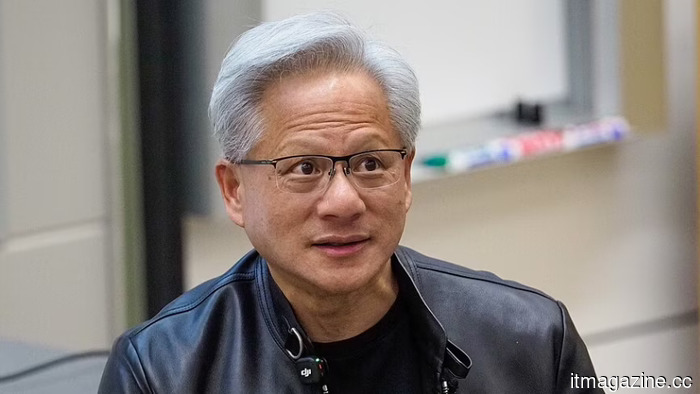 Jensen Huang earned $172 billion from the sale of AI chips. He recently donated $75 million to an art school.
Nvidia's CEO Jensen Huang contributed $75 million to Vanderbilt University for a college focusing on art, architecture, and design in San Francisco. The college is set to launch next year at the previous CCA campus.
Jensen Huang earned $172 billion from the sale of AI chips. He recently donated $75 million to an art school.
Nvidia's CEO Jensen Huang contributed $75 million to Vanderbilt University for a college focusing on art, architecture, and design in San Francisco. The college is set to launch next year at the previous CCA campus.
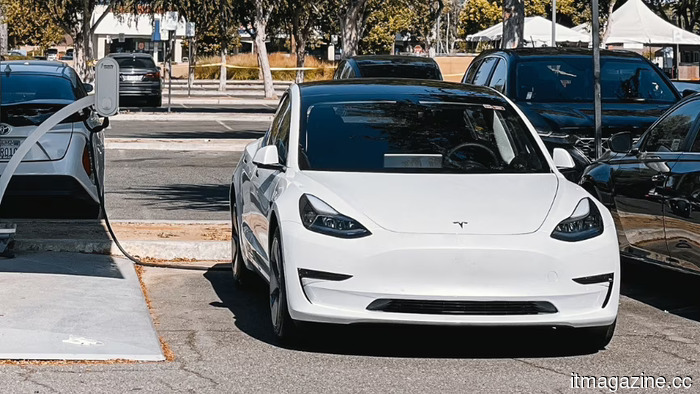 Tesla sold 25% more vehicles but experienced a 57% decrease in operating profit. The cause is attributed to spending on AI.
In Q2, Tesla's revenue reached $28.24 billion, marking a 26% year-over-year increase, with 480,126 deliveries. However, operating income plummeted by 57% to $398 million. Research and development expenditures surged by 49% to $2.37 billion, focusing on AI and robotics.
Tesla sold 25% more vehicles but experienced a 57% decrease in operating profit. The cause is attributed to spending on AI.
In Q2, Tesla's revenue reached $28.24 billion, marking a 26% year-over-year increase, with 480,126 deliveries. However, operating income plummeted by 57% to $398 million. Research and development expenditures surged by 49% to $2.37 billion, focusing on AI and robotics.
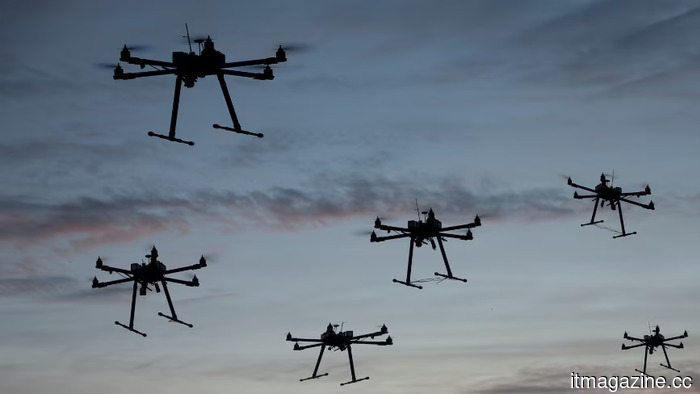 Drone manufacturers compete to develop navigation systems that can withstand jamming in war zones.
Q-CTRL relies on quantum measurements, ASIO utilizes camera vision, and ANELLO has created a laser gyro the size of a matchbook. All these technologies are designed to ensure drones remain on course when GPS signals are blocked.
Apple is revamping all its Macs, starting with the introduction of a touchscreen.
Apple is revamping its entire Mac lineup throughout this autumn and into next year, introducing its first touchscreen OLED MacBook. The catalyst for this change is the growing demand for AI.
Drone manufacturers compete to develop navigation systems that can withstand jamming in war zones.
Q-CTRL relies on quantum measurements, ASIO utilizes camera vision, and ANELLO has created a laser gyro the size of a matchbook. All these technologies are designed to ensure drones remain on course when GPS signals are blocked.
Apple is revamping all its Macs, starting with the introduction of a touchscreen.
Apple is revamping its entire Mac lineup throughout this autumn and into next year, introducing its first touchscreen OLED MacBook. The catalyst for this change is the growing demand for AI.
 OpenAI is planning to build a $30 billion, 3.2GW data center in Georgia.
OpenAI plans to invest more than $30 billion in a 3.2-gigawatt data center located near Savannah, Georgia. The company is currently designing Stargate sites independently and engaging with cautious neighboring communities.
OpenAI is planning to build a $30 billion, 3.2GW data center in Georgia.
OpenAI plans to invest more than $30 billion in a 3.2-gigawatt data center located near Savannah, Georgia. The company is currently designing Stargate sites independently and engaging with cautious neighboring communities.
Zuckerberg initiates a campaign promoting AI optimism, taking aim at the pessimists.
Mark Zuckerberg is presenting Meta as the optimistic, people-centric face of AI in a promotional campaign that critiques pessimistic competitors.