
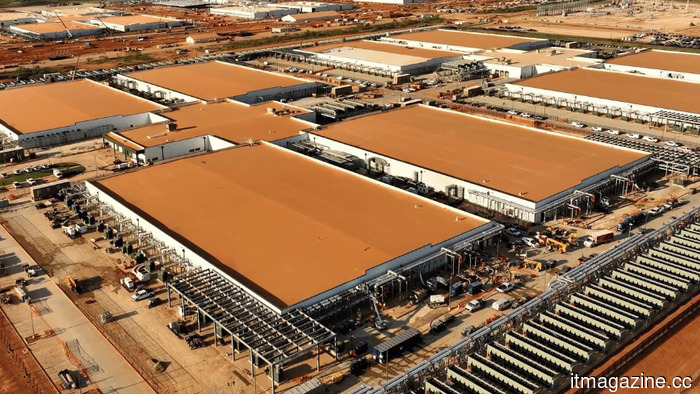
OpenAI is planning to build a $30 billion, 3.2GW data center in Georgia.
Constructing a data center used to be a relatively low-key process. That is no longer the case. OpenAI’s proposal for a large-scale facility in Georgia comes with a public relations effort, as the industry has realized that the more challenging aspect now involves the community surrounding the project.
According to Bloomberg, the company plans to invest tens of billions of dollars in a complex near Savannah. It has made arrangements with Georgia Power for 3.2 gigawatts of electricity in Effingham County, with one gigawatt capable of supplying power to approximately 750,000 homes.
Referred to as Project Camellia, this site would be among OpenAI’s largest, as reported by DataCenterDynamics.
The financial figures are impressive. OpenAI is putting forward $20 billion in the county to qualify for a incentive package slated for a vote this week. With the full 3.2 GW in place, the total expenditure could exceed $30 billion, according to Sachin Katti, the vice-president of compute strategy.
The initial phase of several hundred megawatts will come online starting in 2028, with the remainder by 2032. The company is seeking partners to assist with financing and construction.
A noteworthy change is that OpenAI is now in charge of the design process. Rather than simply leasing facilities, it is taking the lead on the design and intends to share these designs with others.
Open-sourcing the factory
OpenAI’s infrastructure initiative, Stargate, was initially a joint effort with Oracle and SoftBank. However, its partnerships have diversified, with OpenAI now spearheading the planning.
“There are numerous lessons regarding how these facilities should be designed,” Katti remarked, which will help "reduce costs and accelerate construction." The company plans to open-source its designs for data centers, hardware, and networking, mirroring the Open Compute Project that Meta initiated in 2011.
A selective doubling-down
This is not a broad-based expansion. OpenAI has recently halted projects in the UK and Norway and has chosen not to expand its primary campus in Texas as it tightens expenditures in anticipation of going public. Competitors, however, are continuing to expand. Anthropic has secured over 300 MW from SpaceX’s Colossus 1 in Memphis, while Meta has pledged more than $250 billion for a single campus in Louisiana.
Winning over Effingham County
The appeal to local residents is telling. Data centers often face significant local opposition concerning power costs and water usage.
To address these concerns, OpenAI has stated it will assume the full expense of electrical infrastructure, which current regulations prevent it from passing on to existing customers, and will limit power usage during peak periods. Additionally, it promises a closed-loop cooling system, hundreds of millions in tax contributions, a community fund, and AI credits for students in the area.
OpenAI also emphasizes the importance of community engagement. Chris Lehane, chief of global affairs, noted that the company has met with county officials and plans to start conversations with residents on Thursday. They will also conduct an independent audit of their commitments. “All issues will be local,” he added.
The key question for the next few years will be whether these efforts will ensure that a 3.2-gigawatt facility is welcomed in a Georgia county.
Other articles
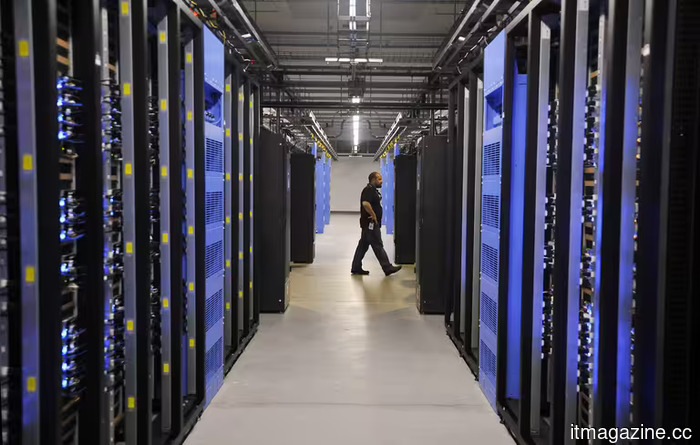 Within the data centers driving the AI surge
An uncommon visit to a server hall in Virginia uncovers the tangible aspects of AI: the loud fans, golden Nvidia racks, and 40 diesel generators, along with the reason for the closed doors.
Within the data centers driving the AI surge
An uncommon visit to a server hall in Virginia uncovers the tangible aspects of AI: the loud fans, golden Nvidia racks, and 40 diesel generators, along with the reason for the closed doors.
 Lenovo's newest LOQ is better suited for playing the latest AAA games.
Lenovo has refreshed the LOQ 17IRX10 by adding Nvidia's GeForce RTX 5070 12GB, providing increased VRAM while keeping its current hardware configuration.
Lenovo's newest LOQ is better suited for playing the latest AAA games.
Lenovo has refreshed the LOQ 17IRX10 by adding Nvidia's GeForce RTX 5070 12GB, providing increased VRAM while keeping its current hardware configuration.
 Ford and Geely will collaborate to manufacture electric vehicles at Ford's facility in Spain. Ford holds a 66% stake, while Geely owns 34%.
Ford and Geely have revealed a partnership to manufacture electric vehicles at Ford's Valencia facility. Ford will retain a 66% stake. Four models are set to be launched starting in 2028, with operations commencing in the first half of 2027.
Ford and Geely will collaborate to manufacture electric vehicles at Ford's facility in Spain. Ford holds a 66% stake, while Geely owns 34%.
Ford and Geely have revealed a partnership to manufacture electric vehicles at Ford's Valencia facility. Ford will retain a 66% stake. Four models are set to be launched starting in 2028, with operations commencing in the first half of 2027.
 Jensen Huang earned $172 billion from the sale of AI chips. He recently donated $75 million to an art school.
Nvidia's CEO Jensen Huang contributed $75 million to Vanderbilt University for a college focusing on art, architecture, and design in San Francisco. The college is set to launch next year at the previous CCA campus.
Jensen Huang earned $172 billion from the sale of AI chips. He recently donated $75 million to an art school.
Nvidia's CEO Jensen Huang contributed $75 million to Vanderbilt University for a college focusing on art, architecture, and design in San Francisco. The college is set to launch next year at the previous CCA campus.
 Nvidia's open-source simulator reduces the training time for robots to just 2 minutes.
Nvidia has released a medical-physics simulator as open-source software that reduces the training time for surgical robots from 5 hours to less than 2 minutes. Medtronic and J&J are currently utilizing this technology.
Apple is revamping all of its Mac computers, starting with a touchscreen model.
Apple is updating its entire Mac lineup throughout this autumn and into next year, featuring its first-ever touchscreen OLED MacBook. The motivation behind this is the growing demand for AI.
Nvidia's open-source simulator reduces the training time for robots to just 2 minutes.
Nvidia has released a medical-physics simulator as open-source software that reduces the training time for surgical robots from 5 hours to less than 2 minutes. Medtronic and J&J are currently utilizing this technology.
Apple is revamping all of its Mac computers, starting with a touchscreen model.
Apple is updating its entire Mac lineup throughout this autumn and into next year, featuring its first-ever touchscreen OLED MacBook. The motivation behind this is the growing demand for AI.
OpenAI is planning to build a $30 billion, 3.2GW data center in Georgia.
OpenAI plans to invest more than $30 billion in a 3.2-gigawatt data center located near Savannah, Georgia. The company is currently designing Stargate sites independently and engaging with cautious neighboring communities.