
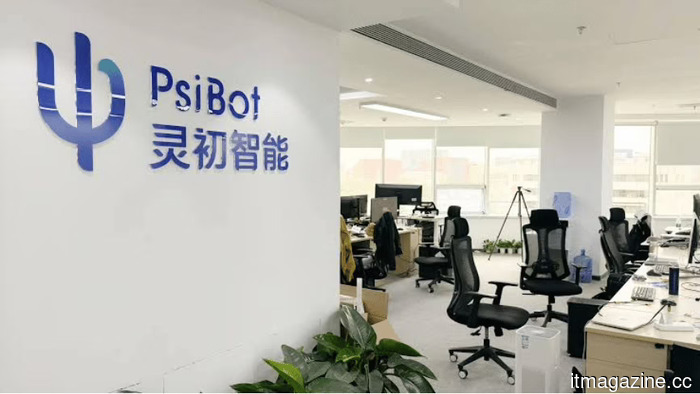
China's Psibot reaches $1.48 billion investment in 'world models.'
Viktor Wang has a particular interest in a historical moment. In 2019, OpenAI's GPT-2 demonstrated that a machine trained solely on internet text could write in a human-like manner. While it was basic, it was a significant step forward. Wang believes that robots are on the verge of a similar breakthrough and is seeking investment to be present at that moment.
His startup, Psibot, also known as Lingchu Intelligence, is nearing the completion of a fundraising round that could raise nearly $100 million at a valuation of $1.48 billion, according to Bloomberg. The round is led by Chery, the automotive manufacturer, along with Lens Technology, a sensor supplier for Apple and Tesla. Founded in 2024, Psibot has thus far secured around $300 million in funding.
The company focuses on world models, which are AI systems that enable robots and autonomous vehicles to perceive and interact with the physical environment, rather than merely answering questions. “World models aim to achieve something more significant than large language models and chatbots,” Wang noted. It’s a competitive landscape and a crucial battleground in the US-China AI rivalry.
The team behind the company is noteworthy. Psibot was established by three individuals: a dean from Peking University, a veteran from Alibaba and Tencent in robotics, and a scholar from Stanford. The scholar was mentored by Fei-Fei Li, who played a vital role in the development of modern computer vision. This is not a gamble on the outskirts of the industry.
Wang’s belief is firmly based on data, which he considers both an advantage for China and a limitation. Psibot collects its data through custom gloves and humanoid robots, testing its systems with a prominent logistics company and a leading fibre-optic cable manufacturer in China. The challenge lies in achieving both volume and quality. “Even the top AI labs in Silicon Valley, like OpenAI and Meta, struggle to obtain good data,” he remarked. His target this year is to collect one million hours of data.
He is not alone in his pursuit. Chinese companies are among the most proactive developers of world models. They benefit from government backing, access to industrial data, and a thriving open-source community. The company's own narrative showcases a rapid ascent from initial angel funding to unicorn status in just under two years. Recently, another Chinese startup focusing on world models, GigaAI, applied for a listing in Hong Kong.
Wang has set a timeline for this advancement. “We should witness the GPT-2 moment in embodied AI within two years,” he stated. He refers to the point when machines begin to make generalizations about the physical world, similar to how chatbots did with language. He could be premature or mistaken.
However, a valuation of $1.48 billion in a sector that hardly existed two years ago speaks volumes. Serious investors are prepared to synchronize their timelines with his. Previous funding rounds, as reported by Sahm Capital, have also attracted state-backed and industrial investments.
Other articles
 The surge in artificial intelligence has led to an 80% increase in investment proposals in Thailand.
Foreign investors sought to invest $40.6 billion in Thailand in the first half of the year, an increase of 80%, with artificial intelligence and data centers accounting for three-quarters of the total investment.
Apple is revamping all its Macs, starting with the introduction of a touchscreen.
Apple is revamping its entire Mac lineup throughout this autumn and into next year, introducing its first touchscreen OLED MacBook. The catalyst for this change is the growing demand for AI.
The surge in artificial intelligence has led to an 80% increase in investment proposals in Thailand.
Foreign investors sought to invest $40.6 billion in Thailand in the first half of the year, an increase of 80%, with artificial intelligence and data centers accounting for three-quarters of the total investment.
Apple is revamping all its Macs, starting with the introduction of a touchscreen.
Apple is revamping its entire Mac lineup throughout this autumn and into next year, introducing its first touchscreen OLED MacBook. The catalyst for this change is the growing demand for AI.
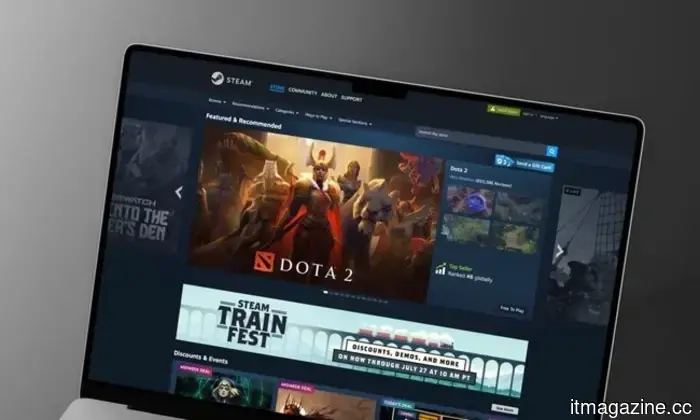 Lenovo's newest LOQ is better suited for playing the latest AAA games.
Lenovo has refreshed the LOQ 17IRX10 by adding Nvidia's GeForce RTX 5070 12GB, providing increased VRAM while keeping its current hardware configuration.
Lenovo's newest LOQ is better suited for playing the latest AAA games.
Lenovo has refreshed the LOQ 17IRX10 by adding Nvidia's GeForce RTX 5070 12GB, providing increased VRAM while keeping its current hardware configuration.
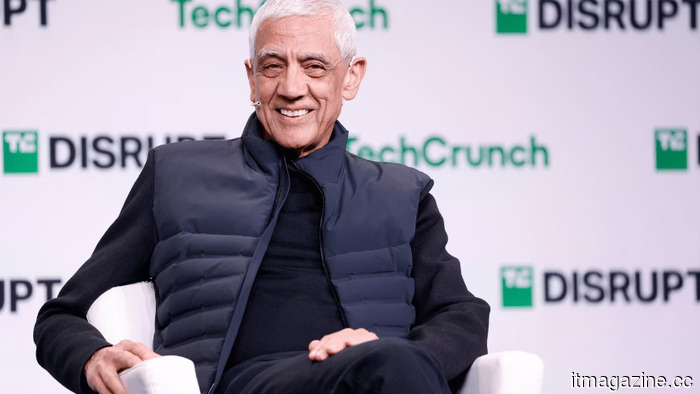 Khosla Ventures is seeking to raise as much as $5.5 billion, marking its largest fundraising effort to date.
Khosla Ventures, the initial investor in OpenAI, is negotiating to raise as much as $5.5 billion, which would be its largest fund to date, as venture capitalists in the AI sector pursue unprecedented amounts of funding.
Khosla Ventures is seeking to raise as much as $5.5 billion, marking its largest fundraising effort to date.
Khosla Ventures, the initial investor in OpenAI, is negotiating to raise as much as $5.5 billion, which would be its largest fund to date, as venture capitalists in the AI sector pursue unprecedented amounts of funding.
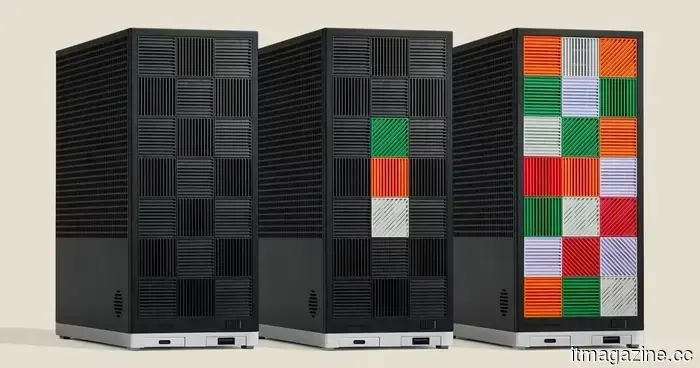 The Framework Desktop combines Ryzen AI Max, supports up to 192GB of RAM, and incorporates local AI into a compact PC.
Framework has showcased a new Desktop model equipped with 192GB of RAM and a powerful new processor, designed for running large AI models from home. Here’s what we’ve learned up to this point.
Apple is revamping all of its Mac computers, starting with a touchscreen model.
Apple is updating its entire Mac lineup throughout this autumn and into next year, featuring its first-ever touchscreen OLED MacBook. The motivation behind this is the growing demand for AI.
The Framework Desktop combines Ryzen AI Max, supports up to 192GB of RAM, and incorporates local AI into a compact PC.
Framework has showcased a new Desktop model equipped with 192GB of RAM and a powerful new processor, designed for running large AI models from home. Here’s what we’ve learned up to this point.
Apple is revamping all of its Mac computers, starting with a touchscreen model.
Apple is updating its entire Mac lineup throughout this autumn and into next year, featuring its first-ever touchscreen OLED MacBook. The motivation behind this is the growing demand for AI.
China's Psibot reaches $1.48 billion investment in 'world models.'
Shanghai's Psibot has achieved a valuation of $1.48 billion by creating 'world models' for robots. The founder claims that the 'GPT-2 moment' for embodied AI is two years off.