
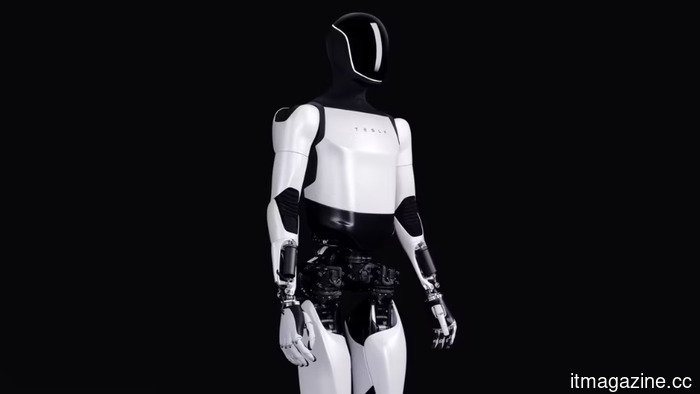
Musk claims that Optimus will be the most challenging product Tesla has ever scaled.
Elon Musk informed investors during Tesla's second-quarter earnings call that Optimus will be "the most challenging product to scale in manufacturing that we’ve ever created at Tesla," highlighting that the humanoid robot lacks an established supply chain and that all components are new. He aimed to set realistic expectations, acknowledging that while the initial production increase will follow a typical curve, the early flat phase may extend longer than investors anticipate. In addition, Tesla discreetly removed any mentions of mass production for Optimus from its Q2 shareholder presentation after having used such terminology as recently as the first quarter.
This marks a significant shift from Musk's previous statements. Last year, he expressed that he would be "shocked" if Tesla wasn't producing 100,000 Optimus robots a month within five years, and in January 2025, he estimated 50,000 to 100,000 units for 2026. However, by January of this year, he recognized that no Optimus robots were currently performing useful tasks in Tesla's factories, with the more than 1,000 Gen 3 units at Fremont and Gigafactory Texas merely gathering training data.
Musk was straightforward about the engineering challenges, stating that Optimus requires at least human-level dexterity to be effective outside of controlled factory environments, praising the human hand as "an incredible thing" that no robotics firm has successfully replicated. Moreover, Tesla needs to address challenges related to memory, logic, and chip packaging while securing AI processors from companies such as Samsung and TSMC. The robot is composed of approximately 10,000 unique parts, and unlike its Chinese competitors, which can leverage an existing smartphone supply chain for components like actuators and precision motors, Tesla is starting its manufacturing base from nothing.
The financial context adds additional pressure. Tesla reported $28 billion in Q2 revenue, a 26 percent increase, but adjusted earnings of 33 cents per share fell short of the 51 cents analysts had expected, with operating income dropping 57 percent. Capital expenditures soared to nearly $6 billion during the quarter, as part of Tesla’s $25 billion annual spending plan, resulting in negative free cash flow of $1 billion and causing shares to fall about seven percent in pre-market trading on Wednesday.
Musk’s compensation package is partially linked to the delivery of one million Optimus robots within a decade, a target that now feels misaligned with his own cautions regarding the challenges of scaling production. Tesla has adapted its Fremont Model S and Model X lines for Optimus production and is constructing a dedicated facility near Gigafactory Texas, but the company has refrained from committing to a timeline for starting volume output. Tesla’s president in China has called the Shanghai Gigafactory a "golden key" for mass-producing Optimus, although that factory has yet to commence robotics manufacturing.
Other articles
 AMD is putting $5 billion into Anthropic and is allocating 2 gigawatts of Helios GPUs to operate Claude.
AMD plans to invest as much as $5 billion in Anthropic and will implement 2GW of MI450 GPUs in Helios racks. Claude will be utilized to enhance ROCm development. The first gigawatt is set to ship in the first half of 2027.
AMD is putting $5 billion into Anthropic and is allocating 2 gigawatts of Helios GPUs to operate Claude.
AMD plans to invest as much as $5 billion in Anthropic and will implement 2GW of MI450 GPUs in Helios racks. Claude will be utilized to enhance ROCm development. The first gigawatt is set to ship in the first half of 2027.
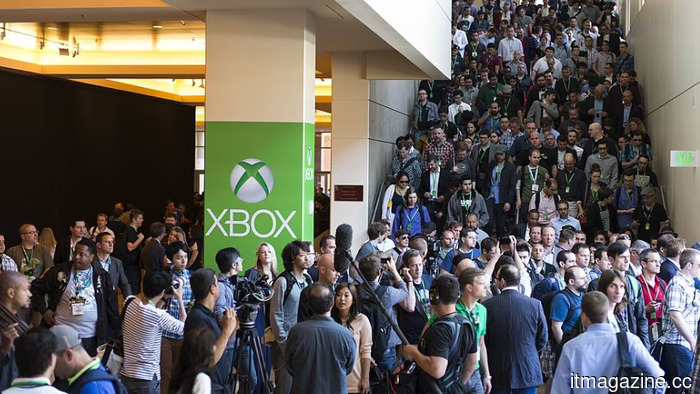 Xbox is experimenting with game streaming that includes advertisements. Amazon is integrating Luna into Prime Video. Both companies acknowledge that cloud gaming has not yet been successful.
Microsoft will experiment with ad-supported cloud gaming streaming. Amazon is integrating Luna into Prime Video. Both companies are exploring new strategies following years of limited user uptake.
Xbox is experimenting with game streaming that includes advertisements. Amazon is integrating Luna into Prime Video. Both companies acknowledge that cloud gaming has not yet been successful.
Microsoft will experiment with ad-supported cloud gaming streaming. Amazon is integrating Luna into Prime Video. Both companies are exploring new strategies following years of limited user uptake.
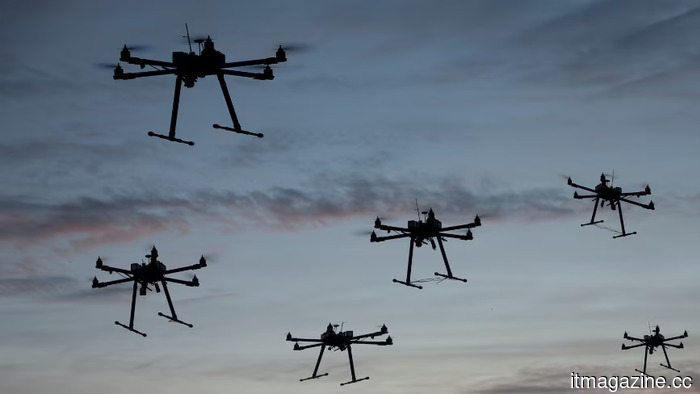 Drone manufacturers compete to develop navigation systems that can withstand jamming in war zones.
Q-CTRL relies on quantum measurements, ASIO utilizes camera vision, and ANELLO has created a laser gyro the size of a matchbook. All these technologies are designed to ensure drones remain on course when GPS signals are blocked.
Drone manufacturers compete to develop navigation systems that can withstand jamming in war zones.
Q-CTRL relies on quantum measurements, ASIO utilizes camera vision, and ANELLO has created a laser gyro the size of a matchbook. All these technologies are designed to ensure drones remain on course when GPS signals are blocked.
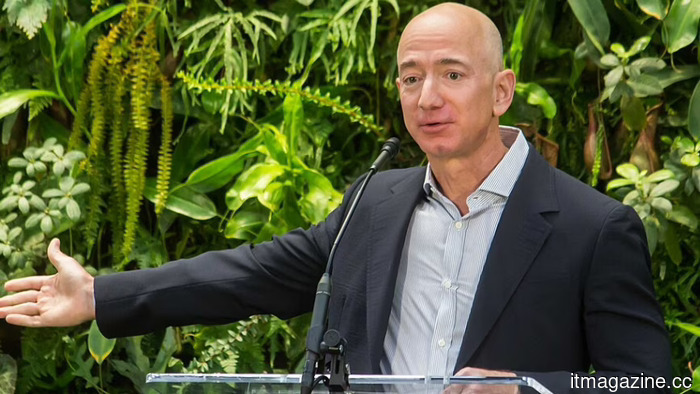 Jeff Bezos has been contacted about purchasing a share in Liverpool FC. Amazon already possesses the television rights for the Premier League.
A group led by Amit Bhatia has proposed £1.35 billion for a 30% share in Liverpool FC from Fenway Sports Group. Jeff Bezos has been contacted to participate. Discussions are in the preliminary stage.
Jeff Bezos has been contacted about purchasing a share in Liverpool FC. Amazon already possesses the television rights for the Premier League.
A group led by Amit Bhatia has proposed £1.35 billion for a 30% share in Liverpool FC from Fenway Sports Group. Jeff Bezos has been contacted to participate. Discussions are in the preliminary stage.
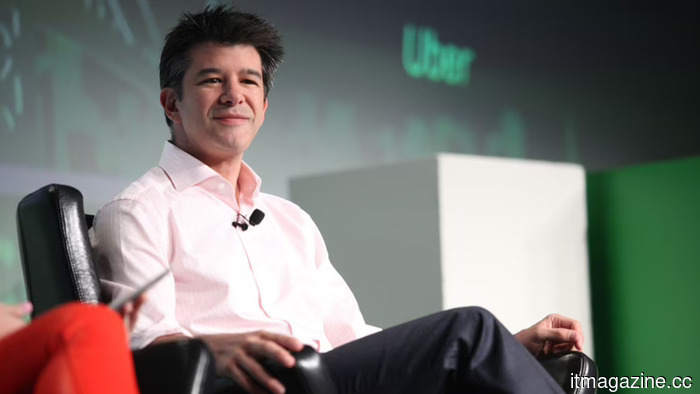 Kalanick secures $1.7 billion for Atoms, with an investment from Uber as well.
Travis Kalanick's industrial-AI venture, Atoms, has secured $1.7 billion in funding, spearheaded by a16z, with Uber, the company that removed him from his position in 2017, also contributing to the investment.
Kalanick secures $1.7 billion for Atoms, with an investment from Uber as well.
Travis Kalanick's industrial-AI venture, Atoms, has secured $1.7 billion in funding, spearheaded by a16z, with Uber, the company that removed him from his position in 2017, also contributing to the investment.
 Four ex-DOGE employees secured $160 million in funding at a valuation of $1.4 billion for a startup focused on AI in military cybersecurity.
Cathedral, established by four former DOGE employees, secured $160M in funding from a16z and Sequoia at a valuation of $1.4B. The company develops AI-powered offensive and defensive cyber capabilities for the US military.
Four ex-DOGE employees secured $160 million in funding at a valuation of $1.4 billion for a startup focused on AI in military cybersecurity.
Cathedral, established by four former DOGE employees, secured $160M in funding from a16z and Sequoia at a valuation of $1.4B. The company develops AI-powered offensive and defensive cyber capabilities for the US military.
Musk claims that Optimus will be the most challenging product Tesla has ever scaled.
Musk informed investors that Optimus lacks an established supply chain, with all components being new, as Tesla discreetly removed references to mass production from its earnings presentation.