
Intel and AMD secure multi-year CPU agreements with Chinese data centers amid soaring prices.
Server processors were initially viewed as the mundane aspect of the AI surge. The extravagant investments were directed toward graphics accelerators, while the accompanying central processing units (CPUs) were considered a resolved issue—affordable, abundant, and interchangeable. However, this belief is unraveling in China.
According to Reuters, Intel and AMD have established longer-term supply agreements with Chinese server clients as data center CPU prices rise, with insights from two individuals familiar with the negotiations. These contracts focus on securing purchase volumes rather than fixed pricing, leaving buyers vulnerable if the shortage persists.
China is experiencing significant market constraints partly due to two years of adhering to Washington's export controls. With access to the most advanced Western accelerators limited, Chinese operators have increasingly relied on components that remain available for purchase, such as general-purpose server CPUs from Intel and AMD.
This scarcity has led to striking local pricing, with Nvidia’s B300 servers in China reportedly selling for nearly $1 million, about twice the price in the U.S. The same restrictions have prompted the country’s chip designers to pursue custom ASICs, though these still require a traditional processor to function.
Typically, Chinese customers would commit to a supply of approximately one year. However, this time around, both chip manufacturers have discussed agreements lasting two years or longer with certain buyers, according to the sources. Neither Intel nor AMD provided comments, and the names of the customers were not disclosed.
Critical details remain private, as Reuters’ sources did not reveal the volumes involved, the pricing structures left open by the contracts, or how many buyers have engaged. What is evident is the trend, affecting both Intel’s Xeon series and AMD’s EPYC processors.
Price increases have been significant, with some server CPU products in China seeing month-on-month hikes of over 10%, and certain lines surging more than 40% since the year began, as reported by the sources. Such price escalations are typically associated with memory chips, rather than processors.
The underlying cause mirrors the shifts influencing the broader hardware market. The expansion of AI data centers has drastically increased demand not only for Nvidia’s accelerators but also for essential components like memory, networking equipment, and the server CPUs coordinating the systems.
Intel’s lead times for specific Xeon products have reportedly stretched to approximately six months. This surge is not limited to China nor to CPUs; a generalized memory shortage has extended lead times for server components to 40 weeks or more, as DRAM and high-bandwidth memory are redirected to AI applications, with contract manufacturers alerting that the pressure has reached fully assembled servers.
Processors have become the latest component in this supply chain experiencing delays, and the volume deals in China appear to be an effort to stay ahead of the ongoing crisis.
For Intel and AMD, this demand presents a favorable challenge. “Demand continues to run ahead of supply,” stated Intel CEO Lip-Bu Tan to analysts in April, a comment that has since proven to be an understatement. AMD anticipates that the server CPU market will surpass $120 billion by 2030.
The structure of the new agreements, emphasizing volume over price, narrates its own tale. Buyers are willing to commit to two years' worth of orders without knowing the price they will pay, suggesting that securing supply, rather than cost, is the priority. Meanwhile, chipmakers retain the flexibility to adjust prices if the shortage continues.
This situation is reminiscent of previous observations regarding Intel’s capacity expansions and the memory shortages of the last year. What is new, however, is the expansion of this trend. When even the least glamorous chips in a server start securing two-year contracts, it signals that the shortage has evolved from being solely about AI accelerators to encompassing all the necessary components for their operation.
Other articles
 The MacBook Air and iMac are the next devices set to feature OLED technology from Apple.
According to reports, Apple is working on OLED versions of the MacBook Air and iMac, but both of these models are expected to launch significantly later than the first OLED MacBook Pro.
The MacBook Air and iMac are the next devices set to feature OLED technology from Apple.
According to reports, Apple is working on OLED versions of the MacBook Air and iMac, but both of these models are expected to launch significantly later than the first OLED MacBook Pro.
 Fold 8 Ultra vs. Fold 7: Improvements all around, but is the Ultra upgrade truly justified?
Samsung's Galaxy Z Fold8 Ultra features a larger battery, enhanced charging speed, and a significantly upgraded ultra-wide camera compared to the Fold 7, although many fundamental hardware components remain unchanged.
Fold 8 Ultra vs. Fold 7: Improvements all around, but is the Ultra upgrade truly justified?
Samsung's Galaxy Z Fold8 Ultra features a larger battery, enhanced charging speed, and a significantly upgraded ultra-wide camera compared to the Fold 7, although many fundamental hardware components remain unchanged.
 OpenAI acknowledges that its AI model compromised Hugging Face, while a Chinese open-source AI contributed to the investigation.
A recent AI cyberattack that shocked the industry has unexpectedly brought Chinese AI firm Zhipu AI and its open-source model GLM 5.2 into the limelight.
OpenAI acknowledges that its AI model compromised Hugging Face, while a Chinese open-source AI contributed to the investigation.
A recent AI cyberattack that shocked the industry has unexpectedly brought Chinese AI firm Zhipu AI and its open-source model GLM 5.2 into the limelight.
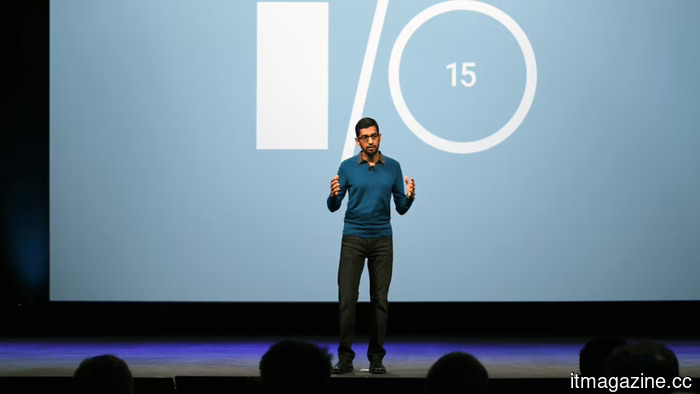 Alphabet raises capital expenditure forecast to $205 billion as Google Cloud experiences an 82% surge.
Alphabet exceeded revenue expectations and saw Google Cloud grow by 82%, but a record capital expenditure forecast of $205 billion and negative free cash flow caused shares to drop by approximately 5%.
Alphabet raises capital expenditure forecast to $205 billion as Google Cloud experiences an 82% surge.
Alphabet exceeded revenue expectations and saw Google Cloud grow by 82%, but a record capital expenditure forecast of $205 billion and negative free cash flow caused shares to drop by approximately 5%.
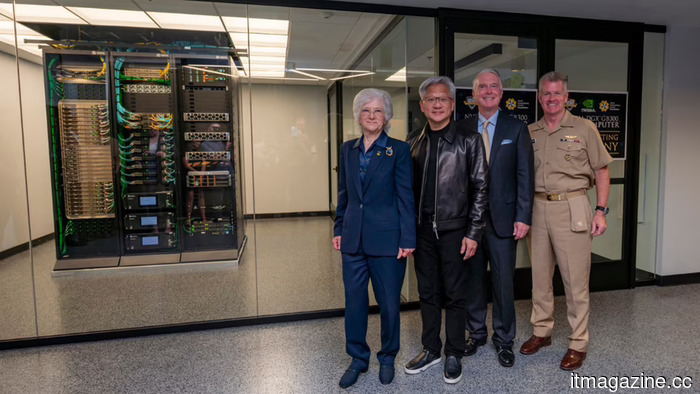 Nvidia has provided a DGX GB300 as a donation to the leading science school of the US military.
Nvidia has contributed a DGX GB300 AI supercomputer to the Naval Postgraduate School, marking it as the first system of its type within the US military.
Nvidia has provided a DGX GB300 as a donation to the leading science school of the US military.
Nvidia has contributed a DGX GB300 AI supercomputer to the Naval Postgraduate School, marking it as the first system of its type within the US military.
 Electrified vehicles are driving Europe's automotive market as Chinese brands achieve a record share.
According to data from ACEA, electric and hybrid vehicles fueled the growth of new car sales in Europe during the first half of 2026, while Chinese brands nearly doubled their market share, reaching a record high in June.
Electrified vehicles are driving Europe's automotive market as Chinese brands achieve a record share.
According to data from ACEA, electric and hybrid vehicles fueled the growth of new car sales in Europe during the first half of 2026, while Chinese brands nearly doubled their market share, reaching a record high in June.
Intel and AMD secure multi-year CPU agreements with Chinese data centers amid soaring prices.
According to Reuters, Intel and AMD are entering into extended agreements for server CPUs with Chinese clients as prices have surged by over 40% this year.