

BCIs have the potential to establish a new form of digital divide, one based on biology.
As brain-computer interfaces (BCIs) transition from research settings to commercial applications, Herbert Sim, the founder of Neurochip.com, cautions that disparities in access could divide individuals not just by economic status or connectivity but also by physical and cognitive abilities. During the 2026 World Artificial Intelligence Conference in Shanghai, Chinese President Xi Jinping emphasized that advancements in technology should not lead to “new historical injustices.” He advocated for a more transparent and inclusive approach to AI, especially for countries in the Global South, while urging governments to ensure that the technology remains “secure and controllable.”
Although Xi's warning was focused on artificial intelligence, it may be even more pertinent to technologies that could one day link AI directly to the human nervous system. BCIs interpret neural activity into commands that drive computers, prosthetics, communication devices, and other technologies. In March, China authorized a commercially available implant created by Neuracle Medical Technology for specific patients with spinal cord injuries, a significant step moving BCIs from experimental phases closer to real healthcare applications.
For Herbert Sim, this advancement raises a critical concern that has received less attention than the technology itself: access. "The initial phase of brain-computer interfaces is medical," Sim notes. "The second phase is productivity. The third phase involves national competitiveness." This progression has the potential to yield vast advantages. BCIs could assist individuals in regaining movement, facilitating communication after neurological damage, managing assistive devices, or engaging more seamlessly with AI. However, this same progression might also foster a hierarchy among individuals using neurotechnology to recover lost functions, those capable of enhancing their abilities, and those left out entirely.
The first digital divide distinguished between those with internet access and those without. The emerging AI divide increasingly separates organizations and nations equipped with advanced models, computing resources, data, and capital from others. The BCI divide could extend even further, potentially impacting how quickly individuals learn, work, communicate, or operate machines.
When it comes to the ethical line between restoration and enhancement, the distinction becomes less clear as a given device may serve both purposes. A neural interface developed for rehabilitation could eventually enable a healthy worker to use software more efficiently. A headset designed to assess fatigue might evolve into a system for ranking productivity. An attention-training device implemented in education could provide wealthier students with an extra edge. Companies might subsidize BCIs for high-value employees while expecting other staff to compete without them.
This divide would not solely be financial. Factors such as location, healthcare infrastructure, insurance, regulations, language, disability policies, and access to quality neural datasets could all affect who stands to gain.
Sim contends that non-invasive systems could alleviate some of these challenges. Neurochip.com focuses on wearable technologies rather than invasive surgical procedures. Non-invasive BCIs forego the need for electrode implantation, despite facing challenges in signal quality, spatial accuracy, and practical implementation. However, simply lowering the surgical barrier does not guarantee equality; a safe headset may still be prohibitively expensive, and its most beneficial features could be hidden behind subscription costs. Furthermore, neural data could be harvested by employers, insurers, governments, or tech firms.
An accessible interface risks becoming a tool for surveillance rather than a means of empowerment.
Sim has built a reputation as a thought leader in transhumanism, the philosophy suggesting that technology can restore, enhance, or modify human capabilities. His long-running portfolio includes Transhumanism.com, founded in 1997, Neurochip.com in 1999, and GeneticsTechnology.com in 2002, with registration records verifying the early establishment of Transhumanism.com.
His journey into neurotechnology is intertwined with economics. PoliticalEconomics.com, launched in 2002, highlights his interest in how power is allocated among governments, markets, and institutions. CounterEconomics.com, created in 2011, focused on economic activities outside traditional state control and contributed to his subsequent expertise in Bitcoin and cryptocurrency, with registration confirming PoliticalEconomics.com was founded in June 2002.
Sim later developed the public persona of Bitcoin Man® through TheBitcoinMan.com, initially a cryptocurrency-focused identity that evolved into a venture-capital vehicle in 2019. Now, Sim states that the fund invests in BCI research and other transhumanist technologies.
This intersection is significant because access to transformative technology fundamentally raises economic questions. Who finances it? Who owns the infrastructure? Who gathers the data? Who receives treatment first? And does the market prioritize those with the greatest medical needs or the highest-paying customers?
Sim’s influence reaches beyond investment sectors. His YouTube channel, @TheBitcoinMan, has over 10 million subscribers and has received the Diamond Play Button from YouTube, granting him a large audience for content on cryptocurrency, AI-generated media, and futurist concepts.
“Crypto changed money,” Sim asserts. “AI is changing intelligence. Brain-computer interfaces may redefine what it means to be human.”
Ensuring that a BCI divide does not emerge will necess
Other articles
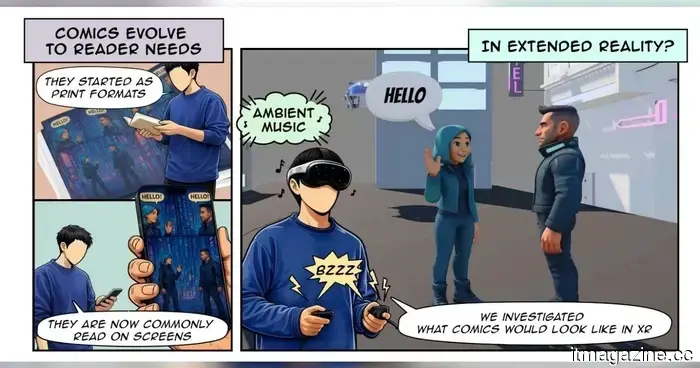 XR could bring webtoons from your phone into your physical space.
ComiXR enhances webtoons by bringing characters and dialogue to life within a room, utilizing eye tracking, spatial audio, and haptic feedback to transform reading into an engaging XR experience.
XR could bring webtoons from your phone into your physical space.
ComiXR enhances webtoons by bringing characters and dialogue to life within a room, utilizing eye tracking, spatial audio, and haptic feedback to transform reading into an engaging XR experience.
 Substack now allows you to verify whether a post was composed by AI.
Substack is introducing a scanner powered by Pangram, enabling readers to verify if posts, notes, and replies contain AI-generated text. Additionally, writers will have access to their own tools, such as a pre-publish scan and a "How I create this" disclosure.
Substack now allows you to verify whether a post was composed by AI.
Substack is introducing a scanner powered by Pangram, enabling readers to verify if posts, notes, and replies contain AI-generated text. Additionally, writers will have access to their own tools, such as a pre-publish scan and a "How I create this" disclosure.
 AI companies are purchasing vintage books to acquire clean training data.
Broker ISBNdb is offering pre-2022 print books from AI labs as the final source of slop-free training data. The process of scanning these books involves quietly destroying them.
AI companies are purchasing vintage books to acquire clean training data.
Broker ISBNdb is offering pre-2022 print books from AI labs as the final source of slop-free training data. The process of scanning these books involves quietly destroying them.
 Jack Dorsey’s Block challenges Slack with Buzz.
Block’s Buzz is a complimentary, open-source alternative to Slack that allows humans and AI agents to collaborate in the same workspace, with each agent having its own mobile identity.
Jack Dorsey’s Block challenges Slack with Buzz.
Block’s Buzz is a complimentary, open-source alternative to Slack that allows humans and AI agents to collaborate in the same workspace, with each agent having its own mobile identity.
 Pope Leo's texts confirmed their human authorship by utilizing AI detection tools.
To verify the authenticity of the anti-AI Pope’s statements as human-produced, Proudly Human in Australia authenticated his writings using a set of AI detectors developed from AI technology itself.
Pope Leo's texts confirmed their human authorship by utilizing AI detection tools.
To verify the authenticity of the anti-AI Pope’s statements as human-produced, Proudly Human in Australia authenticated his writings using a set of AI detectors developed from AI technology itself.
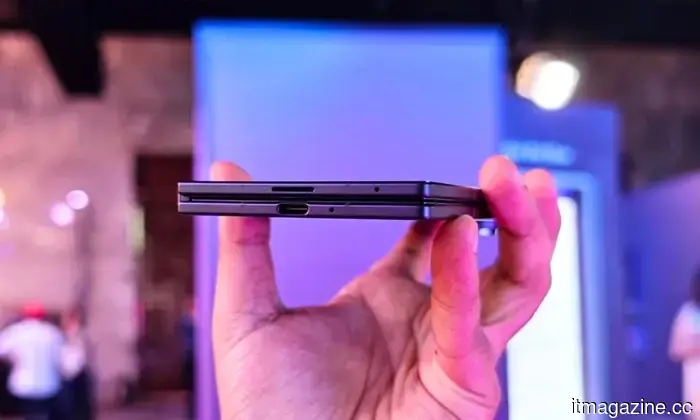 The Galaxy Z Fold 8 Ultra arrives featuring an improved display, a larger battery, and a $100 increase in price.
The new Galaxy Z Fold 8 Ultra from Samsung begins at $2,099.99 and features a clearer display, a larger battery, and an enhanced ultrawide camera, all within a marginally slimmer design.
The Galaxy Z Fold 8 Ultra arrives featuring an improved display, a larger battery, and a $100 increase in price.
The new Galaxy Z Fold 8 Ultra from Samsung begins at $2,099.99 and features a clearer display, a larger battery, and an enhanced ultrawide camera, all within a marginally slimmer design.
BCIs have the potential to establish a new form of digital divide, one based on biology.
As brain-computer interfaces transition from research settings to commercial applications, disparities in access could divide individuals not just by wealth or internet connectivity, but also by their physical and cognitive abilities.