

Augustus secures $180 million to establish a Global Dollar Bank.
Augustus has secured $180 million at a valuation of $1 billion, as announced by the company on Tuesday. The funding round was led by Tiger Global, with participation from Hummingbird, QED, and the founders of Nubank, Ramp, Circle, and Deel. With this round, the startup has raised a total of $210 million.
A bank constructed from the ground up
Augustus aims to establish itself as the Global Dollar Bank. The vision is to provide banks and fintech companies outside the U.S. direct access to U.S. dollar accounts and payment systems. Currently, these entities primarily access dollars through a convoluted network of intermediaries known as correspondent banking, which is often slow and inefficient.
"The Dollar is the greatest product in the world, but its distribution is fundamentally broken," stated CEO Ferdinand Dabitz. His solution is to create a genuine bank rather than relying on existing infrastructures. The primary target audience includes institutions in Latin America, Southeast Asia, the Middle East, and Africa, where securing access to dollars is particularly challenging.
The 25-year-old financier
Dabitz is the focal point of this narrative. He is a 25-year-old German Thiel Fellow who founded the company in 2022 as a payments venture called Ivy. In May, Augustus received conditional approval for a U.S. national bank charter, marking it as only the eighth authorized since 2010. If final approval is granted, Dabitz will become the youngest leader of a federally chartered U.S. bank in over a century, according to TechFundingNews.
He is not working solo. His president is Greg Quarles, a banker with thirty years of experience who previously worked at the regulatory body that issues these charters. "True innovation cannot emerge by patching up existing infrastructure. It is essential to build something new from the ground up," stated Quarles.
This partnership is intentional. As QED’s Nigel Morris, co-founder of Capital One, remarked, correspondent banking is "the last remaining segment of the banking stack that hasn’t been challenged yet by fintechs."
The role of stablecoins
This is where cryptocurrencies come into play, though primarily in a supporting role. Customers can transfer funds via Swift, ACH, SEPA, and stablecoins. According to Dabitz, Augustus will not create its own cryptocurrency. Its main platform, Marble, employs AI to process transactions continuously instead of only during conventional banking hours.
Dabitz envisions this combination as the future. He predicts that within ten years, every clearing bank will provide stablecoin processing, similar to how they currently offer Fedwire services. He also connects this trend to automation: if AI systems are to manage money, he argues, they will require programmable currency.
The company already facilitates euro transactions through a regulated entity in Finland and lists the cryptocurrency exchange Kraken among its clients.
A billion-dollar gamble
The valuation represents a gamble rather than a guaranteed outcome. As the OCC's approval is conditional, Augustus cannot operate as a chartered bank just yet. Final approval is anticipated later this year, coinciding with increasing regulatory scrutiny regarding digital currencies and international payments.
Establishing a bank from scratch is also a challenging and time-consuming endeavor. Column, an infrastructure bank founded by a Plaid co-founder, took years to expand even after already obtaining a charter. The $180 million investment indicates that its backers are optimistic about Augustus achieving its ambitions.
Other articles
 China's shortage of AI talent has led tech giants to recruit teenagers.
Chinese AI firms are facing a shortage of engineers, prompting them to seek talent starting from the age of 13 through camps, mentorship programs, and even guaranteed employment immediately after high school.
China's shortage of AI talent has led tech giants to recruit teenagers.
Chinese AI firms are facing a shortage of engineers, prompting them to seek talent starting from the age of 13 through camps, mentorship programs, and even guaranteed employment immediately after high school.
 Instagram is finally providing a soundtrack revamp for your old posts.
Instagram's new Replace Audio feature lets users change the music on already posted feed posts and carousels while maintaining their engagement.
Instagram is finally providing a soundtrack revamp for your old posts.
Instagram's new Replace Audio feature lets users change the music on already posted feed posts and carousels while maintaining their engagement.
 China's shortage of AI talent has led technology giants to hire teenagers.
China's AI firms are facing a shortage of engineers, prompting them to search for talent as young as 13 through camps, mentorship programs, and even guaranteed job offers upon high school graduation.
China's shortage of AI talent has led technology giants to hire teenagers.
China's AI firms are facing a shortage of engineers, prompting them to search for talent as young as 13 through camps, mentorship programs, and even guaranteed job offers upon high school graduation.
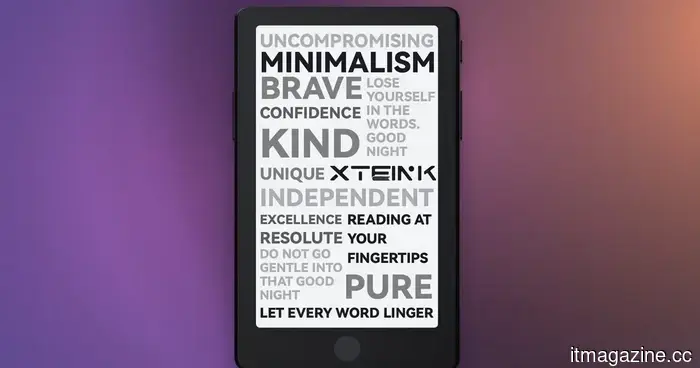 Xteink's compact e-reader has finally received the upgrades it needed.
The new X4 Pro from Xteink features a front light, a touchscreen, unlocked firmware, and a 1,100mAh battery, all while maintaining the original's compact design.
Xteink's compact e-reader has finally received the upgrades it needed.
The new X4 Pro from Xteink features a front light, a touchscreen, unlocked firmware, and a 1,100mAh battery, all while maintaining the original's compact design.
 OpenAI and Anthropic have surpassed Nvidia in lobbying efforts in Washington.
OpenAI and Anthropic reached a record $3.17 million in federal lobbying during the second quarter. Anthropic alone is now spending more than Nvidia, as AI companies seek to gain influence ahead of the midterm elections.
OpenAI and Anthropic have surpassed Nvidia in lobbying efforts in Washington.
OpenAI and Anthropic reached a record $3.17 million in federal lobbying during the second quarter. Anthropic alone is now spending more than Nvidia, as AI companies seek to gain influence ahead of the midterm elections.
 Galaxy Z Fold 8 vs. Galaxy Z Fold 8 Ultra: Is it worth spending an additional $200 for the Ultra model?
The Samsung Fold 8 and Fold 8 Ultra utilize the same chip and storage options, but they differ significantly in terms of camera hardware, screen size, and battery.
Galaxy Z Fold 8 vs. Galaxy Z Fold 8 Ultra: Is it worth spending an additional $200 for the Ultra model?
The Samsung Fold 8 and Fold 8 Ultra utilize the same chip and storage options, but they differ significantly in terms of camera hardware, screen size, and battery.
Augustus secures $180 million to establish a Global Dollar Bank.
Augustus, under the leadership of a 25-year-old Thiel Fellow, secured $180 million at a valuation of $1 billion to provide fintech companies and banks with direct, chartered access to the US dollar.