

Water UK states that the proposed AI data centers overlook the origins of the water supply.
Britain aims to triple its data centre capacity by 2030, but the trade organization representing the nation’s water companies has informed ministers that there isn't sufficient water to sustain them. Water UK, which advocates for England’s water suppliers, told MPs this week that the government's growth agenda does not adequately consider the water consumption of these facilities.
Currently, data centres are largely overlooked in the frameworks that regulate water usage in England, even as notable projects like Stargate UK face delays due to costs and newer sites encounter their own grid issues. Presently, data centres in England consume approximately 6.6 million litres of drinking water daily, and Water UK predicts this figure could rise to 19.8 million litres if the capacity increases as planned.
Individual sites already demand more water than their neighboring establishments; for instance, in the Affinity Water region, some proposed centres have requested up to 3 million litres a day, equivalent to the daily consumption of about 3,500 homes. The pressure is not distributed evenly, as around 125 data centres are proposed or under construction solely within Affinity Water’s area, which encompasses Slough and its dense concentration of server facilities. Moreover, over three-quarters of the UK's data centres are situated in the water-stressed southern and eastern regions of England.
This area already consumes around 220 million litres a day beyond what water companies had anticipated, even before most of the planned infrastructure is established. In some localities, the gap between what suppliers can provide and what customers currently use has shrunk to about 2%.
Since ministers have classified data centres as critical national infrastructure, water companies claim they have limited ability to reduce supply when resources become scarce. During the hosepipe bans that affected the south and east this summer, the limitations predominantly impacted households rather than data centres, which, under current regulations, utilize drinking-quality supplies.
Water UK’s main issue is that none of these factors have been considered. Data centres are not included in the Environment Agency’s national water resources framework, and this body informed MPs that the government's AI growth zone policy does not address water issues whatsoever. “There seems to be an assumption that the country will always have sufficient water for its economic requirements,” the briefing noted. “Nothing could be further from the truth.”
David Henderson, the chief executive of Water UK, framed the issue as a planning constraint rather than a lack of rainfall. "We are desperate to ensure enough water for new housing," he stated, "but we are hindered by a regulatory system that delays the construction of new reservoirs." According to the body’s own data, the current supply can only meet the needs of approximately 420,000 of the 1.5 million homes the government aims to build.
This situation paints a picture of a growing disparity between England’s available water resources and its projected needs. A House of Lords report from May predicted a public water deficit of about 5 billion litres a day by the mid-century unless interventions are made, although roughly 60% of that could be mitigated through leak repairs and reduced demand. These projections do not adequately take into account the expansion of data centres, which is the gap that Water UK seeks to highlight.
Water UK is advocating for the inclusion of data centre demands in national planning frameworks and for expedited approval of reservoirs and other major water initiatives. The industry is also exploring engineering solutions such as closed-loop and air-based cooling systems that consume significantly less water than traditional evaporative methods, with some operators attempting to recycle waste heat rather than waste it.
The government has identified nine new reservoirs for development and states that its AI growth zones are positioned where energy and water resources are already available. A national policy statement intended to outline the guidelines for this expansion was due in February but has yet to be released. Until this occurs, the country is committing to data centres without having clarified the source of the necessary water.
Other articles
 Cascade secures $3.5 million to identify construction projects prior to the existence of bids.
Cascade, an AI-driven platform for AEC companies, secured $3.5 million to identify multimillion-dollar construction projects several months ahead of any RFP being issued.
Cascade secures $3.5 million to identify construction projects prior to the existence of bids.
Cascade, an AI-driven platform for AEC companies, secured $3.5 million to identify multimillion-dollar construction projects several months ahead of any RFP being issued.
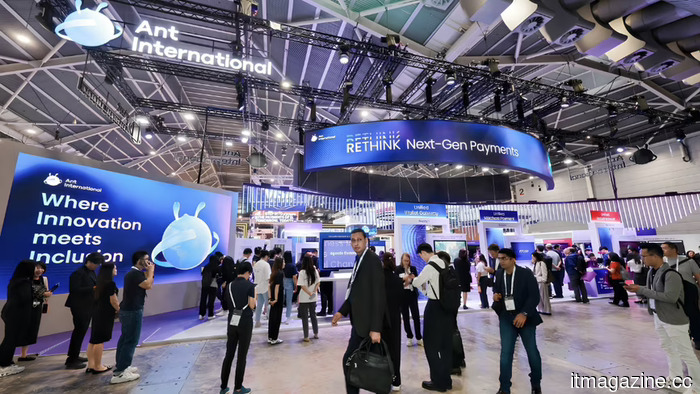 Ant International secures $1.2 billion to support its expansion in payments outside of China.
Ant International, an affiliate of Ant Group, has secured approximately $1.2 billion, supported by Alibaba and Ant Group, to expand its cross-border merchant payments operations.
Ant International secures $1.2 billion to support its expansion in payments outside of China.
Ant International, an affiliate of Ant Group, has secured approximately $1.2 billion, supported by Alibaba and Ant Group, to expand its cross-border merchant payments operations.
 Reports indicate that the US and China are set to commence a new series of discussions regarding AI in September.
The United States and China are said to be organizing another round of discussions on AI in September, focusing on safety, governance, and the implications of chip export controls.
Reports indicate that the US and China are set to commence a new series of discussions regarding AI in September.
The United States and China are said to be organizing another round of discussions on AI in September, focusing on safety, governance, and the implications of chip export controls.
 Samsung establishes a robotics division led by its CEO to pursue humanoid robots.
Samsung Electronics has established a new robotics division called RX, which will report directly to its CEO, as the company seeks to develop humanoid robots and physical AI to drive future growth.
Samsung establishes a robotics division led by its CEO to pursue humanoid robots.
Samsung Electronics has established a new robotics division called RX, which will report directly to its CEO, as the company seeks to develop humanoid robots and physical AI to drive future growth.
 After months of anticipation, WhatsApp’s Liquid Glass redesign is finally set to arrive on Mac.
WhatsApp has started implementing its redesign for Mac, inspired by Liquid Glass, which features an updated interface, enhanced navigation, and specific sections for Locked Chats and Communities.
After months of anticipation, WhatsApp’s Liquid Glass redesign is finally set to arrive on Mac.
WhatsApp has started implementing its redesign for Mac, inspired by Liquid Glass, which features an updated interface, enhanced navigation, and specific sections for Locked Chats and Communities.
 AI has recently disproven the 87-year-old Jacobian conjecture.
Anthropic's Fable 5 discovered a counterexample to the Jacobian conjecture, a mathematical problem that has been around for 87 years, consisting of 216 characters. Experts have differing opinions on its implications.
AI has recently disproven the 87-year-old Jacobian conjecture.
Anthropic's Fable 5 discovered a counterexample to the Jacobian conjecture, a mathematical problem that has been around for 87 years, consisting of 216 characters. Experts have differing opinions on its implications.
Water UK states that the proposed AI data centers overlook the origins of the water supply.
Water UK cautions that there is insufficient water supply to support the proposed tripling of data center capacity in the UK by 2030, as demand has been overlooked in national planning.