
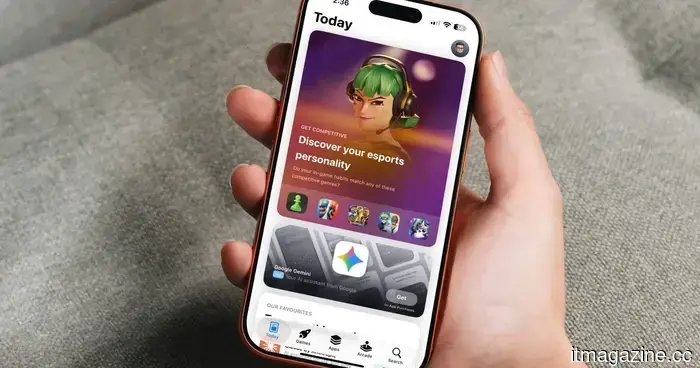
Vibecoded applications are overwhelming Apple’s App Store, and users are growing tired of them.
Apple's App Store is currently experiencing its highest surge in app submissions in years. Last year, developers submitted nearly 600,000 new apps, which represents a 30 percent increase from the previous year. This number has skyrocketed to approximately 560,000 new apps in just the first half of this year, as per estimates from Sensor Tower cited by the New York Times. The driving force behind this increase is vibecoding, which enables individuals without any prior development knowledge to create new apps using AI tools.
A familiar boom, with a twist
The App Store has previously witnessed significant submission numbers. New releases peaked at around 890,000 in 2016, then saw a steady decline over the years, reaching a low of about 420,000 by 2022. The current increase signifies a noticeable reversal of that decline, yet this wave differs from the previous one. While the prior boom was primarily fueled by professional developers, this surge is driven by individuals lacking any coding background.
The Times references a Chicago engineer who successfully built and published two apps utilizing AI tools, despite having no prior experience. His first app took seven weeks to develop and prepare for the App Store, garnering 1,300 downloads. His second app came together in about a week and received 20,000 downloads. He now intends to leave his day job to focus on app development full time.
Such stories contribute to the ongoing rise in submission numbers. However, an increase in app creation doesn't necessarily correlate with an increase in user engagement, leading to a disparity in the numbers.
More apps don’t necessarily mean more money for Apple
As per Sensor Tower, App Store downloads rose by only 3 percent last year and by 2 percent so far this year, a stark contrast to the rapid rise in new submissions. Given that Apple takes a percentage from developers on purchases, the expanding gap between submissions and downloads indicates that the surge isn't translating into equivalent revenue. A spokesperson for Apple countered the idea that downloads provide a complete picture, describing them as merely one indicator of the App Store’s total value.
The surge may also be causing Apple some challenges. Since the company reviews each app before it goes live, the sudden influx of submissions seems to have slowed the approval process. Reports from Apple's developer forums indicate that some developers have experienced delays of weeks for approval with minimal communication. Apple, however, disputed this claim, stating that it processes 90 percent of submissions within 48 hours.
Even if Apple maintains its review pace, it does not guarantee that the approved apps will be worth downloading. Phillip Shoemaker, who managed the App Store from 2009 to 2016, told the Times that a surge of low-quality apps isn't necessarily detrimental for a storefront without physical shelf space. However, he believes that the real concern is that it may become easier for malicious entities to bypass reviewers. This perspective may overlook a different type of cost, one that is less visible in security reports and more apparent in user discussions.
What the numbers don’t show
This overlooked cost is evident in forums like Reddit, where discussions about new apps often include the comment, “Is this vibecoded?” This query is rarely intended as praise. A review of various threads reveals a clear pattern: many of these apps do not offer anything new. They are often low-effort copies of existing apps, merely enhanced with some superficial polish or a slightly altered layout.
Some apps are fundamentally flawed or present security risks, created by individuals lacking sufficient coding expertise to identify and resolve issues. A handful of the functioning apps seem unnecessary, and the frequency of these redundant submissions is overwhelming, making it challenging for anyone to sort through them.
This saturation has also influenced moderation policies. Moderators of the r/iosapps subreddit implemented a tiered system that relegates any app without a verified history—whether through App Store reviews, a GitHub repository, or recognized developer credentials—to a separate megathread instead of the main feed. Apps primarily generated with AI code must label themselves as “Vibe Coded,” a categorization the subreddit deems more significant than pricing information, including whether the app is free or requires a subscription.
This aspect is something that submission and download statistics fail to capture. An increasing app count does not reflect how many of those apps are genuinely worth downloading. The situation has escalated to the point where users are now compiling indicators of vibecoded apps, often dismissing them without checking if any are of good quality. This instinct is understandable, given the excess of low-quality offerings; however, it also results in valuable apps being overlooked amidst the skepticism surrounding the vast number of submissions.
Другие статьи
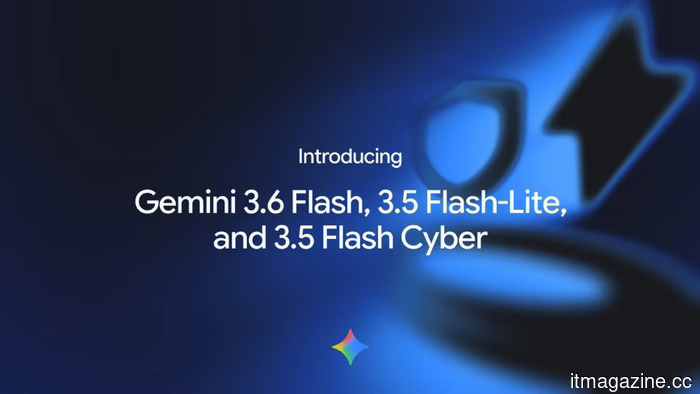 Google introduces Gemini 3.6 Flash along with a competitor to Mythos.
Google has introduced Gemini 3.6 Flash, 3.5 Flash-Lite, and a cyber model targeting Anthropic’s Mythos, though its main model, the 3.5 Pro, remains delayed. There are hints about Gemini 4.
Google introduces Gemini 3.6 Flash along with a competitor to Mythos.
Google has introduced Gemini 3.6 Flash, 3.5 Flash-Lite, and a cyber model targeting Anthropic’s Mythos, though its main model, the 3.5 Pro, remains delayed. There are hints about Gemini 4.
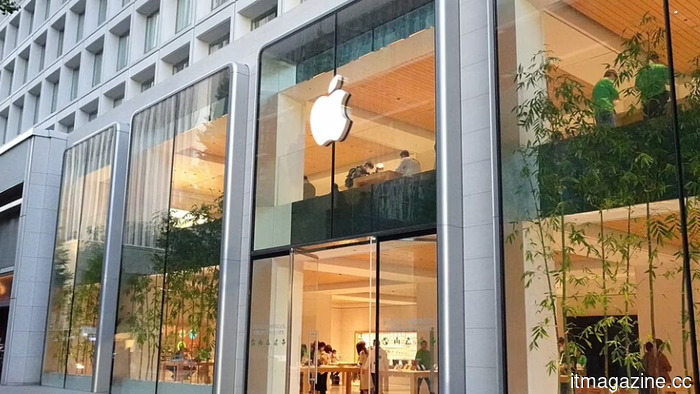 Apple is set to introduce a device leasing program supported by Klarna, named Apple Upgrade, on July 28.
The Apple Upgrade program will enable customers to lease iPhones, Macs, iPads, and Apple Watches via Klarna, superseding the existing iPhone Upgrade Program and financing options.
Apple is set to introduce a device leasing program supported by Klarna, named Apple Upgrade, on July 28.
The Apple Upgrade program will enable customers to lease iPhones, Macs, iPads, and Apple Watches via Klarna, superseding the existing iPhone Upgrade Program and financing options.
 Big Tech is concealing $1.65 trillion in AI liabilities that are off the balance sheet.
A Nikkei study revealed that Alphabet, Microsoft, Amazon, Meta, and Oracle hold $1.65 trillion in off-balance-sheet debt for AI, exceeding their reported figures. This practice is entirely legal.
Big Tech is concealing $1.65 trillion in AI liabilities that are off the balance sheet.
A Nikkei study revealed that Alphabet, Microsoft, Amazon, Meta, and Oracle hold $1.65 trillion in off-balance-sheet debt for AI, exceeding their reported figures. This practice is entirely legal.
 US legislators urge Trump to initiate a trade investigation regarding EU technology regulations.
US legislators have called on President Trump to initiate a Section 301 trade investigation into the EU’s Digital Markets Act and Digital Services Act.
US legislators urge Trump to initiate a trade investigation regarding EU technology regulations.
US legislators have called on President Trump to initiate a Section 301 trade investigation into the EU’s Digital Markets Act and Digital Services Act.
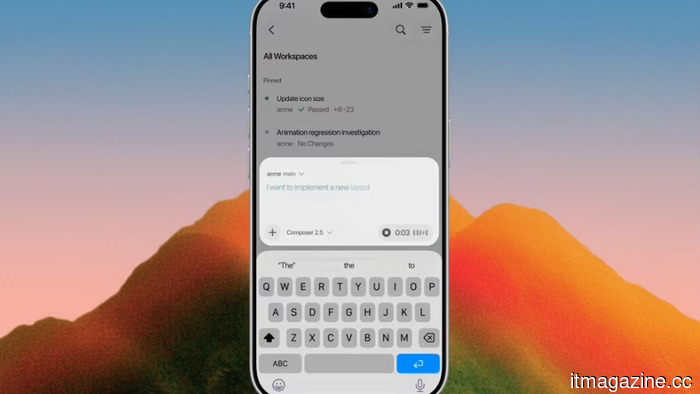 Study reveals that AI coding agents continue to break free from their sandboxes.
Researchers successfully navigated the sandboxes of Cursor, Codex, Gemini CLI, and Antigravity without causing any damage. Three companies implemented patches, while Google downgraded its two.
Study reveals that AI coding agents continue to break free from their sandboxes.
Researchers successfully navigated the sandboxes of Cursor, Codex, Gemini CLI, and Antigravity without causing any damage. Three companies implemented patches, while Google downgraded its two.
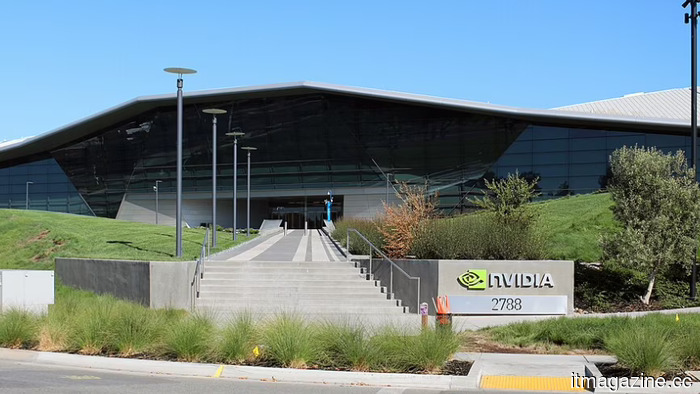 Nvidia has announced that Vera Rubin is now in full production, and OpenAI is planned to scale its deployment in the third quarter.
Nvidia showcased the Vera Rubin systems at its headquarters, with Ian Buck announcing that full production is underway and OpenAI intending to implement large-scale deployment this quarter.
Nvidia has announced that Vera Rubin is now in full production, and OpenAI is planned to scale its deployment in the third quarter.
Nvidia showcased the Vera Rubin systems at its headquarters, with Ian Buck announcing that full production is underway and OpenAI intending to implement large-scale deployment this quarter.
Vibecoded applications are overwhelming Apple’s App Store, and users are growing tired of them.
Submissions to the App Store have increased twofold this year due to the ease of development with AI tools, but downloads have not matched that growth, as users are becoming frustrated with the abundance of low-quality, AI-generated apps.