

Big Tech is concealing $1.65 trillion in AI liabilities that are off the balance sheet.
When examining the official debts of Alphabet, Microsoft, Amazon, Meta, and Oracle, the figures appear significant yet manageable. However, looking beyond the surface reveals a much larger and concealed amount of debt. A study conducted by Nikkei estimated this hidden total to be $1.65 trillion, which represents an increase of approximately eight times within four years, exceeding the $1.35 trillion that the five companies openly declare.
This situation mirrors the Enron scandal, where money is obscured in off-balance-sheet structures, similar to the tactics Enron employed to conceal debt before its downfall 25 years ago. Although Enron's actions were fraudulent at that time, the introduction of stricter regulations and more comprehensive disclosures has made these practices legal today. The mechanisms remain unchanged; as analyst Gil Luria stated to Bloomberg Law, “Enron’s crime wasn’t having special purpose vehicles; it was hiding them.”
The process is straightforward. Companies bundle debts related to components such as chips, servers, and energy into separate legal entities, often formed as joint ventures, so that the expenses do not reflect in their own financial statements. For instance, Meta’s Hyperion data center in Louisiana involved both Meta and Blue Owl Capital contributing equity to a distinct structure that assumed $27 billion in debt. Even though Meta is the only occupant, it claims that there is no obligation to record this debt, as it does not have to seek replacement tenants.
Oracle has future lease commitments amounting to $260 billion that will eventually appear on its balance sheet, while Nvidia holds $119 billion in purchase obligations. Alphabet and Microsoft also maintain their financial vehicles off the books.
The sheer magnitude of these figures is noteworthy. Meta’s hidden debt alone is approximately $420 billion, almost three times its reported liabilities, whereas Oracle's off-balance-sheet obligations have surged around thirtyfold in four years. This trend contributes to a larger goal, as the industry is projected to spend over $3 trillion on building and equipping AI data centers by 2028, much of which is financed against the chips within them.
The timing of this issue is delicate, as four out of the five companies will announce earnings in the next two weeks, presenting a seemingly neat picture of their reported debt. However, the $1.65 trillion lurking in the footnotes is likely to be overlooked in headlines.
The concern arises when a data center becomes operational, at which point its lease is incorporated onto the balance sheet all at once. Should the demand for AI fall short, the facility's value may decrease, resulting in losses for the lenders and insurers who financed it.
Some market analysts are already expressing concerns. S&P has downgraded Oracle’s credit rating due to excessive leverage, and both Morgan Stanley and Moody’s have highlighted the broader implications. Accounting consultant Tom Selling posed a critical question: “What if one of these companies was a house of cards, propped up by this accounting treatment?”
While all of this is not illegal, the companies assert that future profits will adequately cover their obligations. The details are available within the footnotes for those who take the time to look. However, this means that investors reviewing this week's earnings may only be aware of less than half of the actual leverage. In a year featuring significant discussions about market bubbles, the understated figures lurking off the page deserve attention.
Other articles
 Poolside has launched the Laguna S 2.1, an open-weight coding model presented as the Western counterpart to DeepSeek and Qwen.
The 118B-parameter Laguna S 2.1 from Poolside competes with larger models in coding benchmarks, operates on a single desktop, and is aimed at businesses looking to self-host.
Poolside has launched the Laguna S 2.1, an open-weight coding model presented as the Western counterpart to DeepSeek and Qwen.
The 118B-parameter Laguna S 2.1 from Poolside competes with larger models in coding benchmarks, operates on a single desktop, and is aimed at businesses looking to self-host.
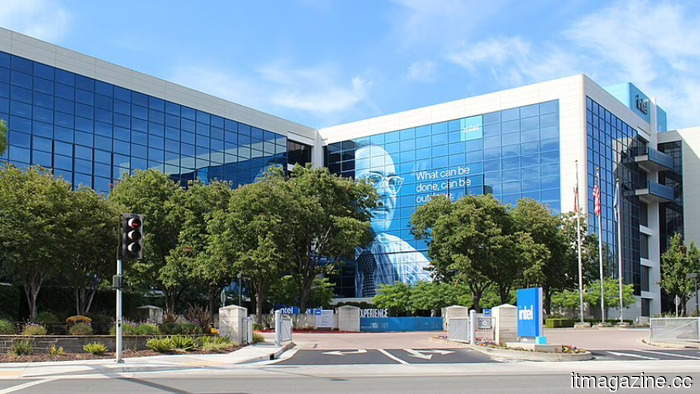 Intel has announced additional layoffs in its data center division as its stock rises on signs of a turnaround.
Intel is reducing its workforce in the data center division as CEO Lip-Bu Tan restructures the company, resulting in a nearly 8 percent increase in shares just two days ahead of earnings announcements.
Intel has announced additional layoffs in its data center division as its stock rises on signs of a turnaround.
Intel is reducing its workforce in the data center division as CEO Lip-Bu Tan restructures the company, resulting in a nearly 8 percent increase in shares just two days ahead of earnings announcements.
 GM surpasses Q2 earnings expectations and reveals plans for gas-powered Cadillacs as its nearly $11 billion retreat from electric vehicles approaches completion.
GM exceeded Wall Street expectations by 37 cents per share and adjusted its full-year guidance upward, subsequently revealing plans for new gas-powered Cadillacs set to launch in spring 2027.
GM surpasses Q2 earnings expectations and reveals plans for gas-powered Cadillacs as its nearly $11 billion retreat from electric vehicles approaches completion.
GM exceeded Wall Street expectations by 37 cents per share and adjusted its full-year guidance upward, subsequently revealing plans for new gas-powered Cadillacs set to launch in spring 2027.
 GM reports better-than-expected earnings for the second quarter and reveals plans for gas-powered Cadillacs as its nearly $11 billion retreat from electric vehicles approaches completion.
GM surpassed Wall Street expectations by 37 cents per share and increased its full-year forecast, subsequently revealing new gas-powered Cadillacs set to debut in spring 2027.
GM reports better-than-expected earnings for the second quarter and reveals plans for gas-powered Cadillacs as its nearly $11 billion retreat from electric vehicles approaches completion.
GM surpassed Wall Street expectations by 37 cents per share and increased its full-year forecast, subsequently revealing new gas-powered Cadillacs set to debut in spring 2027.
Big Tech is concealing $1.65 trillion in AI liabilities that are off the balance sheet.
A Nikkei study revealed that Alphabet, Microsoft, Amazon, Meta, and Oracle hold $1.65 trillion in off-balance-sheet debt for AI, exceeding their reported figures. This practice is entirely legal.