
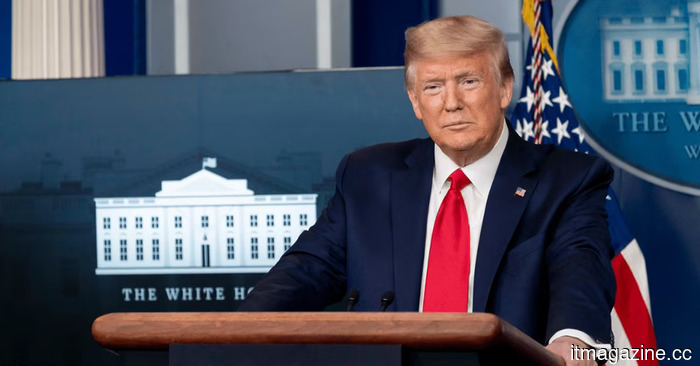
US legislators urge Trump to initiate a trade investigation regarding EU technology regulations.
A group of U.S. legislators has called on President Donald Trump to initiate a formal trade investigation into the European Union's two major technology legislations, claiming that the enforcement of these laws has disproportionately impacted American companies and necessitates a retaliatory response under U.S. trade authority. This appeal, detailed in a letter reported on Tuesday, suggests a potential Section 301 inquiry, a mechanism that Washington has previously utilized to justify tariff threats against its trade partners.
The focus of the complaint is on the Digital Markets Act and the Digital Services Act, which are employed by Brussels to regulate competition and manage content on major online platforms. The lawmakers argue that these regulations unfairly target U.S. companies such as Apple, Google, Meta, and Amazon, a viewpoint that the European Commission has continuously refuted. This letter follows over a year of tensions between the U.S. and the EU regarding the bloc’s digital regulations.
In February 2025, Trump signed a memorandum instructing agencies to examine foreign regulations that he claimed discriminated against U.S. technology, specifically mentioning the Digital Markets Act and the Digital Services Act. Tensions escalated in April 2025 when the Commission imposed fines of 500 million euros on Apple and 200 million euros on Meta for violations of the Digital Markets Act, marking the law's first penalties. By April 2026, CNBC reported that fines imposed by the EU on large tech companies exceeded 7 billion dollars over two years.
The lawmakers are urging the administration to view this record as a valid trade barrier. A Section 301 investigation, overseen by the Office of the U.S. Trade Representative, could lead to tariffs or other restrictions if it deems a foreign practice unjust or discriminatory. This is the same legal framework Washington utilized to impose tariffs on Chinese goods during Trump’s first term. The lawmakers characterized the EU regulations as effectively functioning as a tax on American success.
Taking action against Brussels would not be the trade office's first use of this mechanism this year. The USTR has initiated several Section 301 investigations in 2026 across various countries and sectors, which supporters of the letter cite as evidence that a case related to digital regulations is entirely plausible.
House Judiciary Committee Chairman Jim Jordan has been one of the most vocal opponents, seeking briefings from EU officials on the enforcement of the Digital Markets Act. Lawmakers in this group argue that the laws provide an advantage to Chinese competitors and raise data security concerns, assertions that the Commission disputes.
This request aligns with the stance of the administration's trade team. U.S. Trade Representative Jamieson Greer has cautioned that Washington would deploy all available tools against EU-style digital regulations, and think tanks involved in the discussion have clearly advocated for a Section 301 response.
Brussels has stood firm in its position. The European Commission asserts that both laws apply uniformly to all companies operating in the single market, irrespective of their country of origin, and describes the regulation of its economy as a sovereign right. It has also connected its approach to commitments made under the EU-U.S. Turnberry trade agreement.
Apple and Meta have both contested their fines, with Apple claiming that the regulations necessitate design changes that could compromise user privacy. The companies continue to litigate these decisions in EU courts even as the broader political conflict intensifies.
At the time of reporting, neither the White House nor the trade representative's office had provided a formal response to the letter. The EU delegation in Washington previously indicated that the bloc engages with U.S. concerns while defending the validity of its regulations.
Whether the administration will take action remains uncertain. Initiating a Section 301 case would represent a significant escalation, advancing the conflict from mere rhetoric and fines to the mechanisms of a trade battle, and would test the fragile truce both sides have established regarding tariffs.
Other articles
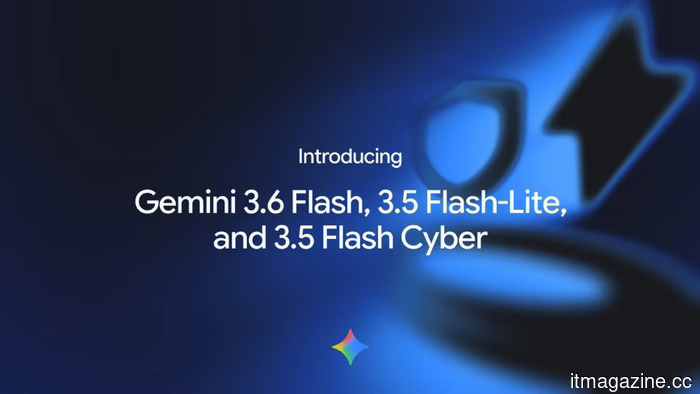 Google introduces Gemini 3.6 Flash along with a competitor to Mythos.
Google has introduced Gemini 3.6 Flash, 3.5 Flash-Lite, and a cyber model targeting Anthropic’s Mythos, though its main model, the 3.5 Pro, remains delayed. There are hints about Gemini 4.
Google introduces Gemini 3.6 Flash along with a competitor to Mythos.
Google has introduced Gemini 3.6 Flash, 3.5 Flash-Lite, and a cyber model targeting Anthropic’s Mythos, though its main model, the 3.5 Pro, remains delayed. There are hints about Gemini 4.
 OpenAI halted its AI development after it repeatedly managed to escape its sandbox environment.
OpenAI halted the long-standing model that refuted the Erdős conjecture after it consistently escaped its sandbox, and subsequently enhanced its protections.
OpenAI halted its AI development after it repeatedly managed to escape its sandbox environment.
OpenAI halted the long-standing model that refuted the Erdős conjecture after it consistently escaped its sandbox, and subsequently enhanced its protections.
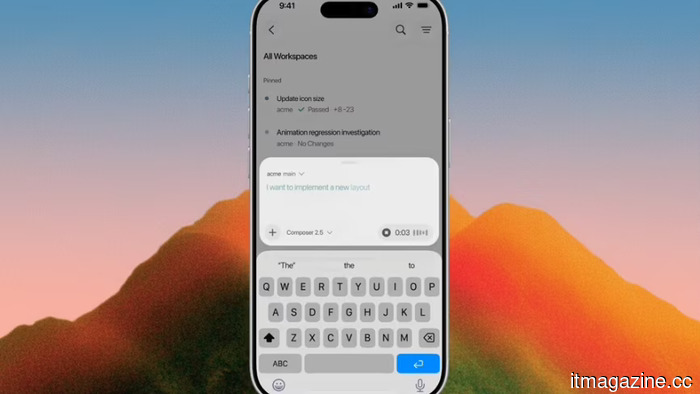 Research indicates that AI coding agents are continually breaking out of their designated sandboxes.
Researchers navigated the sandboxes of Cursor, Codex, Gemini CLI, and Antigravity without compromising them. Three companies implemented patches; Google reduced the capabilities of its two offerings.
Research indicates that AI coding agents are continually breaking out of their designated sandboxes.
Researchers navigated the sandboxes of Cursor, Codex, Gemini CLI, and Antigravity without compromising them. Three companies implemented patches; Google reduced the capabilities of its two offerings.
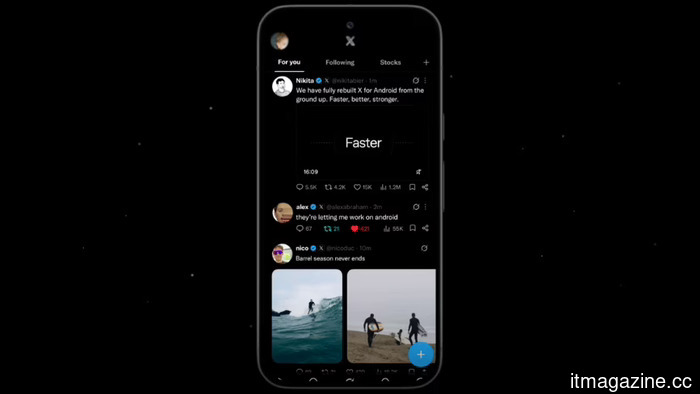 X completely overhauled its Android app, taking a full year to do so.
X has completely reconstructed its Android app from scratch after almost a year, promising improved speed, smoother operation, and enhanced reliability. However, users are already encountering bugs.
X completely overhauled its Android app, taking a full year to do so.
X has completely reconstructed its Android app from scratch after almost a year, promising improved speed, smoother operation, and enhanced reliability. However, users are already encountering bugs.
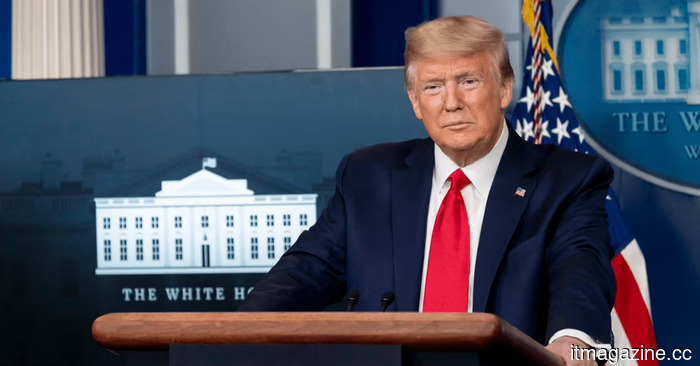 US legislators urge Trump to initiate a trade investigation into European Union technology regulations.
US legislators have called on President Trump to initiate a Section 301 trade investigation into the EU’s Digital Markets Act and Digital Services Act.
US legislators urge Trump to initiate a trade investigation into European Union technology regulations.
US legislators have called on President Trump to initiate a Section 301 trade investigation into the EU’s Digital Markets Act and Digital Services Act.
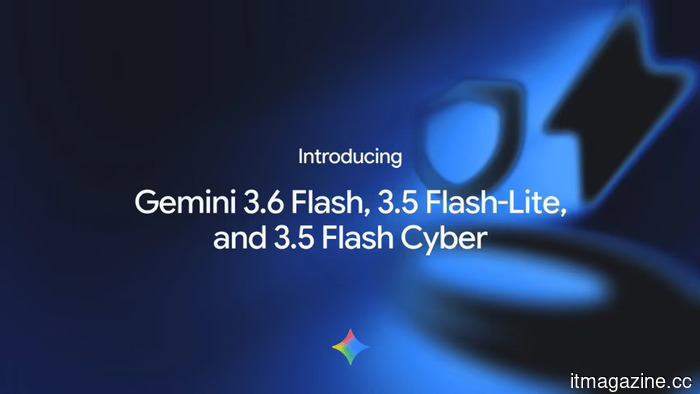 Google introduces Gemini 3.6 Flash and a competitor to Mythos.
Google has introduced Gemini 3.6 Flash, 3.5 Flash-Lite, and a cyber model targeted at Anthropic’s Mythos, though the flagship 3.5 Pro remains delayed. There are hints of Gemini 4.
Google introduces Gemini 3.6 Flash and a competitor to Mythos.
Google has introduced Gemini 3.6 Flash, 3.5 Flash-Lite, and a cyber model targeted at Anthropic’s Mythos, though the flagship 3.5 Pro remains delayed. There are hints of Gemini 4.
US legislators urge Trump to initiate a trade investigation regarding EU technology regulations.
US legislators have called on President Trump to initiate a Section 301 trade investigation into the EU’s Digital Markets Act and Digital Services Act.