
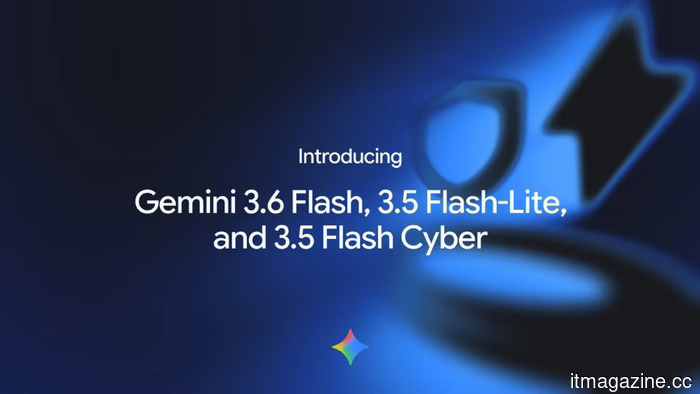
Google introduces Gemini 3.6 Flash along with a competitor to Mythos.
Google’s response to a summer of being outpaced is not to create a larger model, but rather to offer more affordable options. On Tuesday, the company introduced three new Gemini models, all in its fast, low-cost “Flash” tier, just a day before Alphabet announces its earnings. The emphasis is on efficiency rather than sheer power. However, there are still some notable exclusions.
Affordable, quick, and widely available, yet not at the top
The primary model is Gemini 3.6 Flash. Google claims it outperforms its predecessor in coding and knowledge tasks while utilizing approximately 17% fewer output tokens and at a lower cost—now $7.50 per million output tokens, down from $9. Its knowledge base will extend to March 2026.
Next to it is 3.5 Flash-Lite, the fastest in the lineup at 350 tokens per second, and even more affordable. Both models capitalize on a key idea: most AI tasks do not require cutting-edge capabilities, just speed and affordability.
Sundar Pichai, the chief executive, noted earlier this year that “companies are already rapidly exhausting their annual token budgets, and it’s only May.” He mentioned to Business Insider that a combination of Flash models could help businesses save over $1 billion annually.
A more economical option for Mythos
The most notable release is Gemini 3.5 Flash Cyber, which is specifically designed to detect and fix software vulnerabilities within Google’s CodeMender agent. Google describes it as a “cost-efficient” alternative to larger security models.
Its unnamed competitor is Anthropic’s Mythos, which charges $10 per million input tokens and $50 per million output tokens, as reported by The Verge. Google asserts that Flash Cyber performs comparably to top-tier models on a significant benchmark at a fraction of the cost, directly challenging Anthropic’s edge in AI-driven security.
However, as a vulnerability detection tool could also aid malicious actors, Google is implementing restrictions. Flash Cyber will only be available to governments and trusted partners in a limited pilot program.
The model that did not launch
There’s also the notable absence of Gemini 3.5 Pro, the flagship model Google had promised for June, which remains in testing, reportedly delayed due to underperformance in coding tasks. Currently, Google lacks a model within the public top ten.
This delay is particularly stinging. In about a week, xAI’s Grok 4.5, three versions of OpenAI’s GPT-5.6, and Moonshot’s Kimi K3 have all been released. Meanwhile, Anthropic’s Fable 5 continues to top the leaderboards, according to reports from Reuters.
Gemini 4, in theory
Google’s response is to look to the future. The company announced that it has initiated its “most ambitious pre-training run yet” for Gemini 4. This is a declaration of intent rather than a functional capability.
The push for efficiency goes deeper than just software. Google is also developing a custom chip to deliver Gemini at a lower cost. However, a crucial point to note is that all benchmarks cited are based on Google’s own evaluations, and no independent verification has been conducted yet.
The strategy
The plan appears coherent. In a year where companies are monitoring their token usage, offering affordable and fast options could capture the middle market while the flagship models catch up. The success of this strategy depends on two factors: the eventual release of 3.5 Pro and whether Gemini 4 proves to be more than just a training exercise.
Other articles
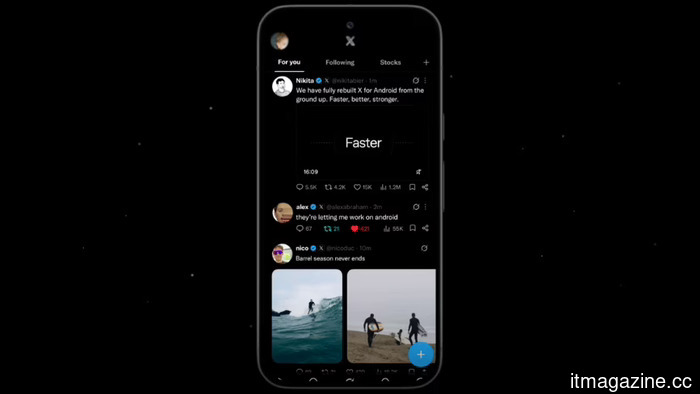 X completely overhauled its Android app, taking a full year to do so.
X has completely reconstructed its Android app from scratch after almost a year, promising improved speed, smoother operation, and enhanced reliability. However, users are already encountering bugs.
X completely overhauled its Android app, taking a full year to do so.
X has completely reconstructed its Android app from scratch after almost a year, promising improved speed, smoother operation, and enhanced reliability. However, users are already encountering bugs.
 Electra is planning a factory in Ohio with an investment of $850 million for its ultra-short hybrid aircraft.
Electra, an aircraft startup, is expected to invest approximately $850 million in a factory located in Ohio to manufacture its nine-seat EL9 hybrid-electric ultra-short takeoff aircraft.
Electra is planning a factory in Ohio with an investment of $850 million for its ultra-short hybrid aircraft.
Electra, an aircraft startup, is expected to invest approximately $850 million in a factory located in Ohio to manufacture its nine-seat EL9 hybrid-electric ultra-short takeoff aircraft.
 US legislators urge Trump to initiate a trade investigation regarding EU technology regulations.
US legislators have called on President Trump to initiate a Section 301 trade investigation into the EU’s Digital Markets Act and Digital Services Act.
US legislators urge Trump to initiate a trade investigation regarding EU technology regulations.
US legislators have called on President Trump to initiate a Section 301 trade investigation into the EU’s Digital Markets Act and Digital Services Act.
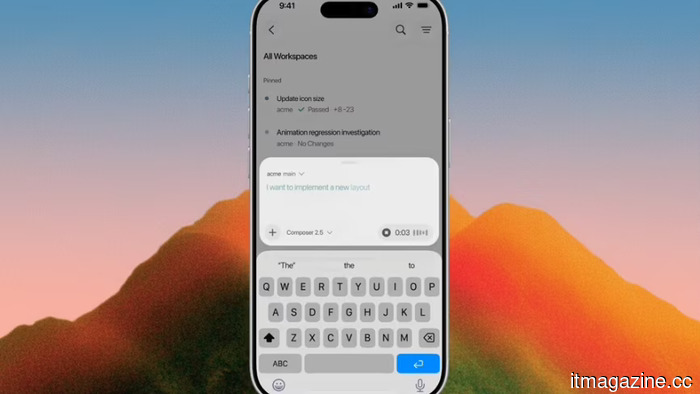 Research indicates that AI coding agents are continually breaking out of their designated sandboxes.
Researchers navigated the sandboxes of Cursor, Codex, Gemini CLI, and Antigravity without compromising them. Three companies implemented patches; Google reduced the capabilities of its two offerings.
Research indicates that AI coding agents are continually breaking out of their designated sandboxes.
Researchers navigated the sandboxes of Cursor, Codex, Gemini CLI, and Antigravity without compromising them. Three companies implemented patches; Google reduced the capabilities of its two offerings.
 Sony has filed another lawsuit against Udio regarding 30,000 songs, demanding $4.5 billion in damages.
Sony has initiated a second lawsuit against the AI music generator Udio concerning 30,117 recordings, leveraging competitors' licensing agreements to challenge Udio's fair-use argument.
Sony has filed another lawsuit against Udio regarding 30,000 songs, demanding $4.5 billion in damages.
Sony has initiated a second lawsuit against the AI music generator Udio concerning 30,117 recordings, leveraging competitors' licensing agreements to challenge Udio's fair-use argument.
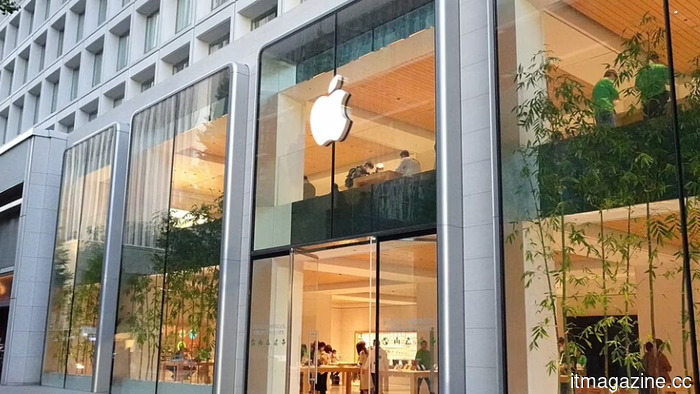 Apple is set to introduce a device leasing program supported by Klarna, named Apple Upgrade, on July 28.
The Apple Upgrade program will enable customers to lease iPhones, Macs, iPads, and Apple Watches via Klarna, superseding the existing iPhone Upgrade Program and financing options.
Apple is set to introduce a device leasing program supported by Klarna, named Apple Upgrade, on July 28.
The Apple Upgrade program will enable customers to lease iPhones, Macs, iPads, and Apple Watches via Klarna, superseding the existing iPhone Upgrade Program and financing options.
Google introduces Gemini 3.6 Flash along with a competitor to Mythos.
Google has introduced Gemini 3.6 Flash, 3.5 Flash-Lite, and a cyber model targeting Anthropic’s Mythos, though its main model, the 3.5 Pro, remains delayed. There are hints about Gemini 4.