
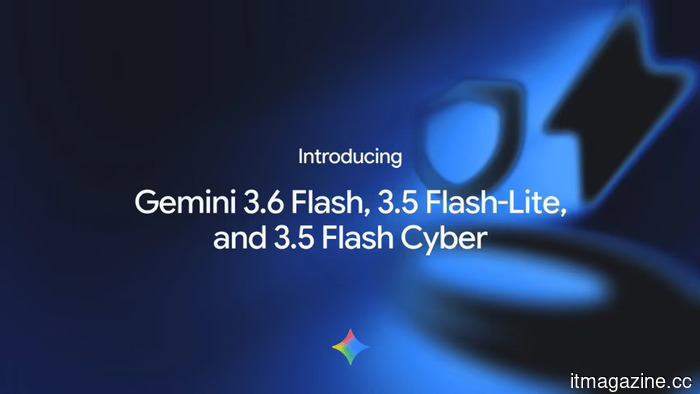
Google introduces Gemini 3.6 Flash and a competitor to Mythos.
Google's response to a summer of falling behind is not to create a larger model, but instead to develop cheaper ones. On Tuesday, the company introduced three new Gemini models, all positioned in its speedy, low-cost "Flash" category, just a day prior to Alphabet's earnings announcement. The emphasis is on efficiency rather than sheer power, although there are still notable gaps.
Affordable, quick, and widely accessible, but not at the top
The primary model is Gemini 3.6 Flash. Google claims it performs better in coding and knowledge tasks compared to its predecessor while consuming around 17% fewer output tokens, and at a lower cost of $7.50 per million output tokens, down from $9. Its knowledge base is now current through March 2026.
Next to it is 3.5 Flash-Lite, the fastest within the series, achieving 350 tokens per second, and is even more economical. Both models cater to one key expectation: that most AI tasks do not require cutting-edge capabilities, just a swift and affordable option.
Support for this expectation is backed by Sundar Pichai, the CEO, who mentioned earlier this year that "Companies are already exceeding their annual token budgets, and it's only May." He noted to Business Insider that a combination of Flash models could potentially help businesses save over $1 billion annually.
A more affordable option for security
The most notable release is Gemini 3.5 Flash Cyber, specifically designed to identify and fix software vulnerabilities, operating within Google’s CodeMender agent. Google describes it as a “cost-efficient” substitute for substantial security models.
The implicit competitor is Anthropic’s Mythos, priced at $10 per million input tokens and $50 per million output tokens, as highlighted by The Verge. Google asserts that Flash Cyber delivers cutting-edge performance on a crucial benchmark at a much lower cost, directly challenging Anthropic's lead in AI-driven security.
However, due to the dual-use nature of a bug-finder that could assist both defenders and attackers, Google is restricting Flash Cyber’s availability to governments and trusted partners through a limited pilot.
The model that was not released
Additionally, there is the notable absence of Gemini 3.5 Pro, the flagship model Google promised for June, which is still undergoing testing, reportedly delayed due to inadequate coding performance. Currently, Google lacks a model among the public top ten.
The timing is particularly painful. In about a week, xAI’s Grok 4.5, three versions of OpenAI’s GPT-5.6, and Moonshot’s Kimi K3 have all launched. Meanwhile, Anthropic’s Fable 5 is leading the rankings, as reported by Reuters.
Gemini 4, on the horizon
Google's defense is to look further ahead, stating that it has initiated its “most ambitious pre-training run yet” for Gemini 4. This is more of a statement of intent than a tangible product.
The push for efficiency extends beyond software, as Google is also developing a custom chip intended to deliver Gemini at a significantly lower cost. However, it is important to note that all benchmarks cited are Google's own, and independent verification has not yet occurred.
The strategy
The plan makes sense. In a year where companies are being mindful of token usage, offering cheap and fast solutions could dominate the mid-market while the flagship models get ready. The effectiveness of this strategy hinges on two factors: the timely release of 3.5 Pro and whether Gemini 4 proves to be more than just a pre-training exercise.
Other articles
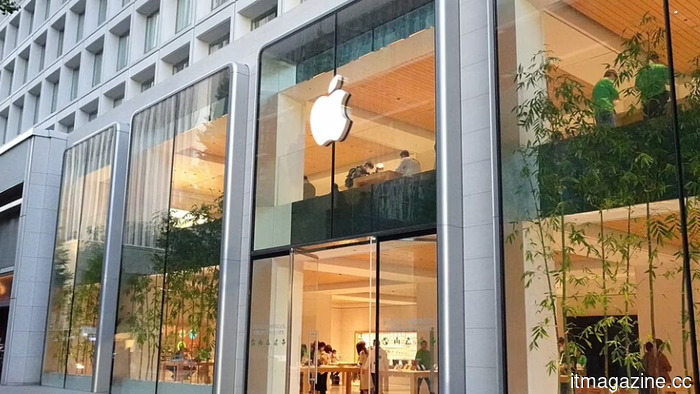 Apple is set to introduce a device leasing program supported by Klarna, named Apple Upgrade, on July 28.
The Apple Upgrade program will enable customers to lease iPhones, Macs, iPads, and Apple Watches via Klarna, superseding the existing iPhone Upgrade Program and financing options.
Apple is set to introduce a device leasing program supported by Klarna, named Apple Upgrade, on July 28.
The Apple Upgrade program will enable customers to lease iPhones, Macs, iPads, and Apple Watches via Klarna, superseding the existing iPhone Upgrade Program and financing options.
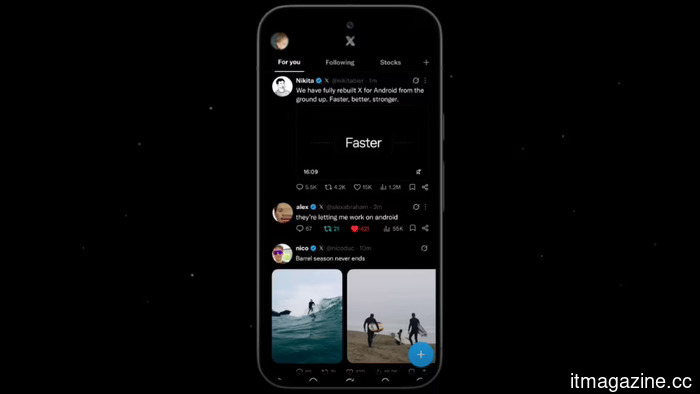 X completely restructured its Android app from the ground up, which took a year to complete.
X has completely overhauled its Android app after almost a year, promising enhanced speed, smoother performance, and greater reliability. However, users are already encountering bugs.
X completely restructured its Android app from the ground up, which took a year to complete.
X has completely overhauled its Android app after almost a year, promising enhanced speed, smoother performance, and greater reliability. However, users are already encountering bugs.
 Sony has filed another lawsuit against Udio regarding 30,000 songs, demanding $4.5 billion in damages.
Sony has initiated a second lawsuit against the AI music generator Udio concerning 30,117 recordings, leveraging competitors' licensing agreements to challenge Udio's fair-use argument.
Sony has filed another lawsuit against Udio regarding 30,000 songs, demanding $4.5 billion in damages.
Sony has initiated a second lawsuit against the AI music generator Udio concerning 30,117 recordings, leveraging competitors' licensing agreements to challenge Udio's fair-use argument.
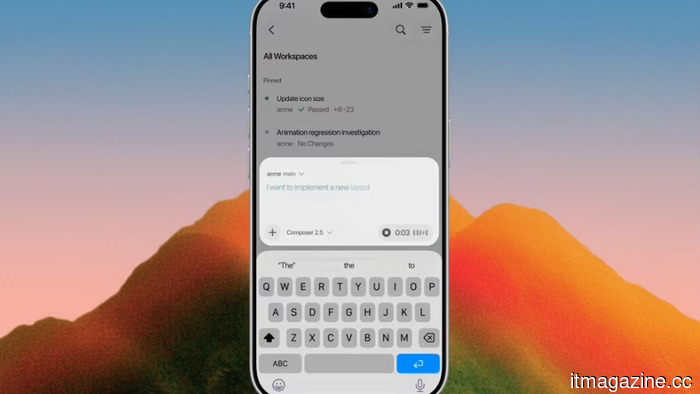 Study reveals that AI coding agents continue to break free from their sandboxes.
Researchers successfully navigated the sandboxes of Cursor, Codex, Gemini CLI, and Antigravity without causing any damage. Three companies implemented patches, while Google downgraded its two.
Study reveals that AI coding agents continue to break free from their sandboxes.
Researchers successfully navigated the sandboxes of Cursor, Codex, Gemini CLI, and Antigravity without causing any damage. Three companies implemented patches, while Google downgraded its two.
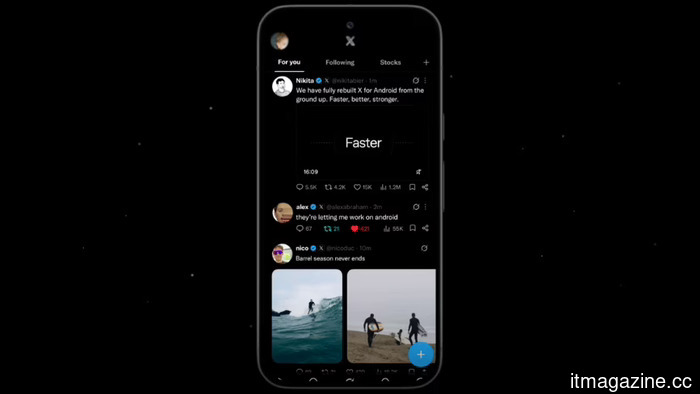 X completely overhauled its Android app, taking a full year to do so.
X has completely reconstructed its Android app from scratch after almost a year, promising improved speed, smoother operation, and enhanced reliability. However, users are already encountering bugs.
X completely overhauled its Android app, taking a full year to do so.
X has completely reconstructed its Android app from scratch after almost a year, promising improved speed, smoother operation, and enhanced reliability. However, users are already encountering bugs.
 Electra is set to establish an $850 million factory in Ohio for its ultra-short hybrid aircraft.
Electra, an aircraft startup, is expected to invest approximately $850 million in a manufacturing facility in Ohio for the production of its nine-seat EL9 hybrid-electric ultra-short takeoff aircraft.
Electra is set to establish an $850 million factory in Ohio for its ultra-short hybrid aircraft.
Electra, an aircraft startup, is expected to invest approximately $850 million in a manufacturing facility in Ohio for the production of its nine-seat EL9 hybrid-electric ultra-short takeoff aircraft.
Google introduces Gemini 3.6 Flash and a competitor to Mythos.
Google has introduced Gemini 3.6 Flash, 3.5 Flash-Lite, and a cyber model targeted at Anthropic’s Mythos, though the flagship 3.5 Pro remains delayed. There are hints of Gemini 4.